

October 7th 2023 Gaza Border Communities Remembrance Self-Guided Driving Tour
About this English self-guided 2h:30m driving tour in Western Negev
Welcome to this digital driving tour of the western Negev and the Gaza border region (Gaza Envelope), following the events of October 7, 2023.
My name is Avi Shalev. I am a Lieutenant Colonel in the reserves, having served for 24 years in the Israel Defense Forces, including positions in military intelligence and the Civil Administration in Judea, Samaria, and Gaza. I am also the author of The Only Jew in the Room, a memoir documenting my experience as the first Jew to enroll in an Arab Islamic college in Israel — a book now being adapted for the stage at the Haifa Theater.
This tour is a journey through places that became symbols of trauma, courage, loss, and memory after the deadliest terrorist massacre against Jews since the Holocaust. On October 7, 2023, approximately 1,200 Israelis were murdered and around 250 people were abducted into Gaza. As we drive through this landscape, we will encounter communities that were attacked, roads on which civilians were hunted and killed, and memorial sites that preserve the stories of those who lost their lives.
Our tour is a driving tour. It begins at Yad Mordechai Junction and ends in the city of Sderot. Along the way, we will visit Netiv HaAsara, the Observation Point of the Female Lookouts, travel along Route 232 — known today by many as the “Road of Blood” — stop at the protected shelter near Sha’ar HaNegev Junction, continue to the Nova Festival memorial site and the burnt vehicles installation, and conclude in Sderot, at the site of the battle over the city’s police station.
At the end of the tour, we will also stop at a local vegetarian restaurant in Sderot, known for its excellent hummus — a small but meaningful reminder that even in places marked by pain, life continues, communities endure, and hospitality remains.
This is not only a geographical journey. It is also a journey into the events of that day, into the human stories behind the headlines, and into the resilience of the people of the western Negev.
- 1For the best experience, begin at the tour's recommended starting point and follow the stops in order.
- 2Want to start somewhere else? Simply use Start At on the tour screen, before tapping Start Tour, to begin from any stop.
- 3Need to detour or skip a stop along the way? Tap Tour Assistant (
![UCPlaces AI Bot Icon]() ) to use Force Play, Skip, and Back, for full flexibility.
) to use Force Play, Skip, and Back, for full flexibility.
 ) to use Force Play, Skip, and Back, for full flexibility.
Route Preview
- Category
- Language
- Mode
- Region
- Country
- City

Places (POIs) visited during this tour

34, Israel
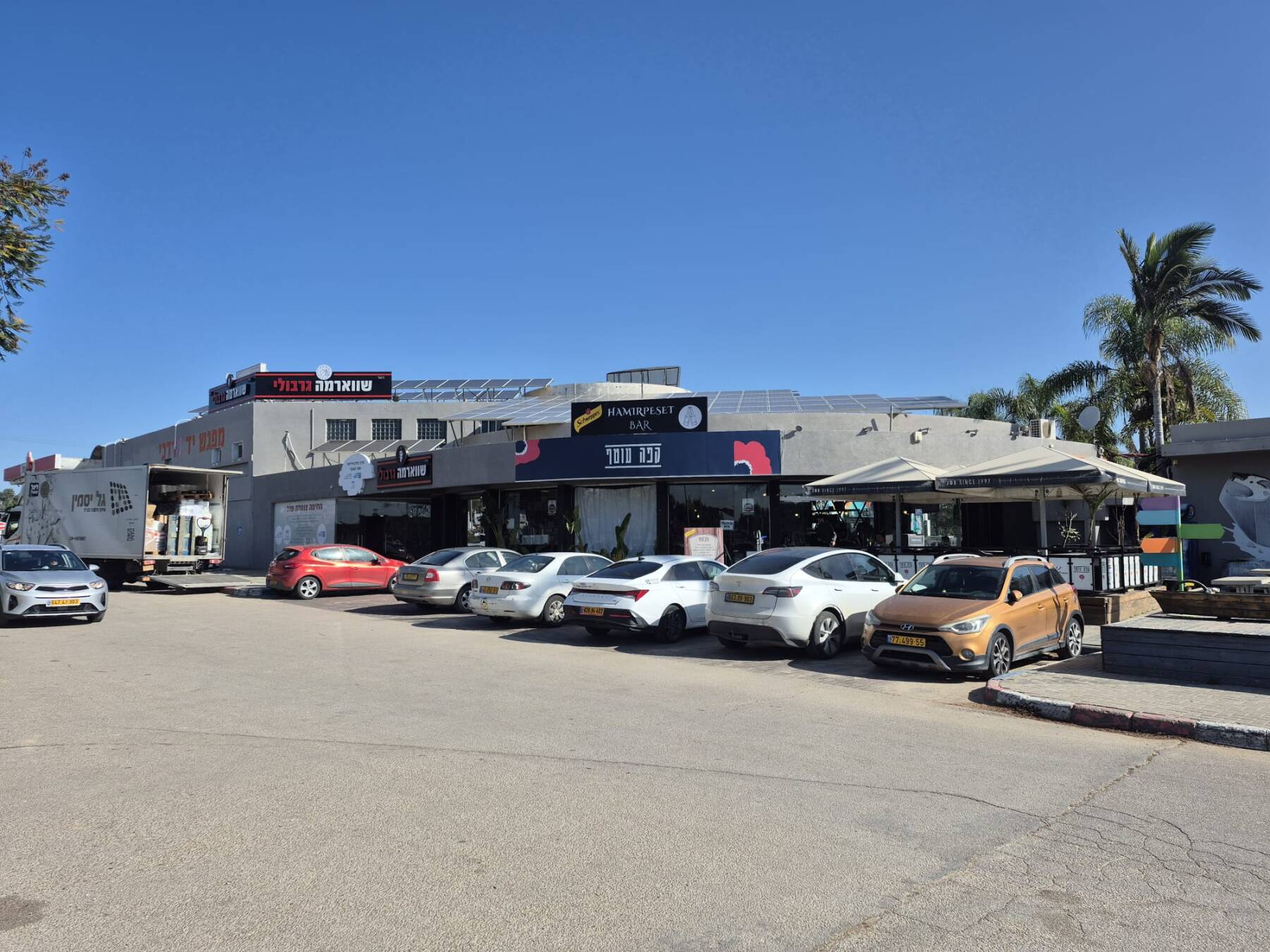
From here, we will continue to Moshav Netiv HaAsara, where 20 residents were brutally murdered on the morning of October 7, 2023.
56, Netiv HaAsara, Israel
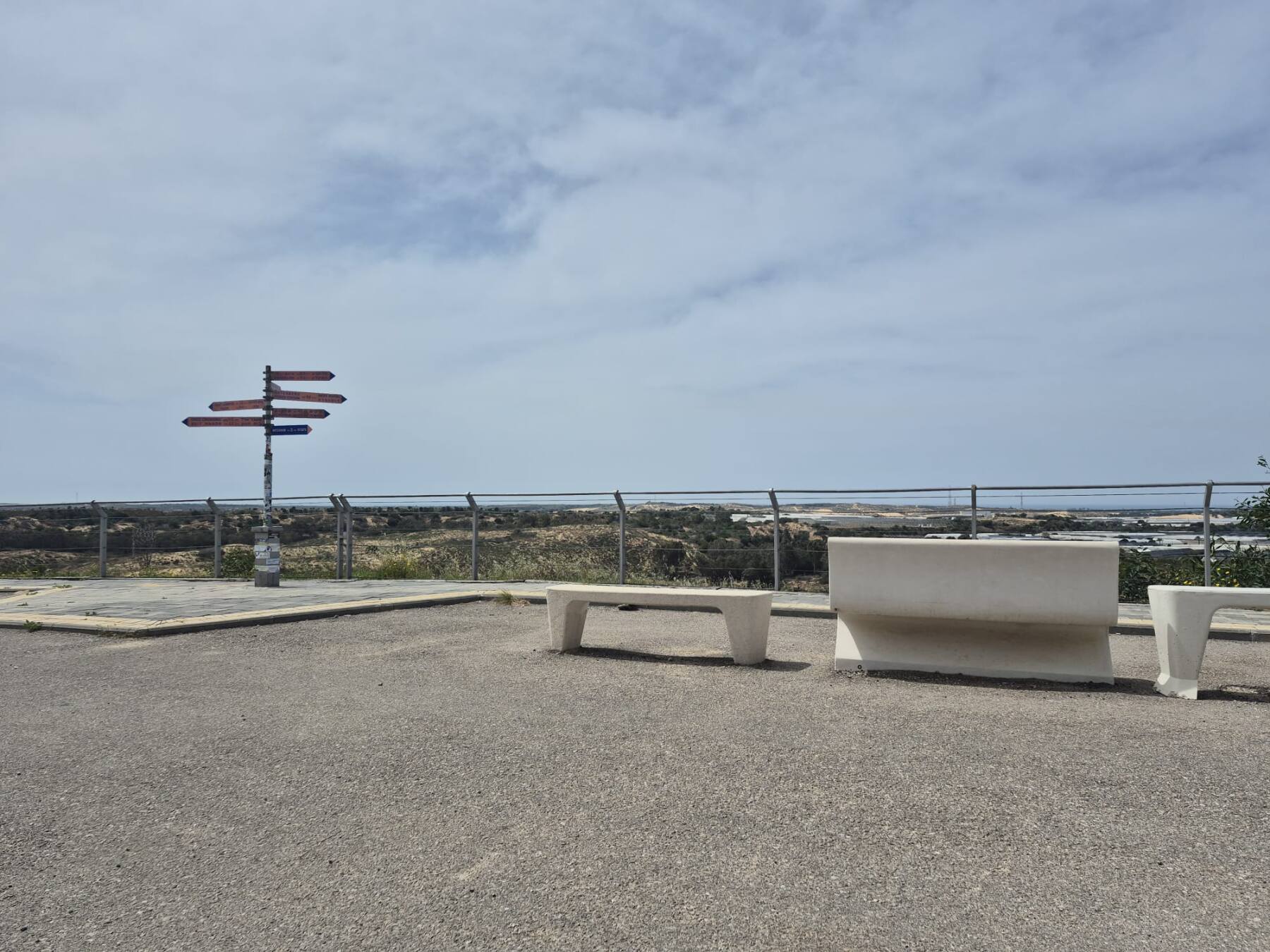
You can read more about Nir Peres—who, by the way, was my commander in the IDF—on the sign next to the shelter.
From this point, you can immediately understand how small the distances are here, and how closely Israeli civilian life existed alongside the Gaza Strip.
As you stand at the lookout, turn your gaze to the left and look southward.
Can you see the northern edge of the Gaza Strip? If you look carefully, you can spot the separation barrier between Israel and Gaza, running from the Mediterranean coast in the distance all the way to the houses with the red roof tiles—the edge of this moshav. You can clearly see the straight line of the barrier cutting through the sand dunes and marking the boundary between Israel and Gaza.
The built-up urban area in the far distance to the south is Gaza City. The flat landscape stretching between the barrier and Gaza City was once home to the Palestinian towns of Beit Hanoun and Beit Lahia, in the northern Gaza Strip. Much of that area was heavily damaged during the war that followed the Hamas attack on Israel on October 7, 2023, and now lies in ruins.
Looking west, straight ahead, you can see the Mediterranean Sea on a clear day. Slightly to the right is the Rutenberg Power Station, a major electricity facility serving southern Israel. For many years, the station was targeted by Hamas missile attacks, even though it also supplied electricity to the Gaza Strip. Can you see the jetties used by ships unloading coal for the station? In the past, they were also used by oil tankers unloading oil into the Iranian-Israeli pipeline that stretched from Ashkelon to Eilat, built to bypass the Suez Canal during the time of the Shah, before the Islamic Revolution. Today, much of Israel’s electricity is generated from natural gas extracted from the Mediterranean Sea.
Further to the right lies Ashkelon, and farther north is the port of Ashdod.
The greenhouses you see in front of you belong to farmers from the moshav. Netiv HaAsara is well known for its agricultural expertise, including seed production and farming in sandy soil. This knowledge was developed over many years, beginning when the community was originally established in the Sinai Peninsula. Following the peace agreement between Israel and Egypt, the village was evacuated from Sinai in 1982 and re-established here, next to the Gaza border.
Netiv HaAsara is a moshav—a close-knit rural agricultural community—but it is different from a kibbutz. In a moshav, each family runs its own household and usually its own economic activity independently, although there is often cooperation within the community. In a kibbutz, at least traditionally, property, work, and income were shared collectively. The simplest way to explain it is this: a moshav is cooperative but family-based, while a kibbutz is communal and collective.
Since 2001 people living IN THIS VILLAGE have endured sniper fire, tunnel threats, mortar attacks, missile fire, and rocket fire. Thousands of projectiles have landed in and around this community over the years. Residents used to TELL ME that life here was 99 percent heaven and 1 percent hell.
On October 7, everything changed.
That morning, Netiv HaAsara was one of the first Israeli communities to be attacked. At 6:30 a.m., a massive barrage of rocket fire hit the village, accompanied by nonstop sirens. Three Hamas terrorists infiltrated the moshav using paragliders, and one of them landed near this area. They entered the community, attempted to break into homes, and murdered 20 residents. A broader ground assault was blocked by the security barrier, sparing the community from even greater devastation.
From here, we will drive to the memorial site dedicated to the murdered members of this community. Please return to your cars, and let us continue to the next stop.
Read More
Place 1
Yad Mordechai Junction
Place 2
Nir Press look-out
Place 3
Netiv HaAsara - Flag Memorial
Place 4
Road side shelter
Place 5
Kibbutz Mefalsim
Place 6
Black Arrow Lookout
Place 7
Kfar Azza
Place 8
The Female Lookouts Observation Point
Place 9
Kibbutz Alumim
Place 10
Nova Festival Site
Place 11
Tkuma Burned Cars Site
Place 12
On our way to Sderot
Place 13
Sderot (Part 2)
Place 14
Sderot (Part 3)
Place 15
Sderot Police Building Memorial
Place 16
Hummus Restaurant