

George Washington's Old Town Alexandria Walking Tour (Self-guided GPS Audio Tour), Virginia
Places: 50 POIs
Distance: 2.85 mi
Duration: 2h:37m
GPS-guided narration through
Your Smartphone
Tour #442
About this English self-guided 2h:37m walking tour in Alexandria
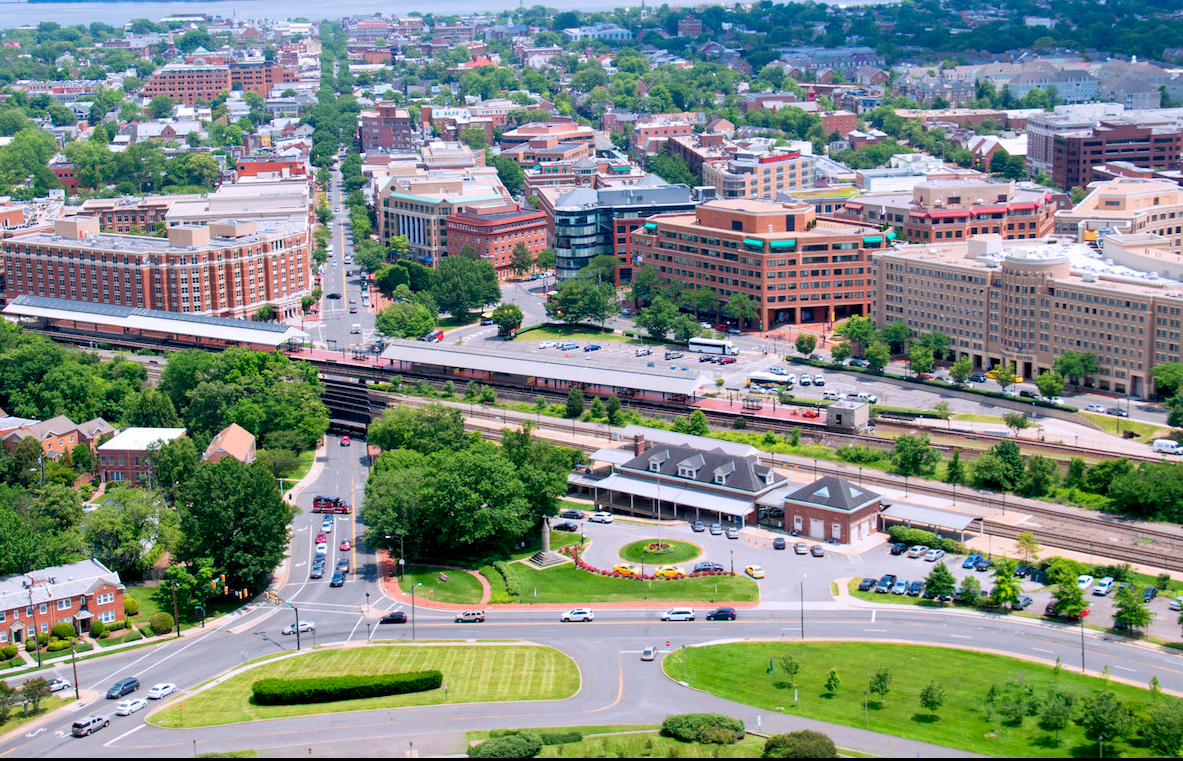
Welcome to Old Town Alexandria! I’m glad you can join me. I’m Christian, your guide and this walking tour will explore a handful of the many historic sites associated with the town’s most famous resident, Revolutionary War General, First President of the United States, and farmer George Washington. Washington enjoyed a fruitful 50 year relationship with Alexandria, from the town’s founding in 1749 until his death in 1799. We’ll begin in the vicinity of the George Washington Masonic National Memorial and work our way down to Old Town’s Waterfront Park along the Potomac River.
Before You Start!- 1For the best experience, begin at the tour's recommended starting point and follow the stops in order.
- 2Want to start somewhere else? Simply use Start At on the tour screen, before tapping Start Tour, to begin from any stop.
- 3Need to detour or skip a stop along the way? Tap Tour Assistant (
![UCPlaces AI Bot Icon]() ) to use Force Play, Skip, and Back, for full flexibility.
 ) to use Force Play, Skip, and Back, for full flexibility.
Route Preview
- Category
- Language
- Mode
- Region
- Country
- City

Places (POIs) visited during this tour
Place #1
![Map Pin]()
Recommended Starting Point
Distance: 0.03mi
, Attraction : Callahan Drive

110 Callahan Dr, Alexandria, VA 22301, USA
Welcome!
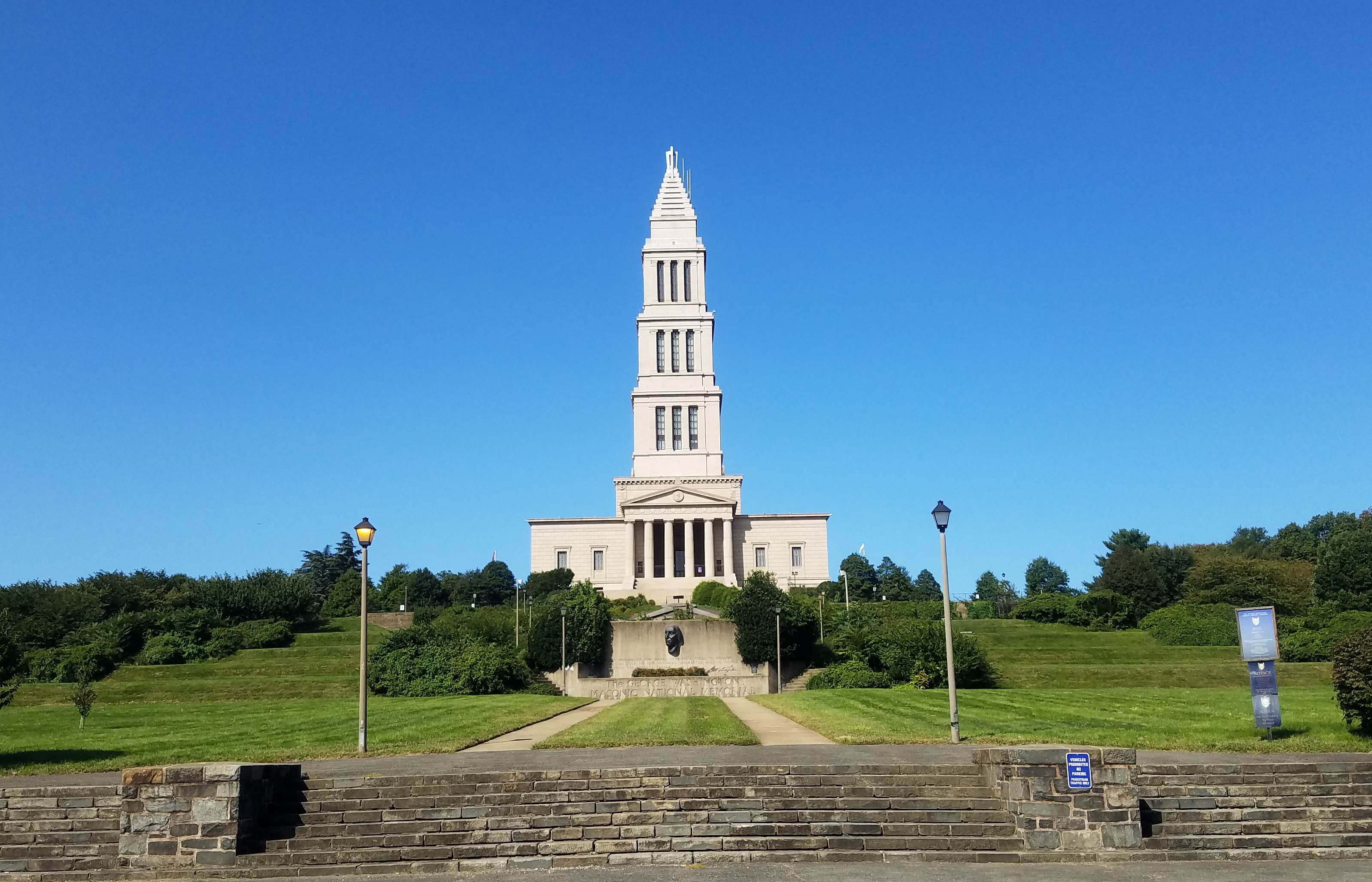
Hey, you found me! If you need to park, there is ample street parking and parking garages nearby. But, whatever mode of transportation you used to get here, a great starting point is on Shuter’s Hill on the grounds of the George Washington Masonic National Memorial, located off of Callahan Drive. Walk up the steps and sidewalk and meet me in front of the George Washington face on the memorial’s entrance wall.
Place #2
![Map Pin]()
Distance: 0.03mi
, Attraction : The George Washington Masonic National Memorial
10 Russell Rd, Alexandria, VA 22301, USA
George Washington, Freemason
Like Benjamin Franklin to Philadelphia and Alexander Hamilton to New York City, Alexandria has always been known as Washington’s hometown. With his home Mount Vernon just eight miles south of here, more than 140 locations in present-day Alexandria are linked with him. It was he who put Alexandria on the map – literally. As a 17 year old surveyor, he helped lay out its streets, surveyed its lots, and drew its first map in the 1750s. He maintained a townhouse, received his mail, purchased his supplies, sold his goods to market, and established the first public school. He was one of the town’s early trustees, a depositor and patron of the Bank of Alexandria, worshipped at Christ Church, and organizer of the first volunteer fire company. Like many of the Founding Fathers, Washington was a member of the fraternal order of Freemasons even serving as First Worshipful Master of Alexandria Lodge of Masons No. 22, which makes its present home inside the 333-foot tall George Washington Masonic National Memorial you see towering on the hill.
Dedicated in 1932, the 200th Anniversary of his birth, the lighthouse-like structure marked a collaboration of Masons across the country who sought to honor their fellow Mason and his views on government, religion, and freedom. The Replica Lodge Room preserves and presents valued Washington relics now owned by the Masons, including his bedchamber clock frozen to the time of 10:20 pm, the moment of his death on December 14, 1799 and the ivory handled trowel his used to lay the cornerstone of the US Capitol Building on September 18, 1793. Memorial Hall has a 17-foot bronze statue of Washington sculpted by Bryant Baker and dedicated by President Harry S. Truman in 1950. Murals by Allyn Cox depicting highlights from Washington’s life surround the room. The memorial’s upper levels feature numerous rooms and displays. The Royal Arch Room contains a replica of the Ark of the Covenant, as well as Egyptian and Hebraic Art. The Assembly Room showcases dioramas of events in George’s life. The Tall Cedars of Lebanon Room features a model of King Solomon’s Temple, and the Children’s Room shows a miniature moving Shriners parade accompanied by music. The George Washington Museum features artifacts from Mount Vernon personally donated by family descendants including the 1732 Family Bible. An outdoor observation deck on the very top offers stunning 360-degree views of Old Town and the surrounding region.
Lastly, you have noticed the massive concrete sculpture with the letter “G.” Designed in 1999 by Donald Robey to mark the 200th anniversary of George’s death, the “G” in the Masonic emblem is said to stand for devotion to God and also for their interest in geometry. Surrounding the “G” are a square and compass, two essential tools for a stonemason. The square, originally used to check two faces of rock for accurate shape symbolizes “squaring” a person’s behavior in the presence of God and humanity. The compass is said to remind a man to keep himself in check, and not to overindulge in life’s vices.
Now, let us proceed to our next destination. As go you back down the sidewalk and steps, hang a left to head over to the sidewalk along King Street.
Read More
Tour itinerary stops | Additional places you'll see on this self-guided tour
Place 1
Welcome!
Place 2
George Washington, Freemason
Place 3
Intersection
Place 4
Intersection
Place 5
Intersection
Place 6
Intersection
Place 7
America's Oldest Federal Monuments
Place 8
Intersection
Place 9
Intersection
Place 10
Intersection
Place 11
Intersection
Place 12
George Washington, First Responder
Place 13
Intersection
Place 14
Intersection
Place 15
George Washington, Education Advocate
Place 16
Intersection
Place 17
Intersection
Place 18
Intersection
Place 19
George Worshipped Here
Place 20
Intersection
Place 21
Intersection
Place 22
"First in war, first in peace, and first in the hearts of his countrymen."
Place 23
Built by Washington's Tomb Maker
Place 24
Intersection
Place 25
Intersection
Place 26
Washington's Second Home
Place 27
George Partied Here
Place 28
Intersection
Place 29
George Was Honored Here
Place 30
George's Inauguration Trip Stop
Place 31
George Slept Here, the Oldest House in Old Town
Place 32
Intersection
Place 33
General Braddock's Headquarters
Place 34
Intersection
Place 35
Flounder House
Place 36
Intersection
Place 37
William Ramsay House
Place 38
The Town Center
Place 39
Intersection
Place 40
The Washingtons' Drugstore
Place 41
Memorial Service to George
Place 42
Intersection
Place 43
George's Doctor
Place 44
Intersection
Place 45
Intersection
Place 46
George's Other Doctor
Place 47
More of George's Friends
Place 48
Captain's Row
Place 49
Intersection
Place 50
Washington's Vision
Click below for full access to this tour
Have any questions about this tour? Or a general travel / self-guided tours question? That's completely natural
+ How long does this tour take?
Most travelers complete this tour in approximately 2 to 3 hours, depending on pace, time spent at each stop, and optional detours. Having said that, please remember that self-guided tours are extremly flexible (you can start, pause, continue anytime) and everyone has their own pace.
+ What does this tour include?
This self-guided walking tour includes 50 stops, covering top attractions such as Welcome!, George Washington, Freemason, Intersection, Intersection, Intersection.
+ Where does the tour start?
The tour starts at Welcome! (Address: 110 Callahan Dr, Alexandria, VA 22301, USA). You can begin the tour there or join from any stop along the route.
+ What type of tour is this?
This is a self-guided walking tour designed to be completed on foot through walkable areas and city highlights.
+ Can I do this tour at my own pace?
Yes, this is a self-guided walking tour, so you can start anytime and explore at your own pace. You can pause, skip stops, or spend more time at places that interest you. You can even split it into multiple days. Explore however feels right for you.
+ Is this a walkable tour?
Yes, this tour is fully walkable and designed to follow a comfortable route through pedestrian-friendly areas.
+ Do I need anything in order to take the tour?
There is one thing that you need - A mobile phone (with the UCPlaces app installed and active location services, and a cellular data plan with a decent signal for downloading the tour) and comfortable walking shoes! But here are some recommendations for a great experience: 1. Make sure your phone is fully charged and bring a mobile charger/battery. 2. Bring earphones for the best experience. 3. Bring a bottle of water and dress appropriately according to the weather forecast.
+ How will I navigate from point to point during the tour?
The tour uses GPS-based navigation through the UCPlaces app, with automatic audio playback and step-by-step directions between stops. Just follow the route (cross streets carefully using crosswalks) and listen to the audio guide. Use the resume feature to continue the from where you recently stopped (or closed the app). Easily skip or go back to stops.
+ Is this tour suitable for families or groups?
Yes, self-guided tours are ideal for families and small groups, allowing everyone to explore comfortably without being tied to a fixed schedule.
+ What makes a self-guided tour better than a guided tour?
Self-guided tours are more flexible, affordable, and personalized. You can avoid crowds, choose your pace, and focus on the stops that interest you most.
+ I installed the app and it's now asking for GPS and media access permissions, why?
The app is your tour-guide, it needs to know where you are located on the map to be able to trigger the points of interest. It also needs access to audio and media files to provide you with this experience.
+ What happens if there are unexpected roadblocks or navigation issues?
We have been working hard to deliver a great experience. Though you may run into unexpected obstacles (the world is constantly changing), our app has multiple features and mechanisms in place to help you overcome them, including: AI assistance, force play an audio if you can't reach the stop, skip or return to stops, automatic rerouting and more.
+ Can I take the tour in my language?
Though all of our tours are primarily in English, many tours are muyltilingual (including: Spanish, German, Portuguese, French, Japanese, Hebrew, French, Arabic and more...). The tour language options depend on the specific tour - You can easily check which languages are available in the tour screen!