

Self-Guided Scenic Driving Audio Tour from Northern Virginia to Raleigh, North Carolina
About this English self-guided 4h:48m driving tour in Triangle
Welcome, road-trippers, and thanks for joining me on this Ace RV Rentals tour! Today we’ll be traveling from Virginia into North Carolina, following a route that carries us through some of the most important chapters in American history. Along the way, we’ll pass through colonial towns, Civil War battlefields, and small communities built on farming, railroads, and industry.
This isn’t just a road trip — it’s a chance to see how the land itself tells a story. Rivers, fields, and old crossroads remind us of the generations who lived and struggled here, from the earliest settlers to the soldiers of the Civil War, and from farmers and craftsmen to the innovators of today.
Our destination is Raleigh, North Carolina’s capital, a city chosen more than two centuries ago for its central location. By the time we arrive, we’ll have traced a journey through landscapes that shaped the nation, ending at the seat of a state still balancing history and progress.
So settle in, and let’s begin this drive southward. Our first stop, or drive-by if nobody is stopping, is the National Museum of the Marine Corps. Just follow your navigation and I'll meet you there!
- 1For the best experience, begin at the tour's recommended starting point and follow the stops in order.
- 2Want to start somewhere else? Simply use Start At on the tour screen, before tapping Start Tour, to begin from any stop.
- 3Need to detour or skip a stop along the way? Tap Tour Assistant (
![UCPlaces AI Bot Icon]() ) to use Force Play, Skip, and Back, for full flexibility.
) to use Force Play, Skip, and Back, for full flexibility.
 ) to use Force Play, Skip, and Back, for full flexibility.
Route Preview
- Category
- Language
- Mode
- Region
- Country
- City

Places (POIs) visited during this tour

18277 Williams Rd, Triangle, VA 22172, USA
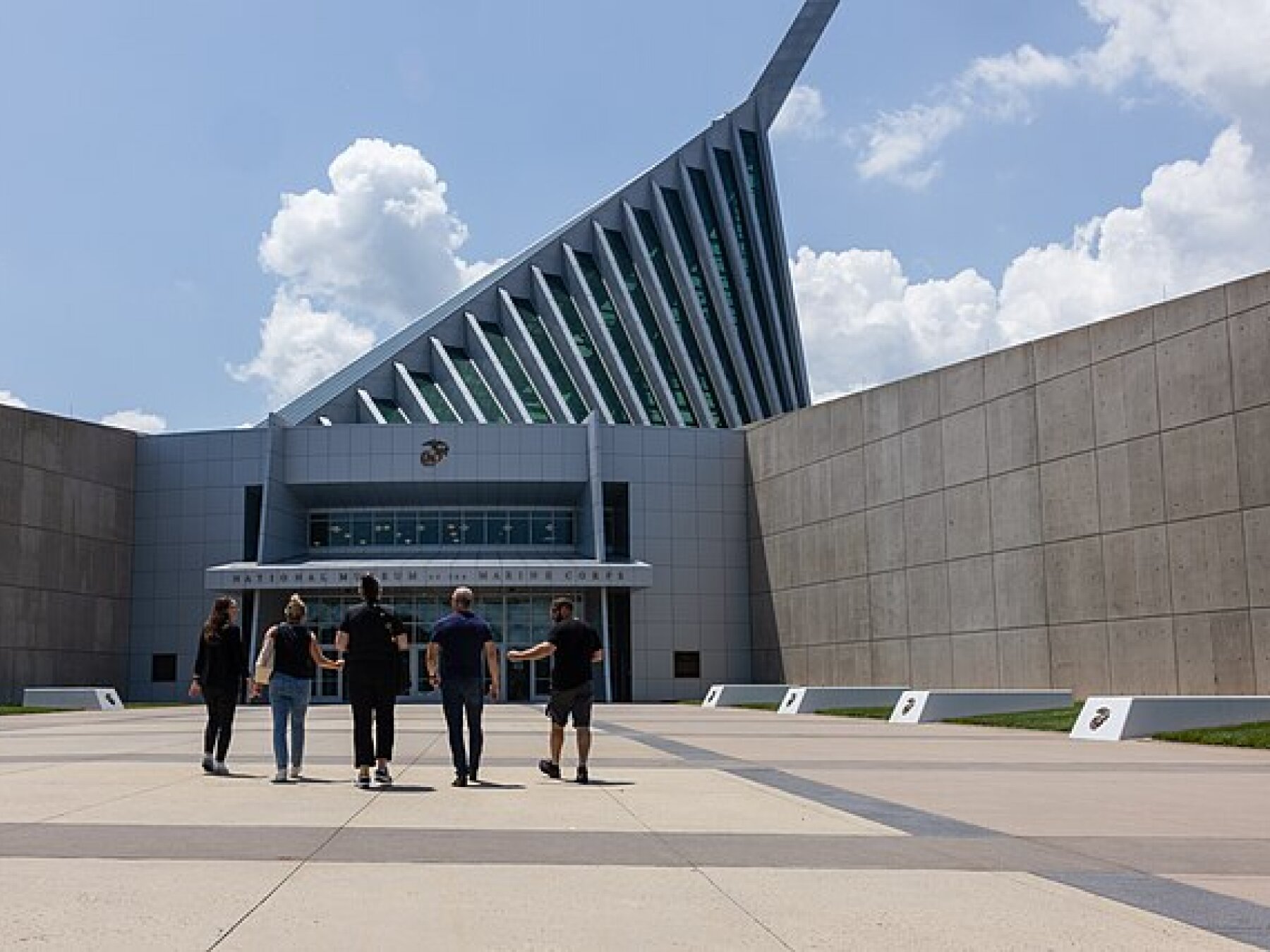
The museum opened in 2006 and stands at the edge of Marine Corps Base Quantico, often called the crossroads of the Corps. From the earliest days of the Revolution in 1775 to missions in the 21st century, the galleries inside trace the service and sacrifice of Marines across nearly two and a half centuries. Visitors who step inside find themselves walking through recreated battlefields: the beaches of the Pacific, the frozen ground of Korea, the jungles of Vietnam. Even the temperature and sounds are designed to bring those experiences closer to life.
But this museum is more than a collection of battles. It tells the human story of the Corps: the recruits at boot camp, the families who wait at home, the traditions and values that have shaped generations of Marines. Beyond the building itself lies Semper Fidelis Memorial Park, where trails wind past monuments that honor units, campaigns, and individuals.
Even as we drive by, the museum speaks. Its spire is visible for miles, a reminder that the Marines’ history is inseparable from the nation’s history. Passing here at the start of our journey, we carry forward that spirit of service and resilience, a fitting beginning as the miles ahead unfold.
Read More
I-95, Stafford, VA 22556, USA
Now, imagine this quiet waterway in 1861, during the opening months of the Civil War. Confederate artillery was positioned along Aquia Creek, attempting to halt Union ships on the Potomac. The Battle of Aquia Creek became one of the war’s earliest naval engagements, with cannons thundering across these waters. The Union eventually secured the area and transformed it into a bustling supply hub. Wharves, warehouses, and railroads sprang up almost overnight, feeding troops pressing deeper into Virginia. President Abraham Lincoln himself visited nearby Potomac Creek to watch engineers rebuild bridges that were destroyed almost as fast as they could be constructed.
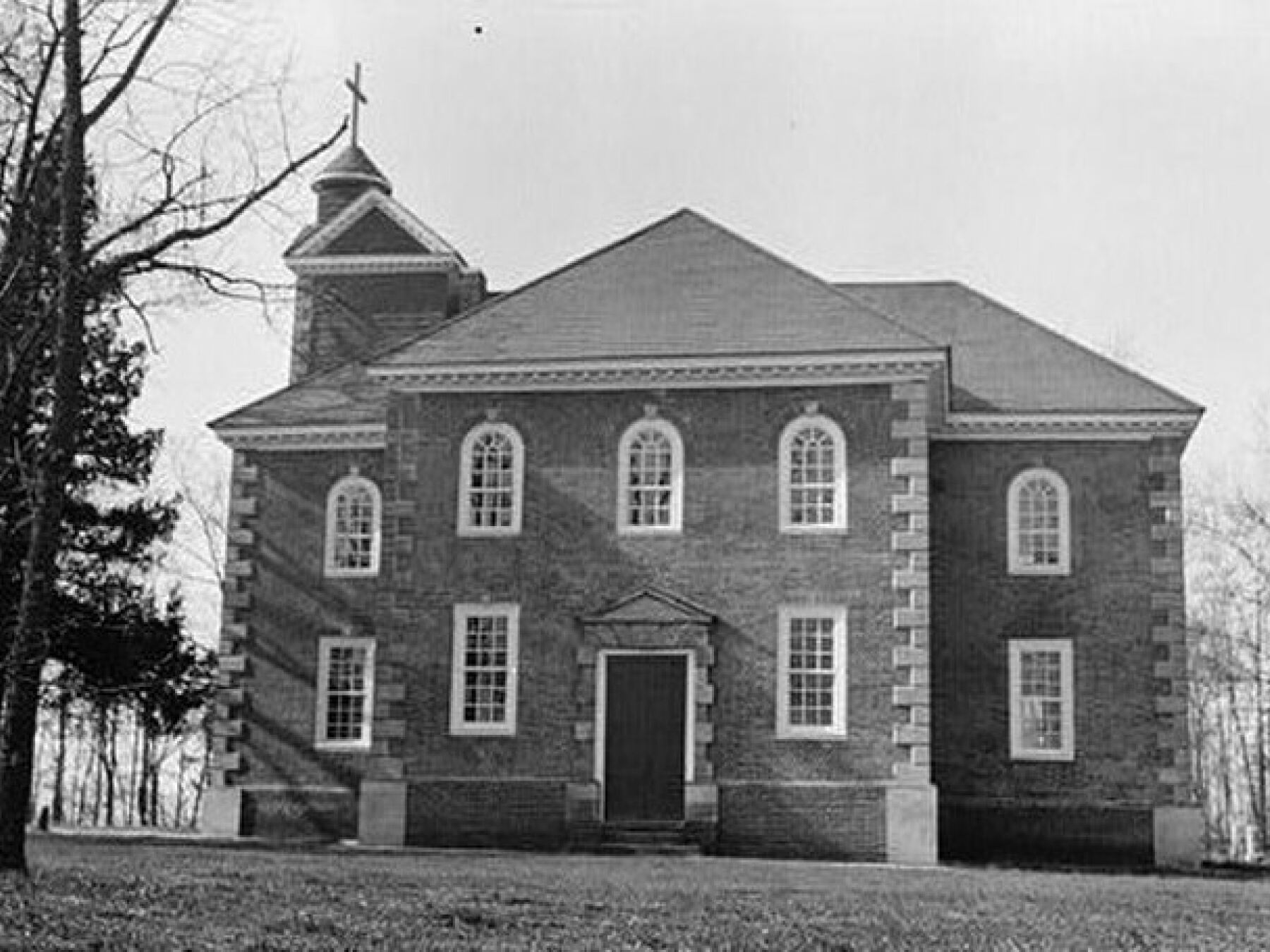
Aquia is also home to Aquia Episcopal Church. Completed in the 1750s, it is built of the same sandstone as the quarry. It has survived fire, war, and centuries of use, still standing as one of Virginia’s oldest colonial churches. George Washington passed through this region often while traveling between his boyhood home in Fredericksburg and Mount Vernon.
Today, the marinas and neighborhoods around Aquia Harbour mask its turbulent past, but the creek still carries the stories of stonecutters, soldiers, and statesmen who shaped a young nation.
Read More
Place 1
National Museum of the Marine Corps
Place 2
Aquia
Place 3
Stafford, Virginia
Place 4
Fredericksburg, Virginia
Place 5
Artillery Ridge
Place 6
Stonewall Jackson Shrine
Place 7
Nancy Wright's Corner
Place 8
Lake Caroline
Place 9
Secretariat's Birthplace
Place 10
Kings Dominion
Place 11
Ashland, Virginia
Place 12
Richmond's Quirky Side
Place 13
Richmond, Virginia Part 1
Place 14
Downtown Richmond, VA
Place 15
Richmond, Virginia Part 2
Place 16
The James River
Place 17
Petersburg, Virginia
Place 18
Transportation
Place 19
Stony Creek, Virginia
Place 20
Jarratt, Virginia
Place 21
Emporia, Virginia
Place 22
Virginia/North Carolina Border
Place 23
Roanoke Rapids, North Carolina
Place 24
Weldon, North Carolina
Place 25
Halifax, North Carolina
Place 26
North Carolina Countryside
Place 27
Enfield, North Carolina
Place 28
Whitakers, North Carolina
Place 29
Rocky Mount, North Carolina
Place 30
North Carolina Beaches
Place 31
Nashville, North Carolina
Place 32
US-64
Place 33
Southern Churches
Place 34
North Carolina Farmland
Place 35
Famous North Carolinians
Place 36
Five County Stadium
Place 37
Lizard Lick, North Carolina
Place 38
Raleigh, North Carolina
Place 39
Duke University
Place 40
North Carolina State University
Place 41
University of North Carolina
Place 42
Directions
Place 43
University Rivalries
Place 44
Raleigh Culture
Place 45
North Carolina State Capitol