
Duplicating
Tour copied successfully!

Places (POIs) visited during this tour

Place #1
Distance: 0.08mi , Attraction : Museum
Map Pin
On Main at 27th Street Northbound Nearside, Kansas City, MO 64108, USA
POI 1 Tour Image
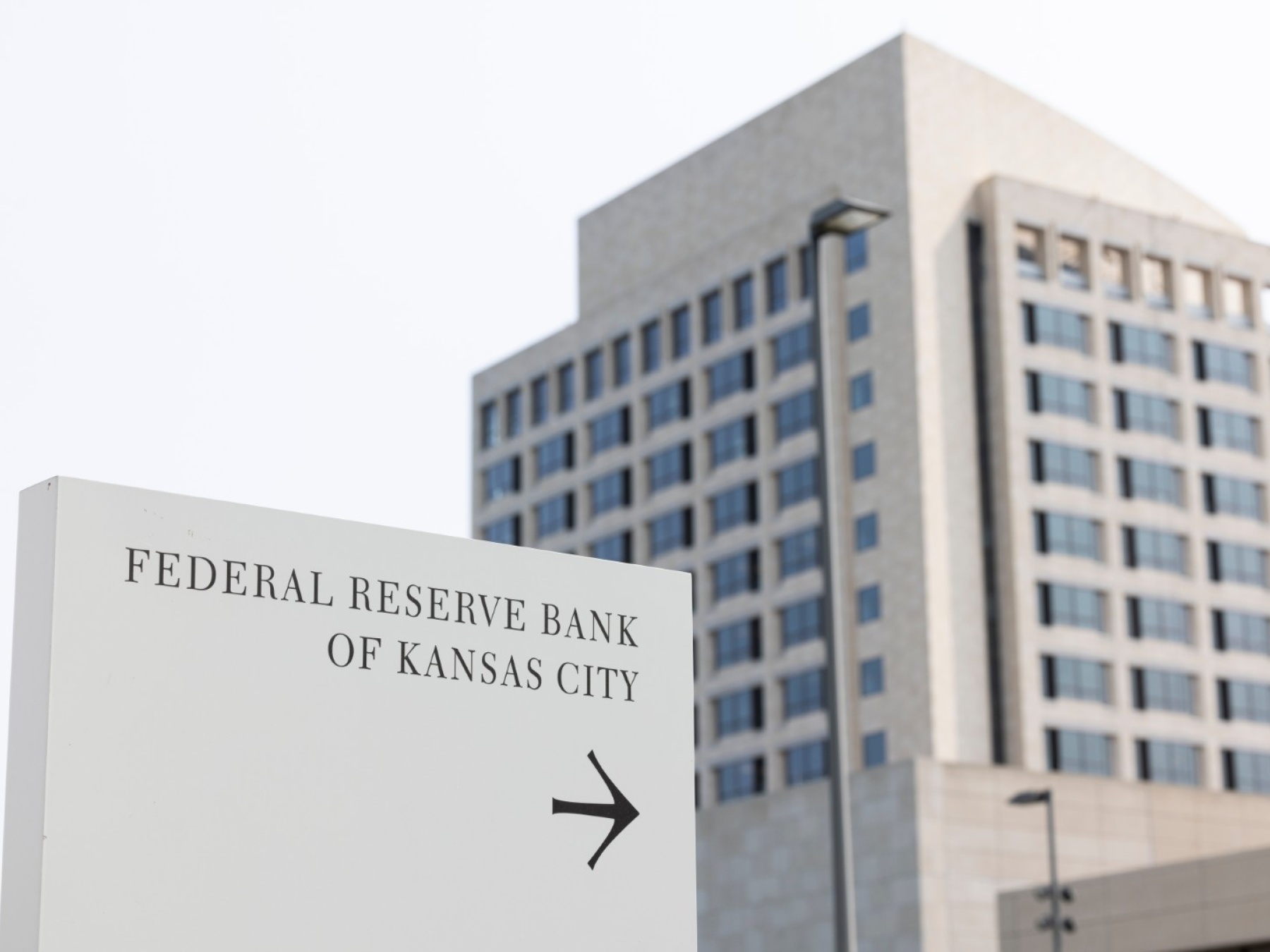
Money Museum
As we begin climbing the stairs toward Liberty Memorial, take a quick look behind you at that fairly unassuming office building.

Believe it or not, that’s home to Kansas City’s Money Museum — operated by the Federal Reserve Bank of Kansas City.

And despite the very official-looking exterior, there’s something pretty fun hidden inside:
millions upon millions of dollars in cash.

The museum gives visitors a behind-the-scenes look at how American money works — from printing and circulation to counterfeit detection and banking operations. You can even see enormous stacks of real currency stored inside secure vault areas.

Which is either fascinating… or the world’s most stressful workplace.

The Federal Reserve itself plays a major role in managing the U.S. financial system, helping oversee inflation, banking stability, and monetary policy across the country.

And Kansas City became an important Federal Reserve location partly because of its central position in the United States — right in the middle of major transportation, agricultural, and commercial networks.

So while the building may not look particularly exciting from the outside, it quietly plays a role in the movement and management of enormous amounts of money across America every single day.

Not bad for a building most people walk past without noticing.

Read More

  https://www.kansascityfed.org/money-museum/
Place #2
Distance: 0.21mi , Attraction : Museum, Memorial (Recommended selfie spot).
Map Pin
100-148 Liberty Memorial Mall, Kansas City, MO 64108, USA
POI 3 Tour Image
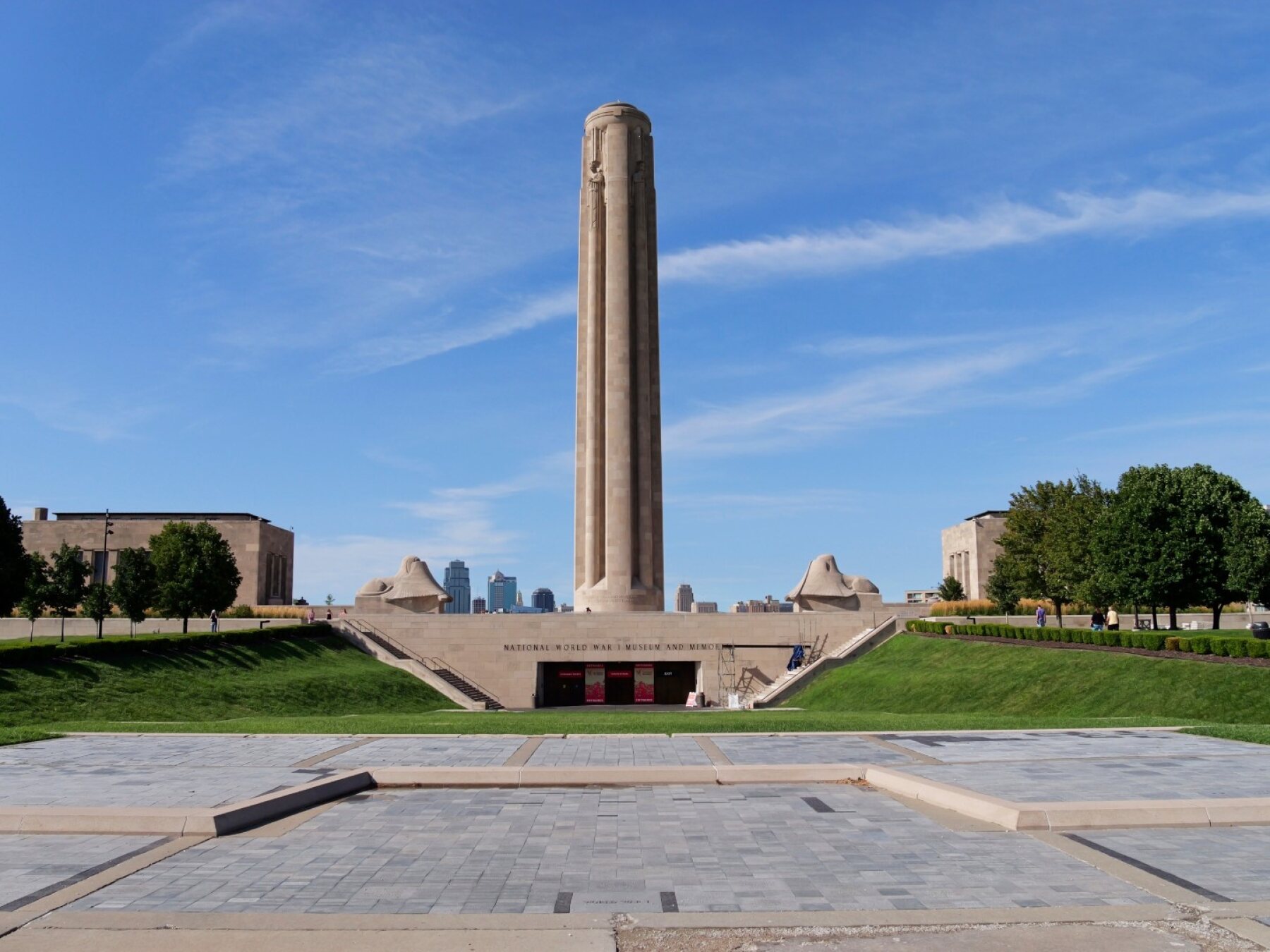
Liberty Memorial & National WWI Museum: Kansas City’s Tower of Remembrance
Standing before you is Liberty Memorial and the National World War I Museum — one of the most important historical landmarks in Kansas City and one of the most significant World War I memorials anywhere in the world.

And yes, that towering structure ahead of you is intentionally dramatic.

Completed in the 1920s, Liberty Memorial was built to honor the soldiers who served and died during World War I, a conflict so devastating that people at the time called it “The War to End All Wars.”

Unfortunately… history had other plans.

The memorial quickly became one of Kansas City’s defining landmarks. In fact, when it was dedicated in 1921, more than 100,000 people attended the ceremony, including military leaders from several Allied nations. It was one of the largest public gatherings in the city’s history.

Take a moment to appreciate the scale of the tower rising above you. At night, the top glows like a giant flame in the sky — symbolizing remembrance, sacrifice, and hope.

And the location itself was carefully chosen.

From here, you get one of the best panoramic views of downtown Kansas City, almost as if the memorial is watching over the city below.

Inside the museum, the experience becomes even more powerful. The National WWI Museum contains an extraordinary collection of artifacts, uniforms, weapons, personal letters, battlefield objects, photographs, and immersive exhibits exploring the global impact of the war.

But what makes the museum especially effective is that it focuses heavily on human stories — soldiers, families, nurses, civilians, and the enormous social changes triggered by the conflict.

World War I reshaped borders, governments, technology, and global politics in ways that still affect the world today.

And yet, compared to World War II, many people know surprisingly little about it.

Architecturally, the memorial itself blends classical monumentality with early twentieth-century symbolism, giving the entire complex a solemn but inspiring atmosphere.

This isn’t just a museum.
It’s a place built to remember the cost of war — and the lives forever changed by it.

Read More

  https://www.theworldwar.org/
Place #3
Distance: 0.13mi
Map Pin
2515 Kessler Rd, Kansas City, MO 64108, USA
POI 4 Tour Image
Kansas City IRS Center: Surprisingly Beautiful Taxes
On your left is the Kansas City IRS processing center — proof that even taxes occasionally get impressive architecture.

Now, let’s be honest. Few people travel across America thinking:
“You know what I’d love to see today? An IRS facility.”

But this complex actually hides an important piece of Kansas City history.

The historic portion of the building originally opened in 1933 as Kansas City’s grand Main Post Office during the golden age of rail travel. Back then, Union Station sat just across the street, and huge amounts of America’s mail moved through Kansas City by train.

At one point, this was reportedly one of the busiest post offices in the entire country.

The architecture reflects the era’s love for monumental federal buildings — massive stone walls, symmetry, and the kind of design meant to communicate stability, authority, and permanence.

Basically:
“Your mail is in very serious hands.”

Today, the old post office has been incorporated into the modern IRS campus, creating an unusual blend of historic civic architecture and one of the country’s major tax-processing centers.

And while taxes may not inspire much excitement, the building itself represents something bigger:
Kansas City’s historic importance as a transportation, logistics, and communication hub at the center of America’s railroad network.

Read More
Place #4
Distance: 0.27mi , Attraction : Train Station, Landmark (Recommended selfie spot).
Map Pin
165 W Pershing Rd, Kansas City, MO 64108, USA
POI 5 Tour Image
Historic Union Station: Kansas City’s Grand Gateway
Down the hill across the road is the Historic Union Station — one of the great railroad landmarks of the American Midwest and one of Kansas City’s most beautiful historic buildings.

When Union Station opened in 1914, this was one of the busiest train stations in the entire country. Tens of thousands of passengers passed through here every day during the golden age of rail travel, when trains were the fastest and most glamorous way to cross America.

And Kansas City was perfectly positioned for it.

Located near the geographic center of the United States, Kansas City became a major transportation hub where rail lines, freight, commerce, livestock, and travelers all converged. If goods were moving east to west or north to south across America, there was a good chance they passed through here.

Take a look at the architecture. The station was designed in the Beaux-Arts style, inspired by the grand railway terminals of Europe. Massive arches, soaring ceilings, marble details, chandeliers, and monumental spaces were all meant to create a sense of importance and arrival.

Back then, train stations weren’t just transportation centers.

They were symbols of civic pride.

At its peak during World War II, more than a million travelers passed through Union Station in a single year, including huge numbers of soldiers moving across the country.

But like many American train stations, Union Station later declined as air travel and highways replaced passenger rail. By the late twentieth century, much of the building sat largely empty and deteriorating.

Then came one of Kansas City’s greatest preservation success stories.

A massive restoration effort brought the station back to life, transforming it into a cultural destination filled with exhibits, restaurants, theaters, science attractions, and public events while preserving its historic beauty.

And honestly, the building feels cinematic.

The giant Grand Hall, with its enormous chandeliers and dramatic scale, looks like the kind of place where you expect a movie scene, a political speech, or someone running to catch a train at the last second.

Today, Union Station remains both a functioning transportation hub and a reminder of the era when railroads helped shape modern America — and when Kansas City stood right at the center of it all.

Read More

  https://unionstation.org/
Place #5
Distance: 0.21mi
Map Pin
Two Pershing Square, 2300 Main St, Kansas City, MO 64108, USA
POI 6 Tour Image
Western Auto Building: Kansas City’s Glowing Icon
On your right is one of the most recognizable landmarks in Kansas City — the historic Western Auto Building, crowned by its famous glowing rooftop sign.

If you’ve seen photos of the Kansas City skyline at night, there’s a good chance you’ve seen that sign glowing in bright red letters above the city.

And locals absolutely love it.

The building dates back to 1915 and originally served as the headquarters for the Western Auto Supply Company, a major national retailer that sold everything from auto parts and tools to radios, sporting goods, bicycles, and household products.

Think of it as an early twentieth-century combination of Amazon, AutoZone, and Sears.

At its peak, Western Auto became one of the country’s largest retail chains, and this building symbolized Kansas City’s importance as a growing center of commerce, transportation, and industry.

The giant rooftop sign was added later and eventually became one of the city’s defining visual landmarks. Even after the company declined and downtown Kansas City went through difficult decades of economic slowdown and urban decline, many residents fought passionately to preserve the sign.

Because by that point, it had become more than advertising.

It had become part of Kansas City’s identity.

Today, the old warehouse and office building has been transformed into residential lofts, part of downtown’s broader revival and repopulation. And honestly, that transformation mirrors the story of Kansas City itself — historic industrial buildings finding new life in a changing urban landscape.

Architecturally, the building is also a great example of early commercial warehouse design, with strong brick construction, large industrial windows, and the kind of practical urban architecture that once dominated American railroad cities.

And then of course… there’s the sign.

Simple, bold, glowing, and instantly recognizable.

Sometimes the best city landmarks aren’t the fanciest ones — they’re the ones people emotionally connect with for generations.

Read More
Place #6
Distance: 0.13mi
Map Pin
2020 W Baltimore Ave #400, Kansas City, MO 64108, USA
POI 7 Tour Image
Jack Stack & Stuart Hall: From Freight Trains to Famous BBQ
On your left is Jack Stack Barbecue, one of Kansas City’s best-known BBQ destinations, located inside the historic Freight House building.

And honestly, few combinations feel more Kansas City than smoked meat inside a restored railroad warehouse.

The Freight House dates back to the late nineteenth century, when this entire area was deeply tied to Kansas City’s booming rail industry. Freight trains moved constantly through the district carrying livestock, meat, grain, machinery, and commercial goods across the country.

Back then, this neighborhood was loud, industrial, smoky, and packed with rail activity.

Today, instead of freight shipments, people mostly come here for burnt ends.

Which may actually be an improvement.

Kansas City barbecue is serious business here. The city developed its own BBQ style known for slow-smoked meats, rich sauces, and a tradition deeply connected to stockyards, meatpacking, and working-class communities.

And if you hear locals debating who has the best BBQ in the city… do not step into that argument lightly.

Up ahead, you’ll also see Stuart Hall, another historic building connected to Kansas City’s railroad and warehouse era. Structures like these helped define the Crossroads and Freight House districts during the city’s rise as a transportation and distribution powerhouse in the American Midwest.

What makes this area especially interesting today is the contrast between old and new.

Historic industrial buildings that once handled freight and commerce have been transformed into restaurants, lofts, galleries, offices, and gathering spaces, helping create one of Kansas City’s most vibrant neighborhoods.

And unlike some redeveloped districts that lose their original character, this area still feels connected to its industrial roots — brick warehouses, rail history, heavy architecture, and all.

Read More
Place #7
Distance: 0.23mi
Map Pin
2019 Wyandotte St, Kansas City, MO 64108, USA
POI 8 Tour Image
Crossroads & Freight House District: Kansas City Reinvents Itself
Welcome to the Crossroads Arts District and the historic Freight House area — one of the most creative, energetic, and transformed neighborhoods in Kansas City.

What you’re walking through today was once the industrial backbone of the city.

In the late nineteenth and early twentieth centuries, this area sat directly alongside major railroad lines feeding Kansas City’s explosive growth as a transportation and distribution hub. Warehouses, freight depots, factories, and commercial buildings filled the district, handling goods moving across the country by rail.

It was gritty, loud, smoky, and built entirely around commerce.

Then, like many industrial urban districts across America, the area declined.

As rail activity decreased and businesses moved outward, many warehouses sat empty or underused for decades. Some people viewed the neighborhood as forgotten.

Artists saw opportunity.

Beginning in the late twentieth century, galleries, studios, cafés, breweries, music venues, restaurants, and creative businesses slowly moved into the old industrial buildings, bringing entirely new life into the district.

And that transformation changed downtown Kansas City.

Today, Crossroads has become one of the city’s cultural and social centers, known for murals, public art, local businesses, loft apartments, nightlife, and the famous First Fridays events that attract huge crowds every month.

Take a look around and notice how much of the industrial architecture remains intact. Exposed brick, warehouse windows, loading docks, faded painted signs, rail infrastructure, and converted factory spaces still define the neighborhood’s character.

That authenticity is part of what makes Crossroads work so well.

It doesn’t feel overly polished or artificial. It still feels connected to the Kansas City that built railroads, moved freight, processed livestock, and powered commerce across the Midwest.

And now, somehow, all of that history coexists with cocktail bars, galleries, coffee shops, live music, and some very good barbecue.

Read More
Place #8
Distance: 0.06mi
Map Pin
1803 Wyandotte St APT 102, Kansas City, MO 64108, USA
POI 9 Tour Image
Crossroads Warehouse Buildings: From Rail Industry to Creative Energy
Take a look at the brick warehouse building on your right.

This structure is some of the clearest reminders of Kansas City’s industrial and railroad past.

In the late nineteenth and early twentieth centuries, this area sat right beside major rail lines and freight activity that helped turn Kansas City into one of America’s most important transportation and distribution hubs.

Goods, livestock, machinery, food products, and materials constantly moved through these warehouses as trains connected the city to the rest of the country.

Back then, this neighborhood was all business.

The buildings were designed for practicality — thick brick walls, large industrial windows, loading docks, freight access, and open interiors built to handle storage, manufacturing, and commercial operations.

And honestly, nobody building them at the time was thinking: “One day this would become an arts district with coffee shops, murals, and plant stores.”

But cities evolve.

As industrial activity declined and businesses moved elsewhere, many of these warehouses became underused or abandoned. Then artists, creatives, galleries, and small businesses slowly began reclaiming the neighborhood, transforming old industrial spaces into studios, apartments, restaurants, breweries, and cultural spaces.

That transformation helped create the modern Crossroads Arts District you see today.

What makes this area especially interesting is that it still feels connected to its industrial roots. Unlike some redeveloped districts that become overly polished, Crossroads kept much of its original warehouse character — exposed brick, freight buildings, rail history, murals, and gritty urban texture included.

And that mix gives the neighborhood its personality.

So while the businesses inside these buildings may continue changing, the structures themselves still tell the story of the Kansas City that helped build modern America through railroads, commerce, and industry.

Read More
Place #9
Distance: 0.17mi
Map Pin
1696 Wyandotte St, Kansas City, MO 64108, USA
POI 10 Tour Image
Kansas City Symphony Offices: A Different Side of Kansas City
Up ahead on your left are the offices of the Kansas City Symphony — a reminder that Kansas City’s identity goes far beyond barbecue, jazz clubs, and railroads.

The symphony is one of the city’s major cultural institutions and plays a huge role in Kansas City’s performing arts scene, attracting musicians and audiences from across the region.

And honestly, this surprises some visitors.

Kansas City often flies under the radar culturally compared to cities like Chicago or New York, but the city has built a remarkably strong arts community over the years — including symphonies, ballet, opera, theater, jazz, galleries, and public art spread throughout downtown and the Crossroads district.

The Kansas City Symphony performs primarily at the nearby Kauffman Center for the Performing Arts, one of the city’s architectural landmarks with its striking modern design overlooking downtown.

What’s especially interesting is how well the arts fit into Kansas City’s personality.

This has always been a city connected to music. Jazz clubs once filled nearby districts during the Prohibition era, musicians traveled through Kansas City along railroad routes, and live performance became deeply woven into local culture.

The symphony represents another chapter in that musical tradition — one built around orchestras, concert halls, and classical performance rather than smoky jazz clubs and late-night bars.

And yet both belong to the same city.

Today, the arts scene continues helping fuel downtown Kansas City’s revival, bringing energy, nightlife, visitors, and creativity into neighborhoods that were once heavily industrial or underused.

So while this building may look fairly quiet from the outside, it’s connected to a much larger story:
Kansas City evolving into a city where culture, creativity, and performance play just as important a role as industry and commerce once did.

Read More
Place #10
Distance: 0.16mi
Map Pin
1662 Broadway Blvd, Kansas City, MO 64108, USA
POI 11 Tour Image
Kauffman Center for the Performing Arts: Kansas City’s Modern Icon
Standing before you is the Kauffman Center for the Performing Arts — one of the most recognizable modern landmarks in Kansas City.

From here at the front, the building feels elegant, polished, and almost futuristic, with its massive glass walls and sweeping curves rising above downtown.

But as we continue walking toward the back side of the building, you’ll notice something even more interesting.

It starts looking less like a concert hall… and more like a spaceship preparing for launch.

Honestly, once you see it, you can’t unsee it.

Opened in 2011 and designed by world-renowned architect Moshe Safdie, the Kauffman Center was built to become both a world-class performing arts venue and a bold architectural statement for Kansas City.

Mission accomplished.

The structure houses major performance spaces for the Kansas City Symphony, ballet, opera, and theater productions, helping establish downtown as a serious cultural destination.

But the architecture itself became part of the attraction.

The design intentionally uses dramatic curves, reflective surfaces, flowing lines, and enormous glass expanses to create movement and openness. Depending on the angle, people compare it to sails, shells, waves, or futuristic sci-fi structures.

And from the rear especially… very strong spaceship energy.

The building also symbolizes Kansas City’s broader transformation in the twenty-first century. Areas around downtown that once felt heavily industrial or underused have increasingly evolved into centers for arts, entertainment, nightlife, and urban living.

The Kauffman Center became one of the clearest visual symbols of that new era.

And what makes it especially effective is its placement overlooking the skyline. The building almost feels like it’s watching over downtown Kansas City while simultaneously trying to launch out of it.

Which honestly feels very appropriate for a city constantly reinventing itself.

Read More
Place #11
Distance: 0.19mi
Map Pin
501-461 W 16th St, Kansas City, MO 64108, USA
POI 12 Tour Image
Kauffman Center Back View: Kansas City’s Spaceship
Now that you’re behind the Kauffman Center, you can really appreciate why so many people compare this building to a spaceship.

From the rear, the sweeping curves and futuristic design feel dramatically different from the elegant glass façade at the front. It almost looks ready to lift off above downtown Kansas City.

Architect Moshe Safdie designed the building to feel dynamic and fluid from every angle, making the structure itself part of the artistic experience.

And honestly, this may be one of the few concert halls where people spend nearly as much time photographing the outside as enjoying the performances inside.
Place #12
Distance: 0.14mi , Attraction : Entertainment District (Recommended selfie spot).
Map Pin
1360 Main St, Kansas City, MO 64105, USA
POI 14 Tour Image
Power & Light District: Kansas City After Dark
Welcome to the Power & Light District — the modern entertainment heart of downtown Kansas City.

If parts of today’s tour focused on railroads, warehouses, jazz history, and historic architecture, this area represents Kansas City’s newer chapter: nightlife, sports, concerts, restaurants, and downtown revival.

And at night, this place gets loud.

The district takes its name from the historic Kansas City Power & Light Building nearby, one of the city’s iconic Art Deco skyscrapers. But today, the name mostly refers to this larger entertainment district filled with bars, music venues, giant screens, patios, restaurants, and event spaces designed to bring energy back into downtown.

Because for many years, downtown Kansas City struggled after businesses and residents moved outward into suburban areas.

Then came a major reinvestment effort.

Projects like the Sprint Center — now T-Mobile Center — nearby, the streetcar line, downtown housing growth, and entertainment development helped transform this area into one of the city’s busiest gathering spaces.

Today, the district becomes especially active during concerts, sporting events, conventions, and weekends, when crowds fill the streets and the atmosphere shifts from business district to party zone.

And if you’re noticing the mix of old and new architecture around you, that’s very intentional.

Historic buildings were preserved and integrated into newer construction, helping the district maintain at least some connection to Kansas City’s earlier urban character instead of feeling entirely artificial.

Now, depending on who you ask locally, opinions about the district can vary. Some people love the energy and revitalization. Others miss the grittier older downtown that existed before redevelopment.

Which honestly happens in almost every city reinventing itself.

But regardless of opinion, there’s no question the Power & Light District helped bring people, nightlife, and momentum back into downtown Kansas City.

And after walking through the city’s industrial roots, railroad history, arts districts, and cultural landmarks, this feels like a fitting final chapter:
modern Kansas City alive, social, growing, and still evolving.

Read More

  https://www.powerandlightdistrict.com/
Place #13
Distance: 0.29mi , Attraction : Arena, Venue (Recommended selfie spot).
Map Pin
1330 Grand Blvd, Kansas City, MO 64106, USA
POI 15 Tour Image
T-Mobile Center: Kansas City’s Entertainment Giant
Standing before you is the T-Mobile Center — the massive arena that helped reshape downtown Kansas City’s modern revival.

Opened in 2007, the arena quickly became one of the city’s major entertainment anchors, bringing concerts, sporting events, tournaments, and huge crowds back into the urban core.

And in many ways, this building helped change downtown’s energy entirely.

Before projects like this, parts of downtown Kansas City could feel surprisingly quiet after business hours. But the arena — combined with nearby development like the Power & Light District — helped transform the area into a true entertainment destination.

Today, tens of thousands of people regularly flow through these streets for major events.

The arena hosts everything from huge concert tours and college basketball tournaments to UFC fights, comedy shows, and national events. And because Kansas City sits near the geographic center of the country, it became a convenient stop for many major touring acts crossing the United States.

Architecturally, the building was intentionally designed with a sleek, modern appearance — lots of glass, steel, lighting, and open public space meant to energize the surrounding district.

And unlike many older arenas hidden behind giant parking lots, this one was integrated directly into downtown’s walkable streets and entertainment zones.

That urban integration became a huge part of downtown Kansas City’s rebirth.

Interestingly, despite being a major-league sports city, Kansas City’s arena has never permanently landed an NBA or NHL franchise, though rumors and speculation seem to return every few years.

Locals have debated it for ages.

But even without a permanent team, the arena became enormously successful as a flexible entertainment venue and remains one of the busiest buildings in the city.

And when events let out at night, the entire district around you comes alive with lights, music, traffic, restaurants, bars, and crowds filling the streets.

It’s Kansas City at full volume.

Read More

  https://www.t-mobilecenter.com/
Place #14
Distance: 0.12mi , Attraction : Government Building, Landmark (Recommended selfie spot).
Map Pin
City Hall, Kansas City, MO 64106, USA
POI 16 Tour Image
Kansas City Hall: Power Above the City
Rising above on your right is Kansas City Hall — one of the tallest city halls in the United States and one of downtown Kansas City’s most recognizable government buildings.

Completed in 1937, the tower reflects the Art Deco architectural style that became popular during the early twentieth century, especially in rapidly growing American cities eager to project confidence, progress, and modernity.

And Kansas City was definitely feeling ambitious at the time.

Take a look at the building’s strong vertical lines, limestone exterior, and stepped design pulling your eyes upward toward the tower. Unlike older city halls that spread horizontally like palaces or capitol buildings, this one rises like a skyscraper — almost blending civic government with corporate downtown architecture.

Which honestly fits Kansas City pretty well.

The building was constructed during the era of political boss Tom Pendergast, one of the most powerful and controversial figures in Kansas City history. Pendergast’s political machine heavily influenced the city during the 1920s and 1930s, overseeing enormous public works projects, infrastructure expansion, and downtown development.

Now… depending on who you ask, he was either a corrupt political boss or the man who helped modernize Kansas City.

Possibly both.

His era shaped much of the city you see today.

Inside City Hall are the offices of Kansas City’s mayor and municipal government, managing everything from public services and development to transportation and city planning.

And just like many parts of downtown Kansas City, the building represents a fascinating blend of old and new:
historic civic ambition standing alongside a constantly evolving modern skyline.

If you look carefully, you may also notice how Art Deco architecture appears throughout downtown Kansas City — a reminder of the city’s major growth period during the early twentieth century, when railroads, jazz, commerce, and political power were all reshaping the urban landscape.

And standing here beneath City Hall, you can still feel some of that ambition reaching upward into the skyline.

Read More

  https://www.kcmo.gov/city-hall
Place #15
Distance: 0.35mi , Attraction : Park (Recommended selfie spot).
Map Pin
401 E 10th St, Kansas City, MO 64106, USA
POI 17 Tour Image
Whittaker Federal Courthouse
Up ahead is the impressive Charles Evans Whittaker U.S. Courthouse, home to the United States District Court for the Western District of Missouri.

Completed in 1999, this massive federal courthouse was designed to reflect both authority and openness — not always an easy balance for government architecture. Its clean limestone exterior, tall glass sections, and symmetrical design give it a modern but still very formal appearance.

The courthouse is named after Charles Evans Whittaker, a Kansas City native who served as a Justice of the United States Supreme Court during the 1950s under President Dwight Eisenhower.

Federal courthouses handle some of the country’s most significant legal cases — everything from organized crime and corruption investigations to constitutional disputes and major financial crimes. So while the building may appear calm and quiet from the outside, inside it’s often the setting for extremely high-stakes decisions.

This area is also part of Kansas City’s larger civic and government district, surrounded by courthouses, municipal buildings, and historic architecture that helped shape the city’s role as a major Midwestern center for commerce, transportation, and law.

And like many federal buildings built after the 1990s, you may notice the large setbacks and security-focused design around the property — subtle reminders of how government architecture changed in response to modern security concerns.

Read More

  https://kcparks.org/places/ilus-davis-park/
Place #16
Distance: 0.38mi , Attraction : Library, Landmark (Recommended selfie spot).
Map Pin
14 W 10th St, Kansas City, MO 64105, USA
POI 18 Tour Image
Kansas City Public Library — The Giant Bookshelf Landmark
On your right is the remarkable Kansas City Public Library - Central Library, one of the city’s most recognizable landmarks.

And yes — those giant books along the parking garage wall are real. Well… sort of. The massive “Community Bookshelf” was designed to look like oversized book spines lined up on a shelf, turning an ordinary parking structure into a public art installation.

The titles were chosen through a community vote, with Kansas City residents nominating books that shaped them or represented important classics. You’ll spot famous titles ranging from To Kill a Mockingbird to The Lord of the Rings and Charlotte’s Web.

The library itself is housed inside the historic First National Bank building, blending early 20th-century architecture with a modern public space filled with reading rooms, exhibitions, events, and cultural programs.

Over the years, the Kansas City Public Library became known not only for books, but also for creative urban projects that helped revitalize downtown Kansas City and make public spaces feel more engaging and accessible.

It’s honestly one of those places where even people who don’t usually get excited about libraries suddenly stop and say, “Okay… that’s pretty cool.”

  https://kclibrary.org/
Place #17
Distance: 0.44mi , Attraction : Museum
Map Pin
801 Broadway Blvd, Kansas City, MO 64105, USA
POI 19 Tour Image
Historic Garment District — Kansas City’s Fashion Industry Legacy
Welcome to Kansas City’s historic Garment District, once one of the city’s major manufacturing and business hubs.

For decades, this neighborhood was filled with clothing factories, textile warehouses, sewing workshops, and fashion businesses. Thousands of workers — many of them immigrants and women — helped make Kansas City an important center for the American garment industry during the early and mid-20th century.

The former Garment District Museum that was in the building to your right once helped preserve that story through exhibits, vintage clothing, and a recreated 1940s factory floor. Although the museum itself has closed, the neighborhood still carries the history of the industry that shaped this part of downtown.

Many of the brick warehouses and industrial buildings you see around here originally supported garment production and distribution. At its peak, the district buzzed with workers, delivery trucks, fabric suppliers, and factory activity.

Today, the area has evolved into a mix of apartments, offices, restaurants, and creative spaces, but it remains an important reminder of Kansas City’s industrial and working-class past.

It’s one of those places where the original purpose of the neighborhood may have changed, but the architecture still quietly tells the story.

Read More

  https://www.kcgarmentdistrict.org/
Place #18
Distance: 0.07mi
Map Pin
426 Delaware St, Kansas City, MO 64105, USA
POI 20 Tour Image
Donutology & Betty Rae’s: Kansas City’s Sweet Side
On your left is one of the sweeter corners of Kansas City.

First up is Donutology — the quirky donut shop inside a restored historic Kansas City streetcar. And not just any streetcar.

This is a restored 1947 Kansas City PCC streetcar, known as Car No. 551.

Back in the mid-twentieth century, streetcars like this once rolled through Kansas City carrying commuters across the city long before modern highways and parking garages took over downtown life. The trolley later operated in other cities before eventually returning home to Kansas City.

Today, instead of transporting passengers, Car No. 551 mostly transports donuts.

Honestly, that feels like a pretty successful retirement plan.

Donutology became known for its customizable mini donuts, colorful toppings, playful flavors, and creative atmosphere that fits perfectly with the surrounding neighborhood energy.

And just nearby is Betty Rae’s Ice Cream, another local favorite famous for handmade small-batch ice cream and inventive flavors that Kansas City locals absolutely swear by.

This stop also captures something fun about modern Kansas City:
the city has become very good at reinventing old infrastructure and historic spaces into places people genuinely enjoy spending time in.

An old streetcar becomes a dessert shop.
Industrial warehouses become art galleries.
Freight districts become nightlife destinations.

Kansas City has a nice way of giving old things new life.

And honestly, donuts inside a vintage trolley followed by ice cream sounds like a pretty good urban planning strategy.

Read More
Place #19
Distance: 0.09mi , Attraction : Neighborhood, Market (Recommended selfie spot).
Map Pin
13 W 5th St, Kansas City, MO 64105, USA
POI 21 Tour Image
River Market District — Kansas City’s Historic Riverfront Neighborhood
Welcome to the lively River Market district, one of the oldest and most historic parts of Kansas City.

Long before downtown skyscrapers, sports arenas, and entertainment districts existed, this area near the Missouri River was the commercial heart of the city. In the 1800s, riverboats arrived here carrying goods, travelers, livestock, and supplies, helping transform Kansas City into a booming frontier town and transportation hub.

The neighborhood grew rapidly thanks to its location along the river and near expanding railroad lines. Warehouses, produce markets, hotels, saloons, and trading businesses filled the streets, creating a busy and sometimes chaotic center of commerce.

Today, River Market blends that history with a much more modern atmosphere. The old brick warehouses and industrial buildings have been transformed into cafés, apartments, restaurants, breweries, and local shops, while still preserving the district’s historic character.

One of the neighborhood’s biggest attractions is the famous City Market, one of the largest and oldest public farmers markets in the Midwest. On weekends, the area fills with local vendors, fresh produce, spices, flowers, street performers, and food from cultures around the world.

You’ll also notice the KC Streetcar running through the neighborhood — part of the city’s modern effort to reconnect downtown districts and encourage walkable urban life.

River Market is a great example of how Kansas City reinvented its historic industrial neighborhoods instead of simply tearing them down. The result is a district that still feels connected to the city’s early roots while remaining one of its liveliest gathering places today.

Read More

  https://thecitymarket.org/river-market
Place #20
Distance: 0.08mi , Attraction : Market, Food Hall (Recommended selfie spot).
Map Pin
104 E 5th St Suite 204, Kansas City, MO 64106, USA
POI 22 Tour Image
The City Market — Kansas City’s Historic Marketplace
Welcome to the famous City Market, one of the oldest and largest public markets in the Midwest.

This area has been a center of trade and commerce since the 1800s, back when Kansas City was still a rough frontier river town growing rapidly along the Missouri River.

For generations, farmers, merchants, wagon traders, and later railroad suppliers brought produce, meat, spices, flowers, and goods here to sell to the growing city. The market became a gathering place where people from very different backgrounds mixed together — something that still defines the area today.

Even now, City Market remains one of Kansas City’s liveliest neighborhoods. On weekends especially, the area fills with local vendors, fresh produce stands, international food stalls, musicians, cafés, and crowds of both locals and visitors.

One of the things people love most about the market is its international character. You’ll find flavors and ingredients from all over the world packed into just a few city blocks — Middle Eastern groceries, Latin American bakeries, Asian markets, spices, fresh coffee, and plenty of local Kansas City favorites mixed together.

The surrounding brick buildings and warehouses also reflect the neighborhood’s industrial and commercial past. Many have been restored into apartments, restaurants, offices, and small shops while still preserving the historic atmosphere of the River Market district.

And honestly, this is one of the best places in Kansas City to simply slow down for a bit, wander around, grab a snack or coffee, and enjoy the energy of the neighborhood.

Read More

  https://thecitymarket.org/
Place #21
Distance: 0.42mi , Attraction : Museum (Recommended selfie spot).
Map Pin
415 Grand Blvd, Kansas City, MO 64106, USA
POI 23 Tour Image
Arabia Steamboat Museum — Treasure from a Sunken Steamboat
On your right is the remarkable Arabia Steamboat Museum, home to one of the most unusual archaeological discoveries in the United States.

The museum tells the story of the Steamboat Arabia, which sank in the Missouri River in 1856 after hitting a submerged tree while carrying hundreds of tons of cargo to frontier towns across the American West.

Over time, the river changed course, mud buried the wreck, and the steamboat disappeared beneath farmland for more than a century. Then, in the late 1980s, treasure hunters finally located it buried deep underground — far from the modern river itself.

What they uncovered was extraordinary. Because the cargo had been sealed in mud without oxygen, thousands of everyday objects were preserved almost perfectly: shoes, tools, dishes, clothing, toys, bottles, food containers, and supplies from the 1850s.

The result became an incredible time capsule of life in pre-Civil War America — not the lives of presidents or generals, but the lives of ordinary people moving westward during the frontier era.

It’s also a reminder of how wild and unpredictable the Missouri River once was before modern flood control reshaped it.

Today, the Arabia Steamboat Museum remains one of Kansas City’s most unique attractions — part history museum, part treasure hunt, and part perfectly preserved snapshot of 1850s America.

We are now heading toward the final point of interest on this tour: the Missouri River Viewing Deck.

Read More

  https://1856.com/
Place #22
Distance: 0.00mi
Map Pin
Add title here
POI 24 Tour Image
Missouri River Viewing Deck — Where Kansas City Began
Welcome to the Missouri River viewing deck near the historic Town of Kansas Bridge, a perfect final stop for our tour.

Standing here, overlooking the Missouri River, you’re looking at the reason Kansas City exists at all.

Long before skyscrapers, railroads, jazz clubs, or barbecue restaurants, this river was the lifeline of the American frontier. In the 1800s, steamboats carried people, supplies, livestock, and trade goods along these waters, turning this area into a critical gateway to the expanding American West.

The original settlement known as the “Town of Kansas” was established nearby in 1838. At the time, this was considered the edge of the frontier — a rough but rapidly growing river town where traders, merchants, pioneers, and travelers gathered before continuing westward.

From this viewpoint, you can also clearly see two important pieces of Kansas City infrastructure spanning the river.

One is the massive BNSF railway bridge, still heavily used by freight trains today. Kansas City remains one of the largest rail hubs in the United States, and this bridge is a reminder of how railroads transformed the city from a frontier river town into a major transportation and shipping center.

You can also spot the Buck O’Neil Bridge, officially carrying U.S. Route 169 across the Missouri River. The bridge is named after legendary Kansas City baseball figure Buck O'Neil, one of the city’s most beloved public figures and an important ambassador for Negro Leagues history and the game of baseball itself.

The river itself was both valuable and dangerous. Before modern flood control systems, the Missouri River constantly shifted course, flooded nearby land, and created major hazards for steamboat navigation. Entire boats disappeared beneath the muddy waters — including the famous Steamboat Arabia we mentioned earlier.

Today, the area around the river has been transformed into parks, trails, museums, and modern neighborhoods, but the Missouri River still feels like the historic backbone of the city.

And honestly, it’s a fitting place to end our journey. Kansas City grew from this riverfront into a major American transportation hub, a railroad city, a jazz capital, a barbecue legend, and one of the Midwest’s most underrated cities.

We hope you enjoyed exploring Kansas City with us.

And if you’d like to keep exploring, don’t forget that UCPlaces also offers a much larger Kansas City driving tour covering even more of the city — including the famous Jazz District, beautiful fountains, historic avenues, scenic parks, impressive architecture, and many additional neighborhoods and hidden gems beyond downtown.

If you had a great time, please take a moment to leave a review on the App Store or Google Play. It truly helps us continue creating more tours around the world.

Thank you for exploring with UCPlaces, and we hope to see you again on another adventure soon.

Read More
 
How to take a UCPlaces tour
Taking a UCPlaces tour is fun and easy.
Download the app (Android or iOS), purchase the tour (either here on the website, or from within the app).
That's it, you're ready to go!
When you want to start the tour, find the tour in the app (via a quick in-app search or by clicking the tour link received in your confirmation email) and click "Start Tour" (headphones recommended for best experience.)
* After purchasing a tour you will receive a purchase confirmation email including the tour link and instructions on how to take the tour, so you don't have to remember anything now.
How does the tour work?
UCPlaces acts as your personal tour guide, providing self-guided audio tours fully navigated within our app using GPS-based navigation. You won't need to switch between external navigation apps.
Whenever you approach a point of interest (POI) on the tour, our app will automatically play the relevant audio story at the right time and place.
If you start the tour before reaching the first POI, the app will navigate you to the starting point and then begin the tour.
How is this more convenient than a traditional tour?
UCPlaces offers an innovative and flexible way to explore exciting destinations on your terms.
Here are some key advantages over traditional tours:
  • No need to commit upfront or purchase in advance; buy a tour only when you're ready to go.
  • Walk at your own pace.
  • No waiting for groups; go on your schedule.
  • Take the tour in your preferred language.
  • Start, stop and continue the tour whenever you want.
  • Returning to the same destination? Take the tour again, and again, and again... And bring a friend!
  • Enjoy preferred prices.

What's included?
  • A self-guided audio tour taken via the UCPlaces app [Android / iOS (iPhone) / Apple CarPlay].
  • Tour route map and in-app GPS navigation (via the UCPlaces app).
  • Audio stories for places visited during the tour.
  • Apple CarPlay connection (for iOS users); for a seamless driving tour experience.
What's NOT included?
  • Earphones (highly recommended).
  • Smartphone.
  • Any kind of transportation (including tickets and passes).
  • Tickets to the attractions on your tour.
  • Food and drinks
  • Physical tour guide.

Have any questions about this tour? Or a general travel / self-guided tours question? That's completely natural

+ How long does this tour take?
Most travelers complete this tour in approximately 2 to 2.5 hours, depending on pace, time spent at each stop, and optional detours. Having said that, please remember that self-guided tours are extremly flexible (you can start, pause, continue anytime) and everyone has their own pace.
+ What does this tour include?
This self-guided walking tour includes 22 stops, covering top attractions such as Money Museum, Liberty Memorial & National WWI Museum: Kansas City’s Tower of Remembrance, Kansas City IRS Center: Surprisingly Beautiful Taxes, Historic Union Station: Kansas City’s Grand Gateway, Western Auto Building: Kansas City’s Glowing Icon.
+ Where does the tour start?
The tour starts at Money Museum (Address: On Main at 27th Street Northbound Nearside, Kansas City, MO 64108, USA). You can begin the tour there or join from any stop along the route.
+ What type of tour is this?
This is a self-guided walking tour designed to be completed on foot through walkable areas and city highlights.
+ Can I do this tour at my own pace?
Yes, this is a self-guided walking tour, so you can start anytime and explore at your own pace. You can pause, skip stops, or spend more time at places that interest you. You can even split it into multiple days. Explore however feels right for you.
+ Is this a walkable tour?
Yes, this tour is fully walkable and designed to follow a comfortable route through pedestrian-friendly areas.
+ Do I need anything in order to take the tour?
There is one thing that you need - A mobile phone (with the UCPlaces app installed and active location services, and a cellular data plan with a decent signal for downloading the tour) and comfortable walking shoes! But here are some recommendations for a great experience: 1. Make sure your phone is fully charged and bring a mobile charger/battery. 2. Bring earphones for the best experience. 3. Bring a bottle of water and dress appropriately according to the weather forecast.
+ How will I navigate from point to point during the tour?
The tour uses GPS-based navigation through the UCPlaces app, with automatic audio playback and step-by-step directions between stops. Just follow the route (cross streets carefully using crosswalks) and listen to the audio guide. Use the resume feature to continue the from where you recently stopped (or closed the app). Easily skip or go back to stops.
+ Is this tour suitable for families or groups?
Yes, self-guided tours are ideal for families and small groups, allowing everyone to explore comfortably without being tied to a fixed schedule.
+ What makes a self-guided tour better than a guided tour?
Self-guided tours are more flexible, affordable, and personalized. You can avoid crowds, choose your pace, and focus on the stops that interest you most.
+ I installed the app and it's now asking for GPS and media access permissions, why?
The app is your tour-guide, it needs to know where you are located on the map to be able to trigger the points of interest. It also needs access to audio and media files to provide you with this experience.
+ What happens if there are unexpected roadblocks or navigation issues?
We have been working hard to deliver a great experience. Though you may run into unexpected obstacles (the world is constantly changing), our app has multiple features and mechanisms in place to help you overcome them, including: AI assistance, force play an audio if you can't reach the stop, skip or return to stops, automatic rerouting and more.
+ Can I take the tour in my language?
Though all of our tours are primarily in English, many tours are muyltilingual (including: Spanish, German, Portuguese, French, Japanese, Hebrew, French, Arabic and more...). The tour language options depend on the specific tour - You can easily check which languages are available in the tour screen!