Duplicating
Tour copied successfully!

Places (POIs) visited during this tour

Place #1
Distance: 0.02mi , Attraction : The Templar school
Map Pin
Emek Refa'im St 4, Jerusalem, Israel
POI 1 Tour Image
The Orient Hotel
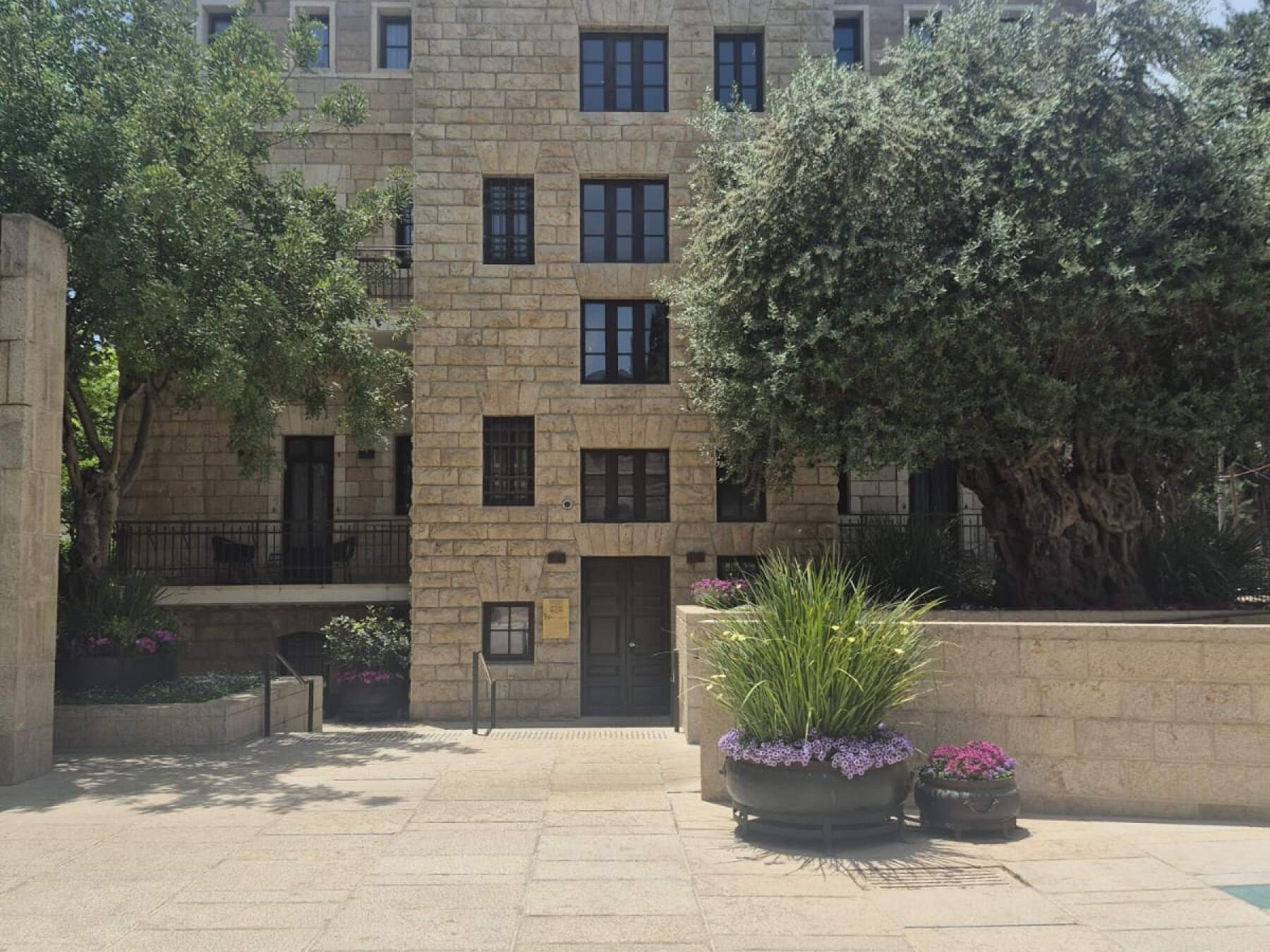
We are standing at the entrance to the Orient Hotel, right at the gateway to Jerusalem’s famous German Colony.
Take a look around. Behind the cafés, restaurants, and modern hotel, you can still spot traces of a very different Jerusalem — a quiet 19th-century German settlement built long before this became one of the city’s most popular neighborhoods.
The German Colony was founded in the late 1800s by the Templers, a Protestant Christian movement from southern Germany. They believed that by settling in the Holy Land and building an ideal community, they were helping prepare the world for redemption. Unlike pilgrims who simply visited Jerusalem, the Templers came to live here permanently. They built homes, farms, schools, workshops, and businesses, creating an organized European-style neighborhood in Ottoman Jerusalem.
Their architectural style still defines the area today. Notice the Jerusalem stone houses, the red-tiled roofs, arched windows, and symmetrical façades. Many homes even included German biblical inscriptions above the entrances. The neighborhood blended European planning with local materials, creating the unique atmosphere that still makes the German Colony stand out today.
Now look at the two historic buildings built into the hotel complex behind us. These were once the school buildings of the German Colony.
The Templers moved their school from Jaffa to Jerusalem, and by 1878 students here were studying German, French, English, Arabic, history, geography, mathematics, and science — an advanced education for the time.
If you look carefully at the building on the left facing Emek Refaim Street, you can still see the round clock near the top. In the 1880s, this clock symbolized precision, order, and modern European culture at a time when many local residents did not even own a personal watch.
The German Colony itself was much more than a residential neighborhood. It was a carefully planned community with schools, farms, workshops, transportation services, and businesses. The Templers became known for agriculture, construction, carpentry, mechanics, and trade, helping introduce European organization and technology into Jerusalem during the Ottoman period.
Now let’s talk about the modern structure behind us.
The Orient Hotel, part of the Isrotel group, opened in 2017, but its construction sparked years of debate.
Many Jerusalem residents strongly opposed earlier plans for a much larger hotel project here. They feared a massive modern building would overpower the historic low-rise neighborhood, increase traffic, and change the character of the entrance to Emek Refaim Street.
The debate raised a classic Jerusalem question: how do you allow a historic city to grow while still preserving its past?
Eventually, compromises were made. The final project preserved and restored the two original Templer school buildings and integrated them into the hotel design.
So what you see today is a very Jerusalem kind of compromise: modern luxury standing side by side with preserved history.
And honestly, that tension between old and new is part of what makes Jerusalem so fascinating. Nearly every street here contains layers of history, preservation, religion, politics, and modernization all competing for space at the same time.
Now, from where you are standing at the entrance to the hotel, carefully cross Emek Refaim Street and turn left.

Read More
Place #2
Distance: 0.05mi
Map Pin
Beit Lehem Rd 2, Jerusalem, Israel
POI 2 Tour Image
The house of Matthaus Frank ("EBEN-EZER")
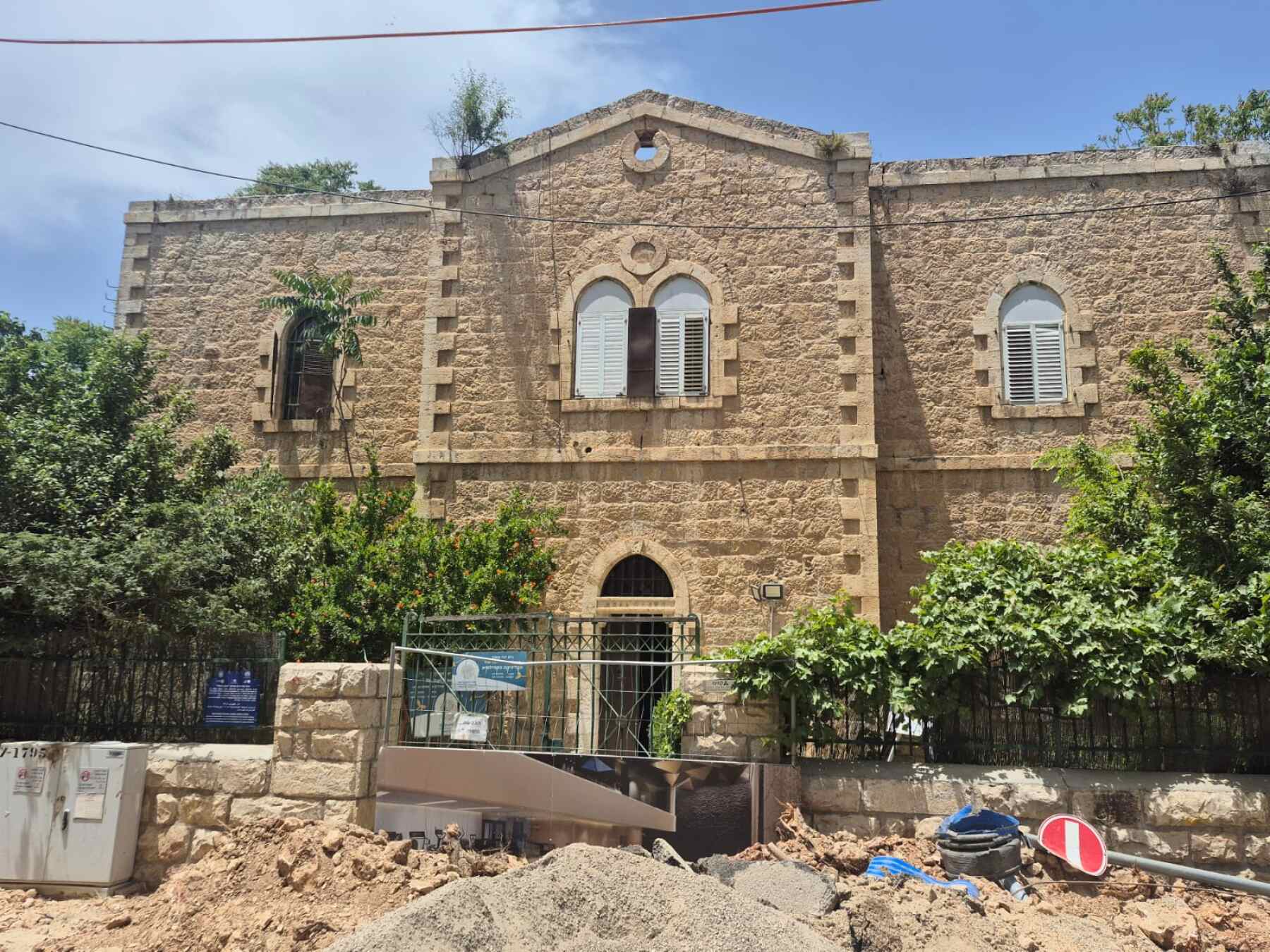
You are standing in front of Matthäus Frank`s House, at 6 Emek Refaim Street, also known as “Eben-Ezer” — “the Stone of Help.”

This was the first house built in the German Colony, and also the largest house in the early colony. Matthäus Frank was one of the key founders of the settlement. He bought the land of the future German Colony from Arabs of Beit Safafa, and later the Templer community purchased the land from him in order to establish their colony here.

Architecturally, the house is a classic early Templer building: solid Jerusalem stone, simple European proportions, a practical rural character, and a clear sense of order and stability. It was both a family home and a working house. Frank was a miller, and the house was connected with his flour mill and productive life.

The most important detail is the inscription above the entrance: “Eben-Ezer.” This name comes from the First Book of Samuel. During the battle against the Philistines, the text says: “The Lord thundered with a great thunder on that day upon the Philistines, and threw them into confusion; and they were defeated before Israel.” After the victory, Samuel set up a stone and called it Eben-Ezer, saying: “Thus far the Lord has helped us.”

For a German Templer settler in the Holy Land, this name had deep symbolic meaning. It connected the house to the biblical story of divine help, victory, settlement and taking root in the land. Frank was not only building a private home; he was marking the beginning of a German Christian settlement in Jerusalem.

The property around the house was also significant. On part of Frank’s former garden, a sports and tennis center was later established, serving the residents of the local community. This reminds us that the German Colony was not only a place of houses and work, but also a living neighborhood with communal and social life.

Today, the building is known as Beit Yuri Stern. It houses the Yuri Stern Holistic Center, which offers support and complementary care for people coping with cancer and for their families.

Continue walking in the same direction.

Read More
Tour itinerary stops | Additional places you'll see on this self-guided tour

Map Pin Place 1 The Orient Hotel
Map Pin Place 2 The house of Matthaus Frank ("EBEN-EZER")
Map Pin Place 3 The Tavern – August Landholt House
Map Pin Place 4 9 Emek Refaim Street
Map Pin Place 5 Abraham Fast’s house
Map Pin Place 6 The house of Gustav Bauernfeind
Map Pin Place 7 Yan Smuts Street
Map Pin Place 8 The house of Philip Wurst
Map Pin Place 9 The house of Abram Dyck
Map Pin Place 10 The First Arab House in the German Colony
Map Pin Place 11 The Orient Kino
Map Pin Place 12 The Catholic Monastery of Saint Charles Borromeo
Map Pin Place 13 The Historic Jerusalem Power Station
Map Pin Place 14 The Armenian church
Map Pin Place 15 Jerusalem’s Historic Railway Station
Map Pin Place 16 The End of the German Colony


This is a premium tour, click below for complete access!

 
How to take a UCPlaces tour
Taking a UCPlaces tour is fun and easy.
Download the app (Android or iOS), purchase the tour (either here on the website, or from within the app).
That's it, you're ready to go!
When you want to start the tour, find the tour in the app (via a quick in-app search or by clicking the tour link received in your confirmation email) and click "Start Tour" (headphones recommended for best experience.)
* After purchasing a tour you will receive a purchase confirmation email including the tour link and instructions on how to take the tour, so you don't have to remember anything now.
How does the tour work?
UCPlaces acts as your personal tour guide, providing self-guided audio tours fully navigated within our app using GPS-based navigation. You won't need to switch between external navigation apps.
Whenever you approach a point of interest (POI) on the tour, our app will automatically play the relevant audio story at the right time and place.
If you start the tour before reaching the first POI, the app will navigate you to the starting point and then begin the tour.
How is this more convenient than a traditional tour?
UCPlaces offers an innovative and flexible way to explore exciting destinations on your terms.
Here are some key advantages over traditional tours:
  • No need to commit upfront or purchase in advance; buy a tour only when you're ready to go.
  • Walk at your own pace.
  • No waiting for groups; go on your schedule.
  • Take the tour in your preferred language.
  • Start, stop and continue the tour whenever you want.
  • Returning to the same destination? Take the tour again, and again, and again... And bring a friend!
  • Enjoy preferred prices.

What's included?
  • A self-guided audio tour taken via the UCPlaces app [Android / iOS (iPhone) / Apple CarPlay].
  • Tour route map and in-app GPS navigation (via the UCPlaces app).
  • Audio stories for places visited during the tour.
  • Apple CarPlay connection (for iOS users); for a seamless driving tour experience.
What's NOT included?
  • Earphones (highly recommended).
  • Smartphone.
  • Any kind of transportation (including tickets and passes).
  • Tickets to the attractions on your tour.
  • Food and drinks
  • Physical tour guide.

Have any questions about this tour? Or a general travel / self-guided tours question? That's completely natural

+ How long does this tour take?
Most travelers complete this tour in approximately 0.5 to 1 hours, depending on pace, time spent at each stop, and optional detours. Having said that, please remember that self-guided tours are extremly flexible (you can start, pause, continue anytime) and everyone has their own pace.
+ What does this tour include?
This self-guided walking tour includes 16 stops, covering top attractions such as The Orient Hotel, The house of Matthaus Frank ("EBEN-EZER"), The Tavern – August Landholt House, 9 Emek Refaim Street, Abraham Fast’s house.
+ Where does the tour start?
The tour starts at The Orient Hotel (Address: Emek Refa'im St 4, Jerusalem, Israel). You can begin the tour there or join from any stop along the route.
+ What type of tour is this?
This is a self-guided walking tour designed to be completed on foot through walkable areas and city highlights.
+ Can I do this tour at my own pace?
Yes, this is a self-guided walking tour, so you can start anytime and explore at your own pace. You can pause, skip stops, or spend more time at places that interest you. You can even split it into multiple days. Explore however feels right for you.
+ Is this a walkable tour?
Yes, this tour is fully walkable and designed to follow a comfortable route through pedestrian-friendly areas.
+ Do I need anything in order to take the tour?
There is one thing that you need - A mobile phone (with the UCPlaces app installed and active location services, and a cellular data plan with a decent signal for downloading the tour) and comfortable walking shoes! But here are some recommendations for a great experience: 1. Make sure your phone is fully charged and bring a mobile charger/battery. 2. Bring earphones for the best experience. 3. Bring a bottle of water and dress appropriately according to the weather forecast.
+ How will I navigate from point to point during the tour?
The tour uses GPS-based navigation through the UCPlaces app, with automatic audio playback and step-by-step directions between stops. Just follow the route (cross streets carefully using crosswalks) and listen to the audio guide. Use the resume feature to continue the from where you recently stopped (or closed the app). Easily skip or go back to stops.
+ Is this tour suitable for families or groups?
Yes, self-guided tours are ideal for families and small groups, allowing everyone to explore comfortably without being tied to a fixed schedule.
+ What makes a self-guided tour better than a guided tour?
Self-guided tours are more flexible, affordable, and personalized. You can avoid crowds, choose your pace, and focus on the stops that interest you most.
+ I installed the app and it's now asking for GPS and media access permissions, why?
The app is your tour-guide, it needs to know where you are located on the map to be able to trigger the points of interest. It also needs access to audio and media files to provide you with this experience.
+ What happens if there are unexpected roadblocks or navigation issues?
We have been working hard to deliver a great experience. Though you may run into unexpected obstacles (the world is constantly changing), our app has multiple features and mechanisms in place to help you overcome them, including: AI assistance, force play an audio if you can't reach the stop, skip or return to stops, automatic rerouting and more.
+ Can I take the tour in my language?
Though all of our tours are primarily in English, many tours are muyltilingual (including: Spanish, German, Portuguese, French, Japanese, Hebrew, French, Arabic and more...). The tour language options depend on the specific tour - You can easily check which languages are available in the tour screen!