Duplicating
Tour copied successfully!

Places (POIs) visited during this tour

Place #1
Distance: 1.03mi
Map Pin
Westminster Pier, London SW1A 2JH, UK
POI 1 Tour Image
Let's Get Started
Welcome to Historic America & UCPlaces' audio walking tour of London. We're glad you could join us! I'm Aaron Killian, your guide (but I also respond to professional history nerd). This is the part of the tour where I fit in my shameless plug for our websites (www.historicamerica.org & ucplaces.com) and invite you to use #historicamericatours on social media while traveling alongside us today.

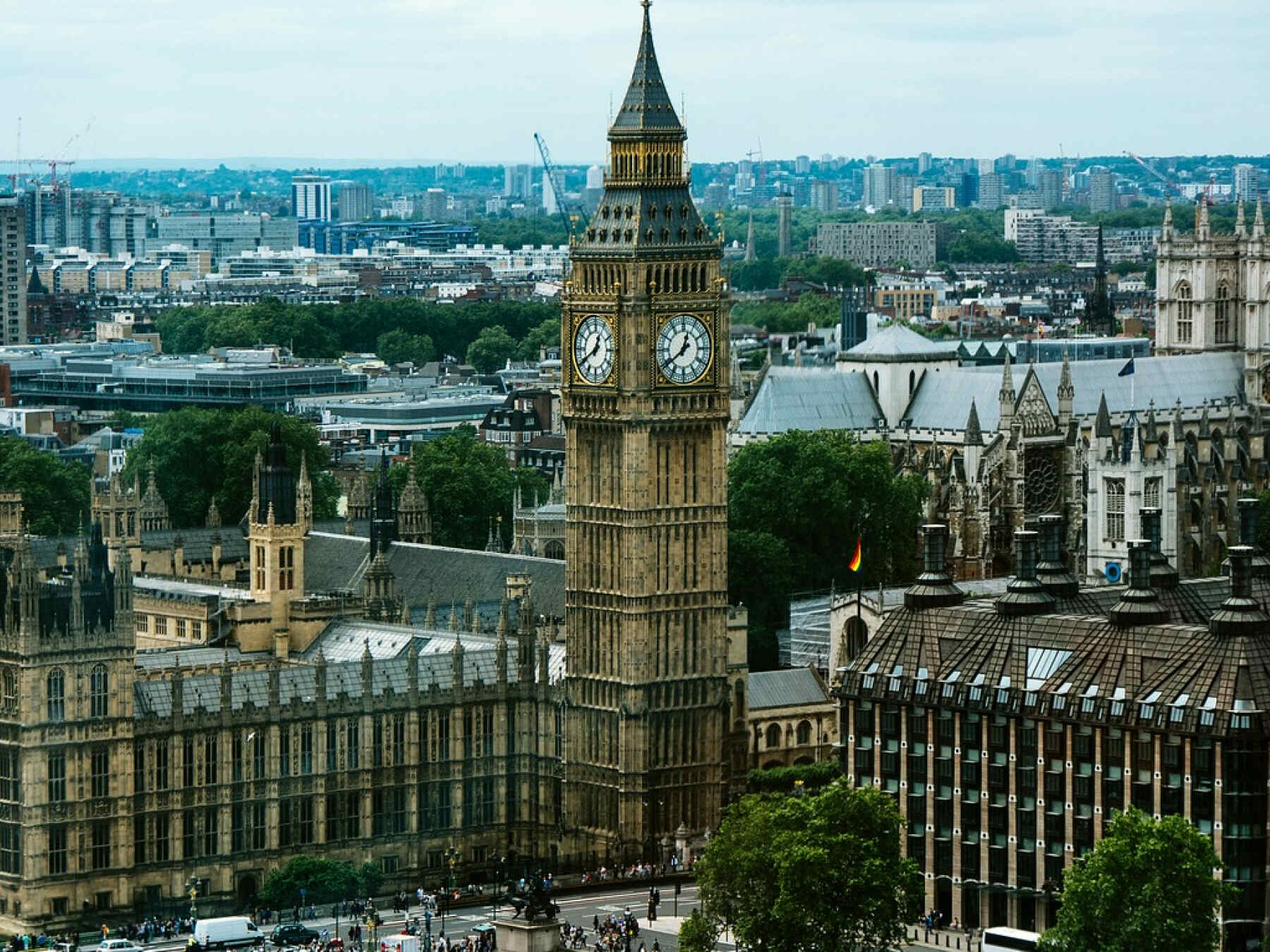
Now that you're outside the station and beside the Portcullis House. Look across the street and find the statue of Queen Boudica riding her chariot. This is our first stop.
Place #2
Distance: 0.42mi , Attraction : Statue
Map Pin
Westminster Pier, London SW1A 2JH, UK
POI 3 Tour Image
Boudiccan Rebellion
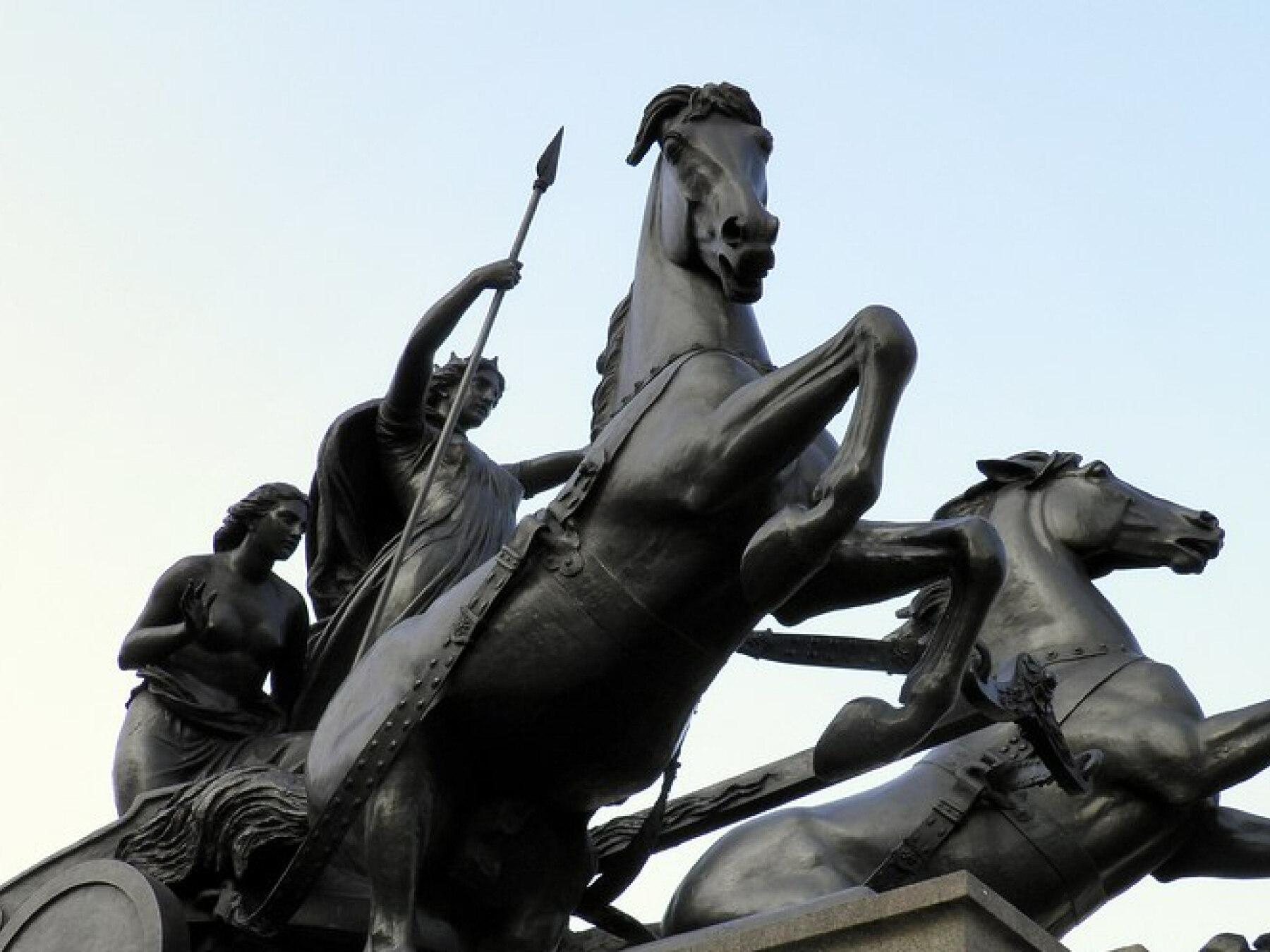
You should now be situated near the statue of Boudicea – a Celtic Queen standing atop a chariot drawn by rearing horses. Closeby are the Houses of Parliament, Big Ben, and the River Thames. What a great place to begin our tour!

Let's get started by going back to the beginning of London itself. A time before London became the global hub you see today. London was founded beside this mighty river, the Thames, nearly 7,000 years ago! More precisely, the first prehistoric settlers built settlements on this land 7,000 years ago. The name London derives from the Roman settlement of Londinium – established here about 2,000 years ago.

The initial Roman settlement only lasted about twenty years, thanks to the woman depicted in the statue before you. She was a proud and noble woman; Boudicea, queen of the Iceni. Boudicea's husband Prasutagus ruled the Iceni as an ally of the Romans. He died in the hope that his daughters might rule his kingdom, but the emperor of Rome had other plans. The Romans annexed the Kingdom of Iceni, took all the departed king's property, flogged the proud Queen Boudicea, and abducted her daughters. Queen Boudicea would not let such cruel treatment stand! She united the Iceni with other tribes suffering under Roman rule and led a revolt. Her army first burned the Roman colony of Camulodunum. With Camulodunum in flames, Boudicea turned her rebels toward Londinium. The Roman governor hastened to defend his city, but faced with Boudicea's oncoming force he had no choice but to abandon Londinium. Boudicea's army defeated the Roman rear guards and sacked Londinium and the town of Varulamium to boot. As further retribution for Rome's cruelty & imperial overreach, Boudicea's followers killed an estimated 80,000 Romans and local collaborators during the revolt.

The tide turned, however, when the Roman governor eventually caught up with Boudicea. Although her forces outnumbered his, superior Roman tactics won the day. With her army vanquished, Boudicea did not live to see the end of her rebellion, dying either by illness or suicide depending on which historical account you believe.

Boudicea's Revolt shook Roman control of Britain to its very core and nearly convinced the emperor to give up the island all together, but with Roman rule firmly restored following her defeat, the island continued under Roman occupation for three more centuries.

This bronze statue of Boudicea in her war chariot pays homage to both her bravery and British patriotism. It was built by sculptor Thomas Thyncroft over the course of twenty years during the reign of Queen Victoria. Unveiled here in 1902 shortly after Victoria's death, the statue has been a fixture at Westminster Bridge for over a century. In the statue, Boudicea rides into battle, accompanied by her two daughters, ready to avenge the wrongs committed against their family. Sharp scythes jut from the chariot's wheels to cut down any Roman soldier daring to oppose the queen. Ironically, the chariot portion of the statue is built according to Roman models.

It is also no accident that this monument dates to the Victorian Era. The statue was envisioned by Queen Victoria's husband Albert as "a throne upon wheels." He likely hoped the statue would evoke parallels between this ancient British warrior queen and his wife Victoria. After all, Boudicea's name meant "victorious woman" in the language of the ancient Britons. Unfortunately, Albert died while his tribute was still under construction, and Queen Victoria did not live to see the statue erected. In fact, Thyncroft himself did not live to see that glorious day! He died 17 years before the money was finally raised to cast and install the statue. A year later in 1903 a poem by 18th century poet and Anglican hymn writer William Cowper, was added to the right side of the statue's plinth to celebrate the great queen in verse as well as bronze.

Once you've had a look, crossover to the southside of Westminster Bridge for a staggering view of the city that rose atop the ashes of Londinium.


Read More

  https://en.wikipedia.org/wiki/Boadicea_and_Her_Daughters
Tour itinerary stops | Additional places you'll see on this self-guided tour

Map Pin Place 1 Let's Get Started
Map Pin Place 2 Boudiccan Rebellion
Map Pin Place 3 Westminster Bridge
Map Pin Place 4 Parliament Square
Map Pin Place 5 The Cenotaph
Map Pin Place 6 Downing Street, the Prime Minister’s House
Map Pin Place 7 Banqueting House
Map Pin Place 8 The Horse Guards’ Parade
Map Pin Place 9 Trafalgar Square
Map Pin Place 10 The National Gallery


This is a premium tour, click below for complete access!

 
How to take a UCPlaces tour
Taking a UCPlaces tour is fun and easy.
Download the app (Android or iOS), purchase the tour (either here on the website, or from within the app).
That's it, you're ready to go!
When you want to start the tour, find the tour in the app (via a quick in-app search or by clicking the tour link received in your confirmation email) and click "Start Tour" (headphones recommended for best experience.)
* After purchasing a tour you will receive a purchase confirmation email including the tour link and instructions on how to take the tour, so you don't have to remember anything now.
How does the tour work?
UCPlaces acts as your personal tour guide, providing self-guided audio tours fully navigated within our app using GPS-based navigation. You won't need to switch between external navigation apps.
Whenever you approach a point of interest (POI) on the tour, our app will automatically play the relevant audio story at the right time and place.
If you start the tour before reaching the first POI, the app will navigate you to the starting point and then begin the tour.
How is this more convenient than a traditional tour?
UCPlaces offers an innovative and flexible way to explore exciting destinations on your terms.
Here are some key advantages over traditional tours:
  • No need to commit upfront or purchase in advance; buy a tour only when you're ready to go.
  • Walk at your own pace.
  • No waiting for groups; go on your schedule.
  • Take the tour in your preferred language.
  • Start, stop and continue the tour whenever you want.
  • Returning to the same destination? Take the tour again, and again, and again... And bring a friend!
  • Enjoy preferred prices.

What's included?
  • A self-guided audio tour taken via the UCPlaces app [Android / iOS (iPhone) / Apple CarPlay].
  • Tour route map and in-app GPS navigation (via the UCPlaces app).
  • Audio stories for places visited during the tour.
  • Apple CarPlay connection (for iOS users); for a seamless driving tour experience.
What's NOT included?
  • Earphones (highly recommended).
  • Smartphone.
  • Any kind of transportation (including tickets and passes).
  • Tickets to the attractions on your tour.
  • Food and drinks
  • Physical tour guide.

Have any questions about this tour? Or a general travel / self-guided tours question? That's completely natural

+ How long does this tour take?
Most travelers complete this tour in approximately 0.5 to 0.5 hours, depending on pace, time spent at each stop, and optional detours. Having said that, please remember that self-guided tours are extremly flexible (you can start, pause, continue anytime) and everyone has their own pace.
+ What does this tour include?
This self-guided walking tour includes 10 stops, covering top attractions such as Let's Get Started, Boudiccan Rebellion, Westminster Bridge, Parliament Square, The Cenotaph.
+ Where does the tour start?
The tour starts at Let's Get Started (Address: Westminster Pier, London SW1A 2JH, UK). You can begin the tour there or join from any stop along the route.
+ What type of tour is this?
This is a self-guided walking tour designed to be completed on foot through walkable areas and city highlights.
+ Can I do this tour at my own pace?
Yes, this is a self-guided walking tour, so you can start anytime and explore at your own pace. You can pause, skip stops, or spend more time at places that interest you. You can even split it into multiple days. Explore however feels right for you.
+ Is this a walkable tour?
Yes, this tour is fully walkable and designed to follow a comfortable route through pedestrian-friendly areas.
+ Do I need anything in order to take the tour?
There is one thing that you need - A mobile phone (with the UCPlaces app installed and active location services, and a cellular data plan with a decent signal for downloading the tour) and comfortable walking shoes! But here are some recommendations for a great experience: 1. Make sure your phone is fully charged and bring a mobile charger/battery. 2. Bring earphones for the best experience. 3. Bring a bottle of water and dress appropriately according to the weather forecast.
+ How will I navigate from point to point during the tour?
The tour uses GPS-based navigation through the UCPlaces app, with automatic audio playback and step-by-step directions between stops. Just follow the route (cross streets carefully using crosswalks) and listen to the audio guide. Use the resume feature to continue the from where you recently stopped (or closed the app). Easily skip or go back to stops.
+ Is this tour suitable for families or groups?
Yes, self-guided tours are ideal for families and small groups, allowing everyone to explore comfortably without being tied to a fixed schedule.
+ What makes a self-guided tour better than a guided tour?
Self-guided tours are more flexible, affordable, and personalized. You can avoid crowds, choose your pace, and focus on the stops that interest you most.
+ I installed the app and it's now asking for GPS and media access permissions, why?
The app is your tour-guide, it needs to know where you are located on the map to be able to trigger the points of interest. It also needs access to audio and media files to provide you with this experience.
+ What happens if there are unexpected roadblocks or navigation issues?
We have been working hard to deliver a great experience. Though you may run into unexpected obstacles (the world is constantly changing), our app has multiple features and mechanisms in place to help you overcome them, including: AI assistance, force play an audio if you can't reach the stop, skip or return to stops, automatic rerouting and more.
+ Can I take the tour in my language?
Though all of our tours are primarily in English, many tours are muyltilingual (including: Spanish, German, Portuguese, French, Japanese, Hebrew, French, Arabic and more...). The tour language options depend on the specific tour - You can easily check which languages are available in the tour screen!