

Gettysburg Self-Guided Driving Tour: The Battle That Changed America
Gettysburg: Self-Guided Driving Audio Tour of the Battlefield incl. Little Round Top
About this English self-guided 1h:30m driving tour in Gettysburg
Welcome to Gettysburg National Military Park and thank you for joining us on this self-guided driving tour through one of the most important battlefields in American history.
Over the next two hours, you'll follow the story of the Battle of Gettysburg as it unfolded during three dramatic days in July of 1863. Although the battle lasted from July 1 through July 3, this tour has been carefully designed to guide you through its most significant locations in chronological order, helping you understand how the fighting began, how it intensified, and how it ultimately changed the course of the Civil War.
This tour generally follows the route recommended by the National Park Service for exploring Gettysburg National Military Park, while enhancing the experience with immersive storytelling and additional historical insights. Along the way, you'll visit iconic landmarks such as Little Round Top, the Peach Orchard, High Water Mark, and Gettysburg National Cemetery, while also discovering lesser-known sites that played a critical role in the battle's outcome.
At the end of the tour we encourage you to visit the Gettysburg Museum and Visitor Center, where you'll find exhibits, artifacts, and the famous Gettysburg Cyclorama that provide valuable context before beginning your journey.
As you drive, please obey all traffic laws, remain alert to pedestrians and cyclists, and use designated parking areas whenever you wish to stop and explore. We also encourage you to drive slowly and safely throughout the battlefield. Not only will this help ensure a safe and enjoyable experience for everyone, but it will also give the narration time to fully play before you arrive at the next point of interest. Gettysburg is best experienced at a thoughtful pace, allowing you to absorb both the history and the significance of the places you'll visit.
The Battle of Gettysburg involved more than 160,000 soldiers and resulted in over 50,000 casualties, making it the largest battle ever fought in North America. Yet beyond the numbers are the stories of the individuals who lived through these events—soldiers, civilians, commanders, and families whose lives were forever changed by what happened here.
Our journey begins at McPherson Ridge, where the first shots of Gettysburg were fired and where a determined Union defense set the stage for everything that followed.
When you're ready, proceed to McPherson Ridge and prepare to step back into July of 1863.
Top landmarks on this tour
 Little Round Top
- The Wheatfield
- The Peach Orchard
- High Water Mark
- Gettysburg National Cemetery
- McPherson Ridge
- 1For the best experience, begin at the tour's recommended starting point and follow the stops in order.
- 2Want to start somewhere else? Simply use Start At on the tour screen, before tapping Start Tour, to begin from any stop.
- 3Need to detour or skip a stop along the way? Tap Tour Assistant (
![UCPlaces AI Bot Icon]() ) to use Force Play, Skip, and Back, for full flexibility.
 ) to use Force Play, Skip, and Back, for full flexibility.
Route Preview
- Category
- Language
- Mode
- Region
- Country
- City

Places (POIs) visited during this tour
48 Reynolds Ave S, Gettysburg, PA 17325, USA
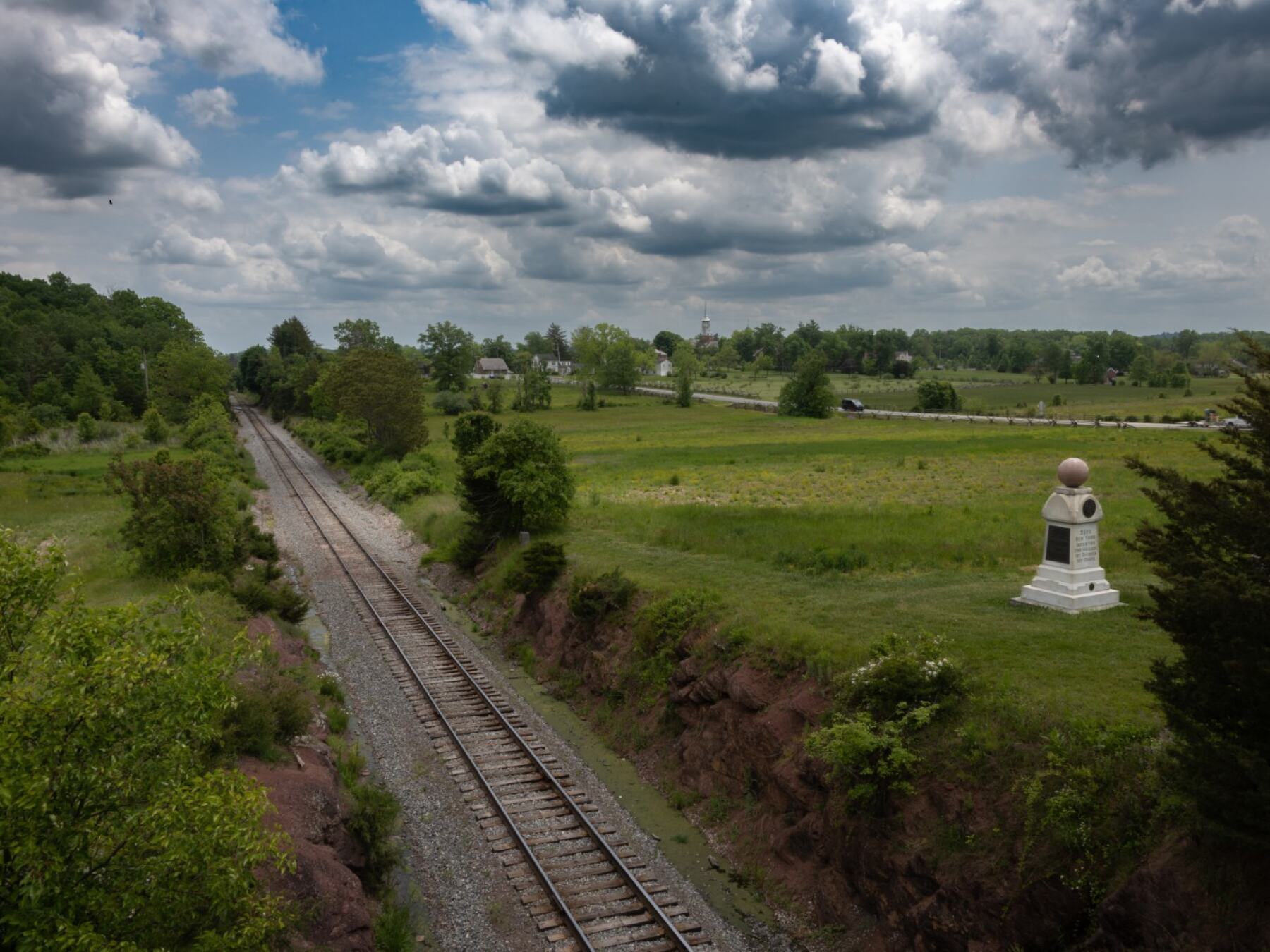
As you look across these peaceful Pennsylvania fields, it may be hard to imagine that on the morning of July 1, 1863, thousands of soldiers converged here in what would become the largest battle ever fought in North America.
Just after sunrise, Union cavalry under General John Buford spotted Confederate forces approaching from the west along the Chambersburg Pike. Buford immediately recognized the importance of the high ground south of Gettysburg. If Confederate troops captured those ridges first, the Union Army would face a difficult and costly fight to reclaim them.
Buford's mission was simple, yet incredibly dangerous: hold the enemy long enough for Union infantry reinforcements to arrive.
Outnumbered and fighting on foot, Buford's cavalrymen delayed the Confederate advance for several crucial hours. Their stand here bought precious time for Major General John Reynolds and the Union First Corps to reach the battlefield. Reynolds, one of the Union Army's most respected commanders, rode directly into the fighting to deploy his troops. Within minutes, he was struck and killed while directing his men into position. He became the highest-ranking officer from either side to die at Gettysburg.
Despite suffering heavy losses, Union forces held this ridge long enough to allow the Army of the Potomac to establish defensive positions on the heights south of town. Many historians believe that Buford's decision to fight here helped shape the outcome of the entire battle.
Take a moment to look around. Beyond these fields lie Willoughby Run, the McPherson Farm, and the ridges over which soldiers advanced under artillery fire and musket volleys. The fighting that began here would continue for three days, involving more than 160,000 soldiers and resulting in more than 50,000 casualties.
As we continue our journey through Gettysburg, you'll follow the battle in the order it unfolded, discovering how a small Pennsylvania town became the setting for a turning point in American history.
When you're ready, continue to our next stop, the Eternal Light Peace Memorial.
Read More
100 Confederate Ave, Gettysburg, PA 17325, USA
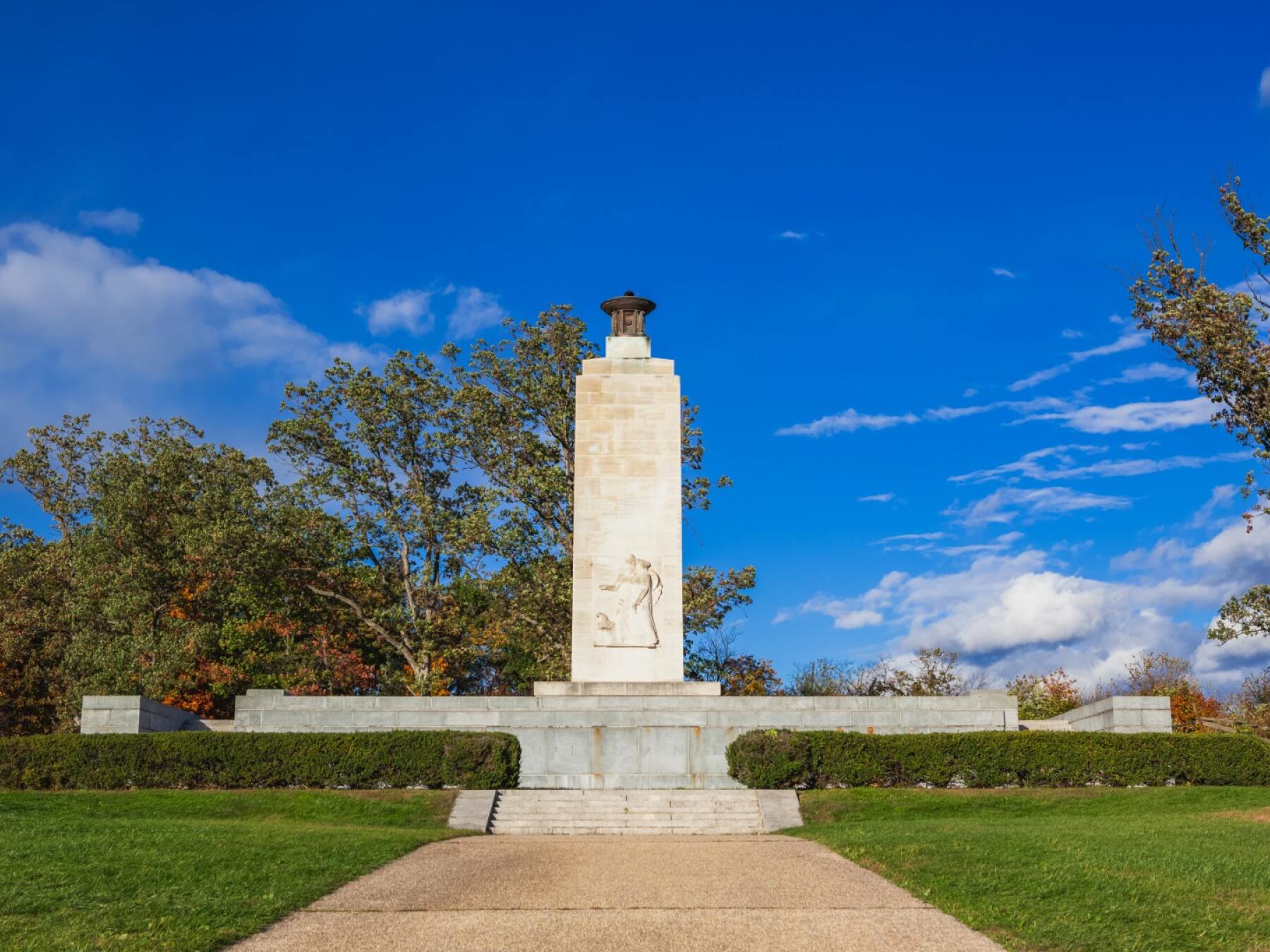
Dedicated on July 3, 1938, this memorial commemorates the seventy-fifth anniversary of the Battle of Gettysburg and honors the spirit of reconciliation between North and South. More than 1,800 Civil War veterans returned to Gettysburg for the dedication ceremony, including several hundred who had fought on these very fields. Former enemies, once divided by war, gathered here in peace.
At the top of the memorial burns an eternal flame, symbolizing unity and the hope that the nation would never again experience such a devastating conflict. Inscribed on the monument are the words:
"Peace Eternal in a Nation United."
Take a moment to reflect on the remarkable journey represented here. In 1863, Gettysburg was the site of unimaginable violence and sacrifice. Seventy-five years later, veterans who had faced one another in battle stood together to honor not what had divided them, but what ultimately united them.
From this vantage point, you can also appreciate the scale of the battlefield. The fighting began to the west at McPherson Ridge, where Union cavalry delayed the Confederate advance. As the day progressed, the battle expanded north and east, eventually drawing tens of thousands of soldiers into the struggle for control of the high ground around Gettysburg.
The Eternal Light Peace Memorial reminds us that Gettysburg is not only a story of military strategy and battlefield heroics. It is also a story of healing, remembrance, and the enduring effort to preserve a united nation.
When you're ready, continue to our next stop, Oak Ridge, where the fierce fighting of Gettysburg's first day intensified.
Read More
Place 1
McPherson Ridge: Where the Battle Began
Place 2
Eternal Light Peace Memorial: From Conflict to Reconciliation
Place 3
Oak Ridge: Holding the Northern Line
Place 4
Barlow's Knoll: A Bold Advance
Place 5
North Carolina Memorial: The Price of Sacrifice
Place 6
Virginia Memorial: Lee and the Army of Northern Virginia
Place 7
Pitzer Woods: Preparing for the Storm
Place 8
Warfield Ridge: The Confederate Advance
Place 9
Little Round Top: The Union's Last Line
Place 10
The Wheatfield: A Field of Death
Place 11
The Peach Orchard: A Costly Decision
Place 12
Plum Run: The Valley of Death
Place 13
Pennsylvania State Memorial: Honoring the Home State
Place 14
Spangler's Spring: Humanity Amid the Battle
Place 15
East Cemetery Hill: Defending the High Ground
Place 16
High Water Mark: The Climax of Gettysburg
Place 17
Gettysburg National Cemetery: Lincoln's Enduring Words