Places (POIs) visited during this tour
Place #1
Recommended Starting Point
Distance: 0.00mi
, Attraction : Historical Landmark
1 Desert Vw Rd, Grand Canyon Village, AZ 86023, USA
Desert View Watchtower
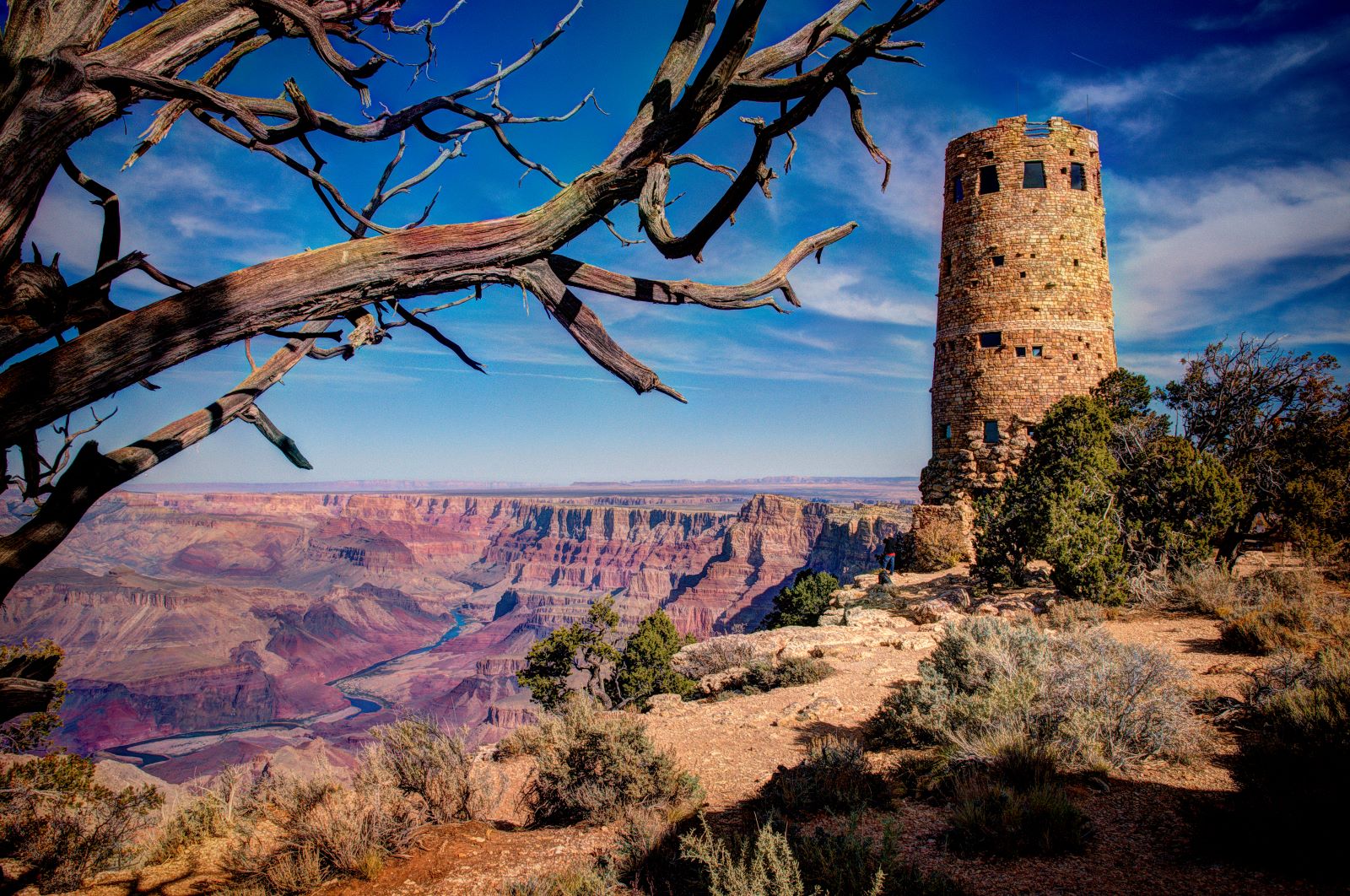
First up today is The Desert View Watchtower, an iconic structure located on the South Rim. It was designed by architect Mary Colter and completed in 1932. The watchtower was constructed to resemble an ancient Native American tower, specifically inspired by the architecture of the ancestral Puebloan people.
Always fascinated by Native American cultures, Colter carefully studied indigenous building techniques and the natural materials they used. She investigated ancient Puebloan ruins, and dabbled in learning about Hopi culture. These influences all came into play when she planned the Watchtower.
The tower stands at a height of 70 feet (21 meters) and offers panoramic views of the Grand Canyon and the surrounding landscape. It's strategically positioned at Desert View Point, providing visitors with a breathtaking vista of the canyon and the Colorado River below.
The interior of the watchtower is just as fascinating as its exterior. The lower floors feature murals and paintings by Hopi artist Fred Kabotie, depicting various aspects of Native American culture and mythology. Each story of the Watchtower has several windows that allow visitors to gain different views of the Canyon and the surrounding area. The first floor displays a Hopi snake altar. The walls and ceiling are covered in Native American symbols and pictographs. This includes a mural of the Hopi Snake Legend by Hopi artist Fred Kabotie that describes their cultural connection to the Grand Canyon. This painting tells the story of a Hopi man who floated down the Colorado River through the canyon in a hollow log.
Visitors can climb to the upper floors via a spiral staircase to enjoy even more stunning views from the tower's windows and observation deck.
Aside from its scenic vistas and architectural significance, the Desert View Watchtower serves as a cultural and historical landmark, showcasing the rich heritage of the indigenous peoples of the region. It's a must-see attraction for anyone visiting the Grand Canyon National Park, offering both natural beauty and cultural insights.
Let’s head west on Desert View Drive and make our way to the next place on our tour today, Navajo Point.
Read More
Place #2
Distance: 0.96mi
, Attraction : Lookout
858C25Q7+53
Navajo Point
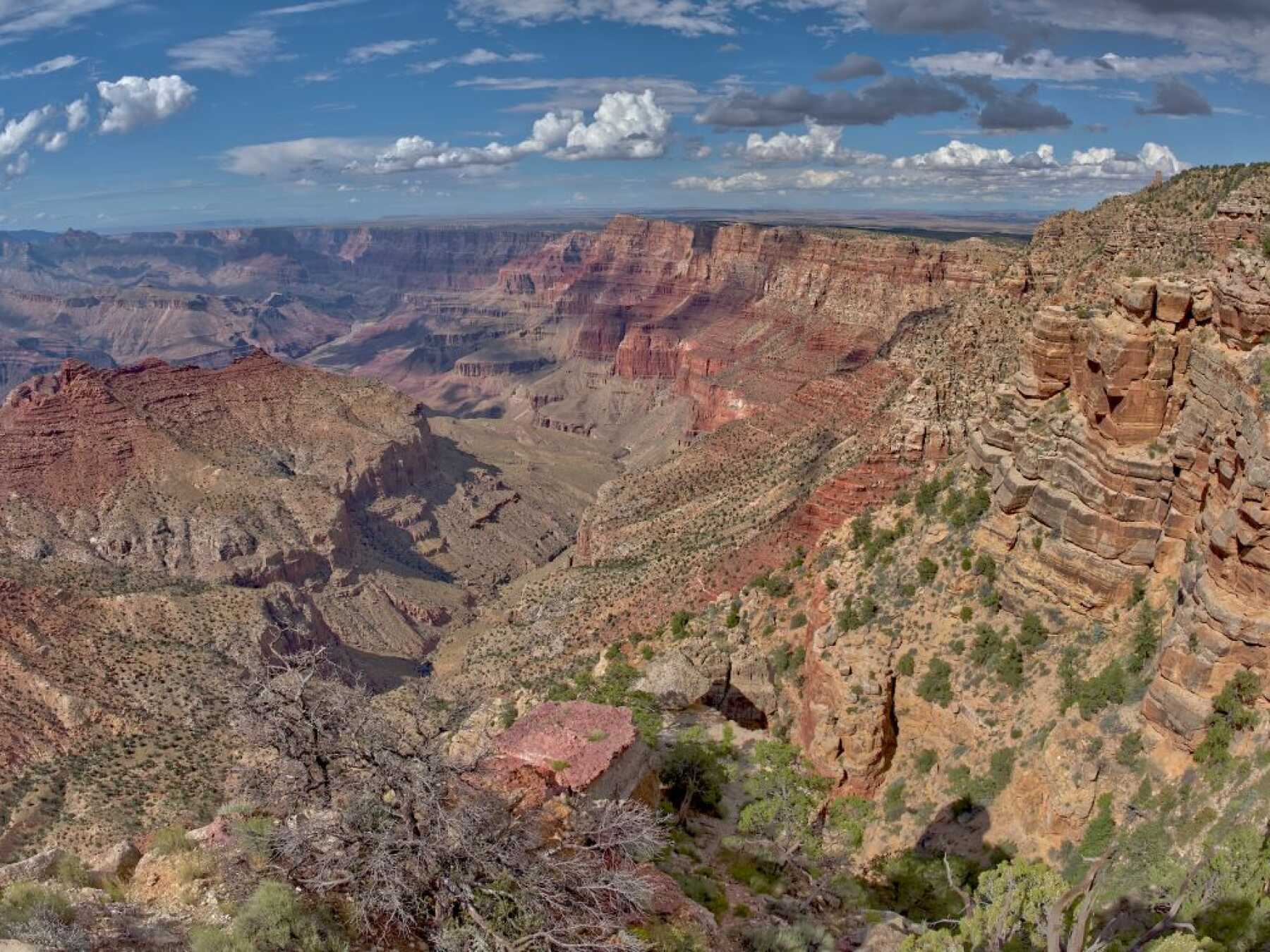
We are arriving now at Navajo Point, one of the most iconic viewpoints along the South Rim of the Grand Canyon. Situated at an elevation of over 7,000 feet (about 2,134 meters), it offers visitors breathtaking panoramic vistas of the canyon's vastness and depth. Named after the Navajo Nation, whose land borders the eastern portion of the Grand Canyon, Navajo Point provides unparalleled views of the Colorado River winding its way through the canyon's ancient rock layers. From this vantage point, visitors can appreciate the sheer scale and grandeur of the canyon, with its colorful cliffs, rugged terrain, and intricate network of side canyons.
This expansive viewpoint is a popular stop along the South Rim, allowing visitors to take in the majestic beauty of the Grand Canyon while enjoying interpretive displays that provide insights into the geological and cultural significance of the area. Navajo Point also serves as a prime spot for sunrise and sunset viewing, offering visitors the chance to witness the canyon bathed in the warm hues of dawn and dusk, creating unforgettable memories of this natural wonder.
In addition to its stunning vistas, Navajo Point also features picnic areas and interpretive displays that provide information about the geology, ecology, and cultural significance of the Grand Canyon. It's a popular stopping point for travelers exploring the South Rim, offering a memorable experience and a chance to connect with the natural wonders of the canyon.
The Navajo Nation, also known as Dinetah in the Navajo language, is a sovereign Native American territory covering approximately 27,000 square miles (70,000 square kilometers) in parts of Arizona, Utah, and New Mexico. The Navajo people have a deep cultural, spiritual, and historical connection to the Grand Canyon and the surrounding area.
Archaeological evidence suggests that Navajo ancestors lived in and around the canyon area long before European contact.
The Grand Canyon holds significant spiritual importance in Navajo culture. Known as "Tsékooh Hatsoh," which translates to "The Place Where Water Flows Through Rocks," the canyon is considered a sacred place where the Navajo people have performed ceremonies, gathered medicinal plants, and sought guidance from the spiritual realm.
The Navajo have traditional stories and legends that are intertwined with the Grand Canyon. These stories often reflect the Navajo worldview, teachings, and spiritual beliefs. For example, some stories explain the creation of the canyon and the presence of landmarks within it.
Historically, the Navajo people relied on the land surrounding the Grand Canyon for sustenance, including hunting, gathering, and agriculture. The canyon and its tributaries provided important resources such as water, game, and plant materials.
While the Grand Canyon National Park is managed by the National Park Service, the Navajo Nation has jurisdiction over nearby lands.
Read More
Tour itinerary stops | Additional places you'll see on this self-guided tour
Click below for full access to this tour
Have any questions about this tour? Or a general travel / self-guided tours question? That's completely natural
+ How long does this tour take?
Most travelers complete this tour in approximately 1.5 to 2 hours, depending on pace, time spent at each stop, and optional detours. Having said that, please remember that self-guided tours are extremly flexible (you can start, pause, continue anytime) and everyone has their own pace.
+ What does this tour include?
This self-guided driving tour includes 17 stops, covering top attractions such as Desert View Watchtower, Navajo Point, Lipan Point, Desert View Road, Urban Legends.
+ Where does the tour start?
The tour starts at Desert View Watchtower (Address: 1 Desert Vw Rd, Grand Canyon Village, AZ 86023, USA). You can begin the tour there or join from any stop along the route.
+ What type of tour is this?
This is a self-guided driving tour designed to be completed by car, covering scenic routes, city highlights and optional key stops.
+ Can I do this tour at my own pace?
Yes, this is a self-guided driving tour, so you can start anytime and explore at your own pace. You can pause, skip stops, or spend more time at places that interest you. You can even split it into multiple days. Explore however feels right for you. The only vaiables that might affect your pace are speed limits and traffic congestion.
+ Do I need a car for this tour?
Yes, this is a driving tour, designed to be completed by car, with stops spread across different locations connected by a driving route.
+ Do I need anything in order to take the tour?
There are two things that you need - 1. A mobile phone (with the UCPlaces app installed and active location services, and a cellular data plan with a decent signal for downloading the tour). 2. A car. Here are some recommendations for a great experience: 1. Make sure your phone is fully charged and bring a charging cable for your car. 2. Connect your phone to the car speaker system via bluetooth or use our CarPlay/Android Auto option for the best experience.
+ How will I navigate from point to point during the tour?
The tour uses GPS-based navigation through the UCPlaces app, with automatic audio playback and step-by-step directions between stops. This works great either directly from your phone, or while connected to your car's multimedia system and using our CarPlay or Android Auto options. Just follow the route and listen to the audio guide. Use the resume feature to continue from where you recently stopped (or closed the app). Easily skip or go back to stops.
+ Is this tour suitable for families or groups?
Yes, self-guided tours are ideal for families and small groups, allowing everyone to explore comfortably without being tied to a fixed schedule.
+ What makes a self-guided tour better than a guided tour?
Self-guided tours are more flexible, affordable, and personalized. You can avoid crowds, choose your pace, and focus on the stops that interest you most.
+ I installed the app and it's now asking for GPS and media access permissions, why?
The app is your tour-guide, it needs to know where you are located on the map to be able to trigger the points of interest. It also needs access to audio and media files to provide you with this experience.
+ What happens if there are unexpected roadblocks or navigation issues?
We have been working hard to deliver a great experience. Though you may run into unexpected obstacles (the world is constantly changing), our app has multiple features and mechanisms in place to help you overcome them, including: AI assistance, force play an audio if you can't reach the stop, skip or return to stops, automatic rerouting and more.
+ Can I take the tour in my language?
Though all of our tours are primarily in English, many tours are muyltilingual (including: Spanish, German, Portuguese, French, Japanese, Hebrew, French, Arabic and more...). The tour language options depend on the specific tour - You can easily check which languages are available in the tour screen!
) to use Force Play, Skip, and Back, for full flexibility.