

Budapest Self-Guided (GPS) Audio Walking Tour, Hungary - Queen of the Danube Main Sites & Historical Landmarks
About this English self-guided 2h:21m walking tour in Budapest
Hello and welcome to this UCPlaces Tour of The Queen of The Danube! You’ve made it to the enchanting city of Budapest, where history and modernity intertwine along the scenic banks of the legendary river. As we embark on this walking tour, you'll discover why Budapest is often hailed as the "Queen of the Danube."
The city of Budapest is divided into two main parts: Buda and Pest, which are separated by the Danube River. This division reflects the historical, geographical, and cultural differences between the two areas, which were officially united in 1873. Pest, where we are now, is flat and has developed into the commercial and administrative heart of Budapest. It was also a separate town before the unification, and has a vibrant cultural and social scene. Pest is flatter and more densely built-up, housing most of the city's commercial activities and government buildings.
The western side of the Danube River, Buda, is characterized by its hills and historical landmarks, such as Buda Castle. It was historically a separate town and has always been seen as the more upscale and residential part of the city. Buda is known for its rolling hills and greener, more residential areas. We will explore this area later in the tour.
My name is Dave, and it’s my pleasure to show you around this stunning city in the heart of Europe. Today we will visit historically and culturally significant landmarks, to give you the best experience possible. From castles and cathedrals, to outdoor spa's and urban legends, you'll find it here.
We start here in Városliget, also known as City Park, the largest public park located in Budapest and one of the most popular recreational areas in the city. This is a good place to start as we are conveniently located near parking, if you drove, as well as public transportation stops.
Today’s tour is a moderate walk, so hopefully you’re wearing your most comfortable pair. Don’t worry, we will stop for refreshments, and show you the best spots to take a break and relax. Follow your navigation, and let's get started at our first destination on our tour.
- 1For the best experience, begin at the tour's recommended starting point and follow the stops in order.
- 2Want to start somewhere else? Simply use Start At on the tour screen, before tapping Start Tour, to begin from any stop.
- 3Need to detour or skip a stop along the way? Tap Tour Assistant (
![UCPlaces AI Bot Icon]() ) to use Force Play, Skip, and Back, for full flexibility.
) to use Force Play, Skip, and Back, for full flexibility.
 ) to use Force Play, Skip, and Back, for full flexibility.
Route Preview
- Category
- Language
- Mode

Places (POIs) visited during this tour

Budapest, Kós Károly stny. 1, 1146 Hungary
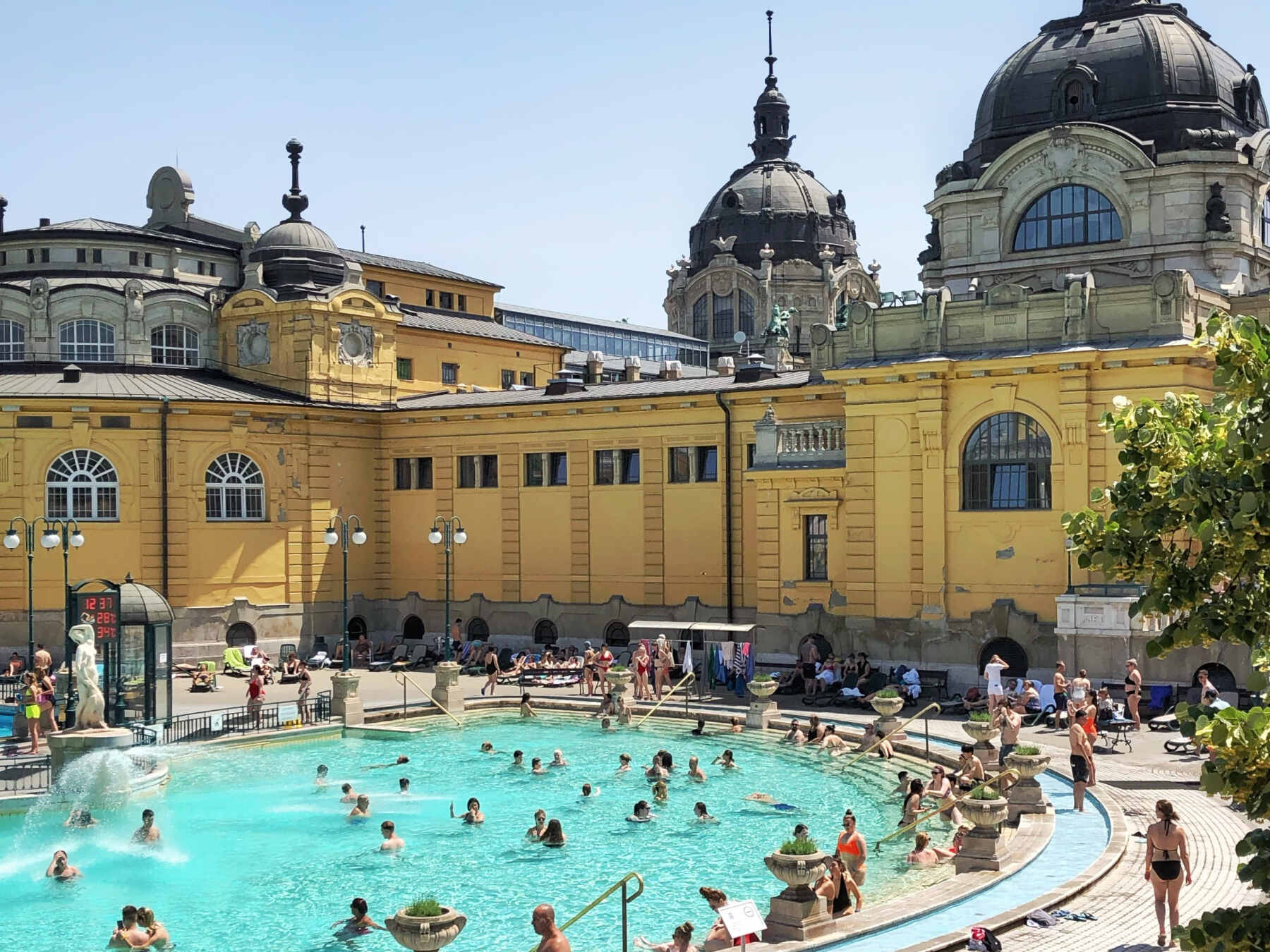
Built in 1913 in a Neo-Baroque style, making it one of the oldest thermal baths in Budapest. The complex was named after Count István Széchenyi, a prominent Hungarian statesman and key figure in the country's development during the 19th century. More on what a ‘Count’ is and what ‘Baroque style’ is, but for now, let's soak in the mineral rich waters and find out what health benefits we may enjoy.
The thermal waters that feed the Széchenyi Bath are supplied by two thermal springs with temperatures ranging from 74°C (165°F) to 77°C (171°F). These mineral-rich waters are believed to have healing properties and are particularly beneficial for various health conditions, including joint problems and circulatory disorders, respiratory illnesses and the narrowing of blood vessels.
The outdoor section of the Bath is stunning – a daffodil-yellow wraparound of neo-renaissance architecture, but it gets quite busy. Iconic "sparties" with DJs and a bar, take place here on most Saturday nights. In the colder months (late December-February), enjoy little beats relaxing in the warmth of the Széchenyi Baths as snow flutters all around you
Budapest lies on a geological fault line, where the Buda Hills collide with the Great Plain. This topographical fender-bender causes more than 100 thermal springs to jet skyward, releasing some 40,000m3 of warm, mineral-rich water each day.
The Széchenyi Bath is not just a place to soak in thermal waters but also a social hub where locals and tourists come to socialize, play chess, and relax in the sun. It's a great place to interact with people from various backgrounds. Attending the thermal baths has been part of the city's culture for centuries. The Eravisci tribe first chanced upon the springs calling the area Ak-ink (Abundant Water). But it wasn’t until the Romans marched in and built the regional capital of Aquincum here that the power of the waters was fully harnessed.
The layout of most of Budapest’s baths is similar: a series of indoor thermal pools where temperatures range from warm to hot, steam rooms, saunas, ice-cold plunge pools and rooms for massage. Some have outdoor pools with fountains, sprays and whirlpools, and pools for swimming laps.
Going to the thermal baths for some Hungarians is as arbitrary as meeting friends for coffee at the local shop or eating a bunch of caramels.
All done? Ok, let’s take a shower and get ready to head to our next point of interest on our tour.
Read More
Budapest, Kós Károly stny. 1, 1146 Hungary
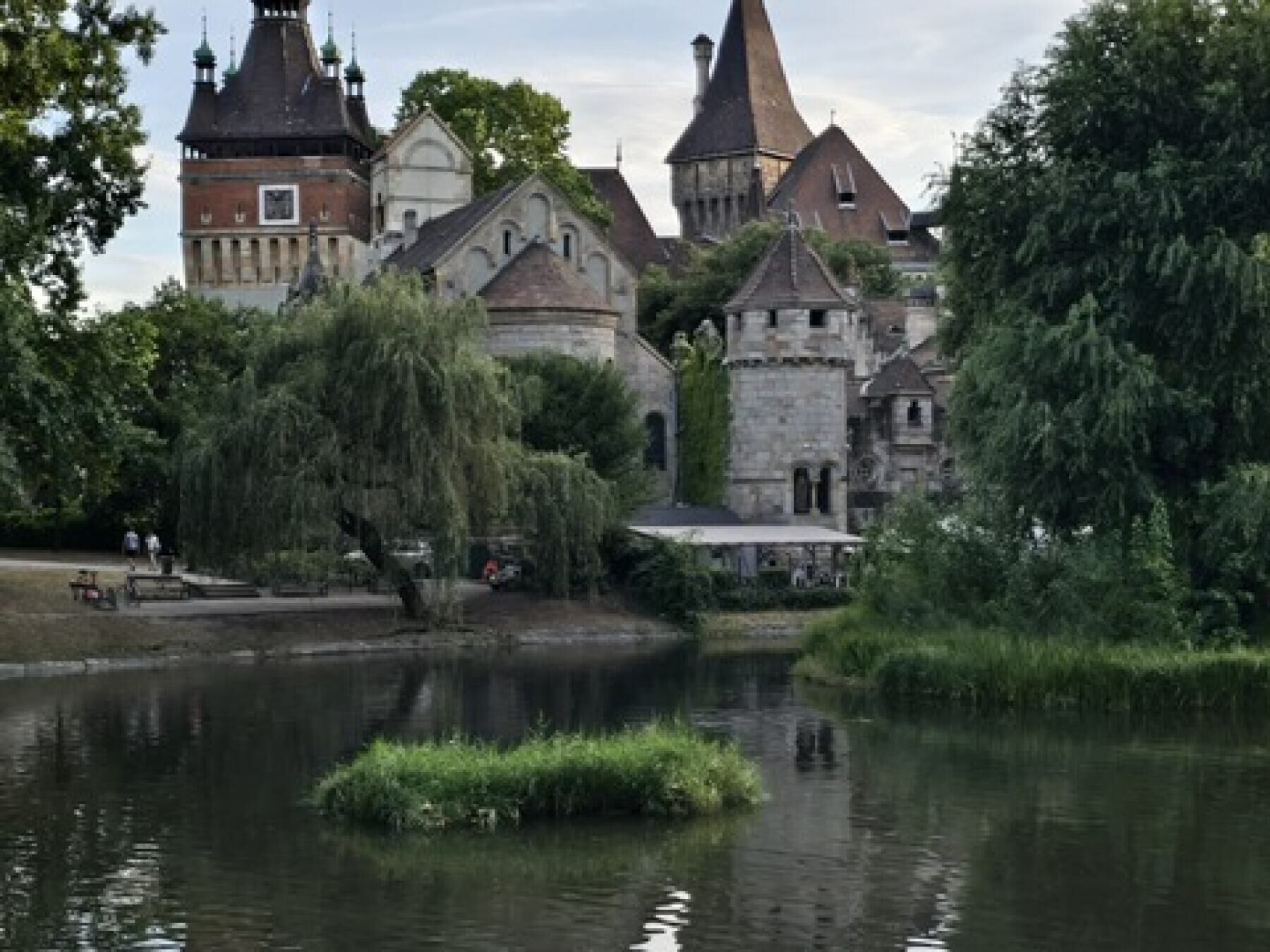
The replica was created as part of the Vajdahunyad Castle complex for the 1896 Millennial Exhibition to showcase Hungary's architectural heritage. It was so well-received that it was later reconstructed in durable materials.
One of the most striking features is The Romanesque Portal, which is adorned with intricate carvings and figures, showcasing the artistry of medieval stonemasons. It features Biblical scenes and saints. The interior of the chapel is designed to reflect the simplicity and solemnity of Romanesque ecclesiastical architecture. It often includes features such as round arches, thick walls, and small windows that create a dimly lit, contemplative atmosphere.
Let’s go check out the castle and the main grounds.
Place 1
Széchenyi Thermal Bath
Place 2
Ják Chapel
Place 3
Anonymous Statue
Place 4
Vajdahunyad Castle
Place 5
Outdoor Ice Rink
Place 6
Heroe's Square
Place 7
Museum of Fine Arts and Museum of Architecture
Place 8
Andrássy Avenue
Place 9
HOPP Museum
Place 10
Kodaly Museum
Place 11
World War I Memorial
Place 12
Terror Haza Museum
Place 13
Cuisine and Refreshment Break
Place 14
Opera House (Magyar Állami Operaház)
Place 15
Shopping
Place 16
St. Stephen's Basilica
Place 17
Ruin Bars
Place 18
Ferris Wheel
Place 19
Vörösmarty Square
Place 20
Danube Promenade
Place 21
Buda Castle and Parliament
Place 22
Storytime
Place 23
Széchenyi Chain Bridge
Place 24
Additional Structures on the Hill
Place 25
Buda Castle Funicular
Place 26
Sandor Palace
Place 27
House of Houdini
Place 28
Labyrinth of Count Dracula
Place 29
Alley and The Hertl-Strobl House
Place 30
Matthias Church
Place 31
Fisherman's Bastion