

Cairo, Egypt: Self-Guided Walking Tour of Historic Islamic Cairo, Al-Muizz Street & Khan el-Khalili
About this English self-guided 1h:10m walking tour in Cairo
Explore the old city of Cairo on this GPS-guided, self-guided audio walking tour of Historic Islamic Cairo, a UNESCO World Heritage Site.
Walk the full length of Al-Muizz Street, often called the world's greatest open-air museum of Islamic architecture, from the Fatimid gate of Bab Zuweila to the northern walls at Bab al-Futuh and Bab al-Nasr.
Discover how a palace city founded in 969 became the heart of Cairo, and how Fatimid, Ayyubid, Mamluk and Ottoman rulers each left their mark.
Stand before Mamluk masterpieces like the Qalawun complex with its medieval free hospital, a Gothic doorway taken from a Crusader church, the moonlit façade of Al-Aqmar, and the hidden courtyard house of Bayt al-Suhaymi.
Hear the stories of a queen who hid her husband's death to win a war, a caliph who banned molokhia and vanished into the hills, a sultan whose grand tomb stayed empty, and French soldiers who carved names into medieval gates.
Walk through Naguib Mahfouz's childhood neighbourhood in Gamaliya, pass the shrine of Al-Hussein, and lose yourself in the lantern-lit lanes of Khan el-Khalili.
Finish with mint tea at El Fishawy, the legendary mirrored café that has welcomed generations of Cairenes.
In Islamic Cairo, sidewalks are often narrow, uneven, or blocked by parked cars and shop displays.
Because of this, people often walk along the edge of the street, close to traffic.
Watch your step, stay alert, and take your time, and you'll be fine.
About 3 km: roughly 1 hour 10 minutes of pure walking, and around two hours with listening time, fully self-guided at your own pace.
Top landmarks on this tour
 Khan el-Khalili
- Al-Hakim Mosque
- Bab Zuweila
- Bab al-Futuh
- Bayt al-Suhaymi
- Bab al-Nasr
- 1For the best experience, begin at the tour's recommended starting point and follow the stops in order.
- 2Want to start somewhere else? Simply use Start At on the tour screen, before tapping Start Tour, to begin from any stop.
- 3Need to detour or skip a stop along the way? Tap Tour Assistant (
![UCPlaces AI Bot Icon]() ) to use Force Play, Skip, and Back, for full flexibility.
 ) to use Force Play, Skip, and Back, for full flexibility.
Route Preview
- Category
- Language
- Mode
- Region
- Country
- City

Places (POIs) visited during this tour
Al-Muizz li-Din Allah St at Bab Zuweila, Al-Darb al-Ahmar
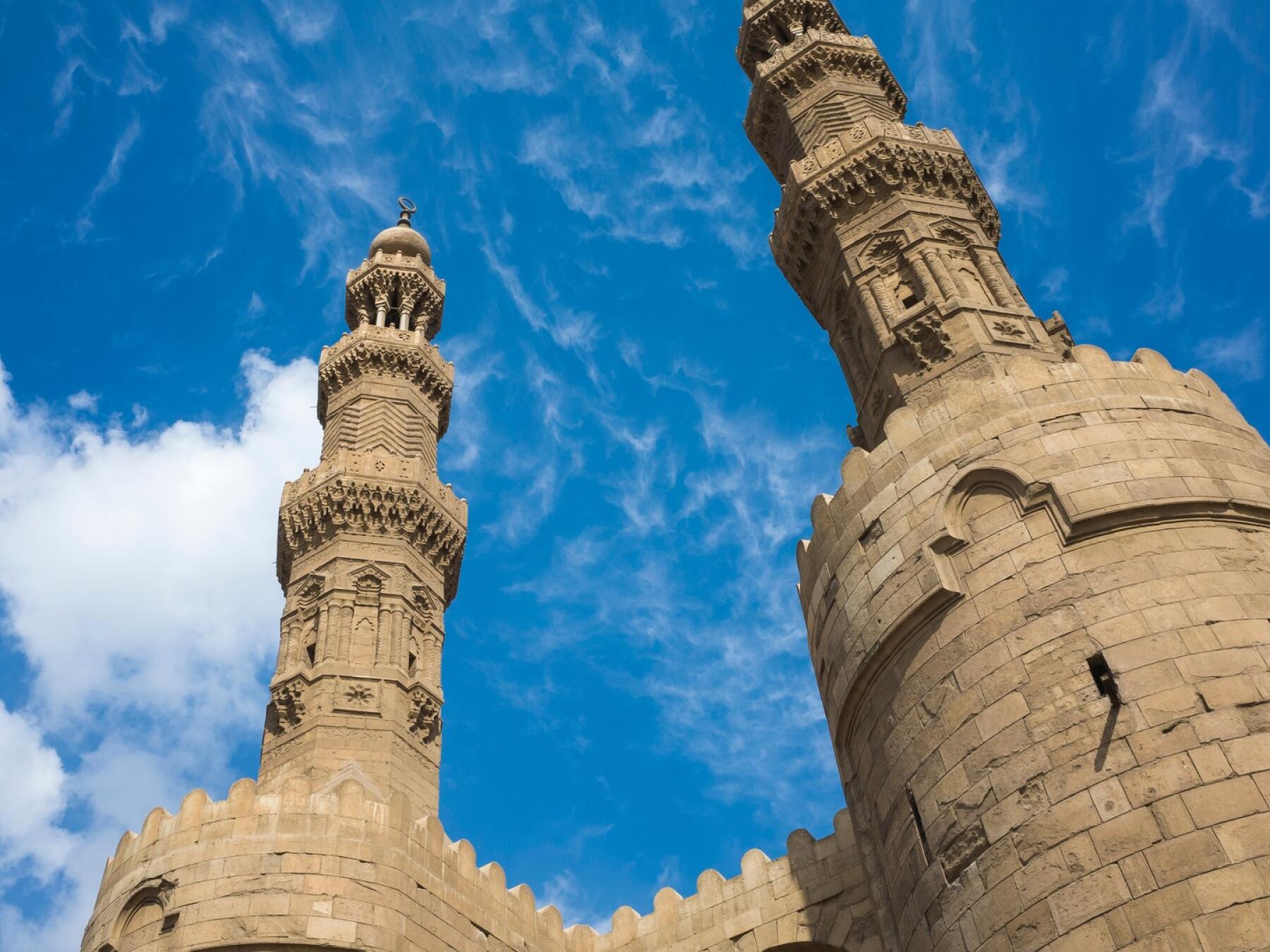
It was commissioned by the vizier Badr al-Jamali and named after the Zuwayla, North African soldiers who served the Fatimid caliphs.
The twin minarets on top belong to the Mosque of Sultan al-Mu'ayyad Shaykh, built in the 1410s on the site of the prison where he was once held.
For centuries the gate was Cairo's stage for executions, and in 1517 the last Mamluk sultan, Tumanbay II, was hanged here by the Ottomans.
People also came here for blessings, hammering nails into the doors and leaving locks of hair to ask a saint to cure their pains.
You can climb up inside the gate and the minarets for one of the best rooftop views in Cairo (separate ticket).
Al-Muizz St (Al-Ghuriya market section), between Bab Zuweila and Al-Azhar St
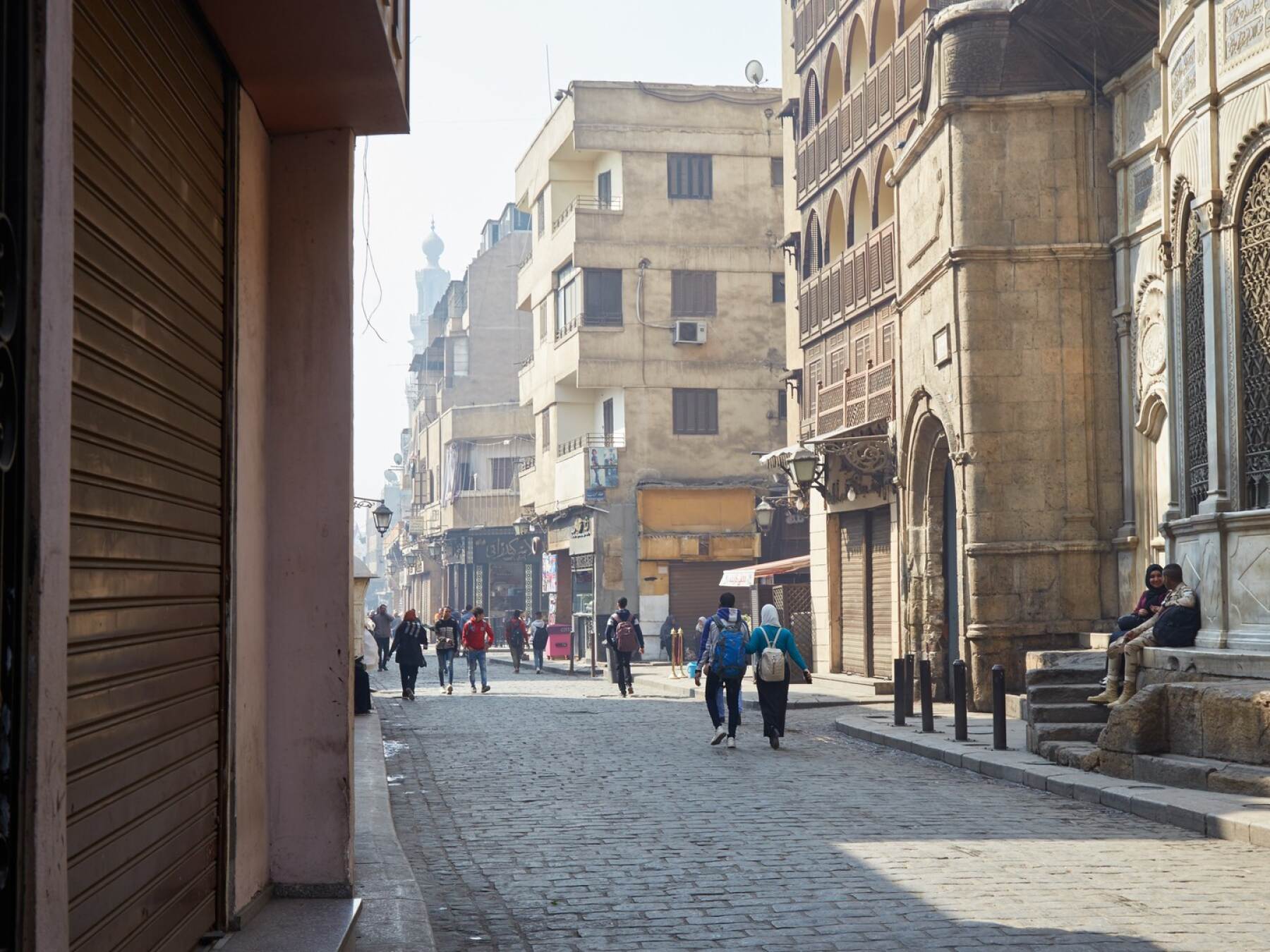
In 969 the Fatimid general Jawhar al-Siqilli, 'the Sicilian', laid out a walled royal city here for Caliph al-Mu'izz li-Din Allah and named it al-Qahira, 'the Victorious', the origin of the name Cairo.
For its first two centuries it was a private palace city, while ordinary Egyptians lived in older Fustat to the south.
This street, named after al-Mu'izz, ran about a kilometre and a half from gate to gate, and it was the route of royal processions.
Look right for the small Al-Fakahani 'Fruit-sellers' Mosque', founded in the Fatimid era and rebuilt in 1735, which still keeps its carved Fatimid wooden doors.
UNESCO listed Historic Cairo as a World Heritage Site in 1979.
Place 1
Bab Zuweila: The Gate of Heads and Hopes
Place 2
The Street of Sultans, Tents and Tarboush
Place 3
Al-Ghuri Complex: The Sultan Who Never Came Home
Place 4
Sultan Barsbay's Mosque and the Spice Crossroads
Place 5
Al-Salih Ayyub and the Queen Shajar al-Durr
Place 6
Bayn al-Qasrayn: The Sultans' Skyline
Place 7
Bashtak Palace and the Fountain at the Fork
Place 8
Al-Aqmar: The Moonlit Mosque
Place 9
Bayt al-Suhaymi: Life Behind the Lattice
Place 10
Sulayman Agha al-Silahdar and the Lemon Market
Place 11
Al-Hakim Mosque: The Caliph Who Banned Molokhia
Place 12
Bab al-Futuh: The Gate of Conquests
Place 13
Bab al-Nasr: The Gate of Victory
Place 14
Gamaliya: Baybars al-Jashankir and Mahfouz's Neighbourhood
Place 15
Wikalat Bazara: A Caravan Inn
Place 16
Midan al-Hussein and Al-Azhar
Place 17
Khan el-Khalili: The Bazaar of a Thousand Lamps
Place 18
Finale: Tea at El Fishawy