

Charleston Self-guided (GPS-led) Walking Tour, South Carolina - Charleston 101 Rich History & Main sites
4
Places: 21 POIs
Distance: 1.76 mi
Duration: 1h:17m
GPS-guided narration through
Your Smartphone
Tour #427
About this English self-guided 1h:17m walking tour in Charleston
Welcome to Historic America’s walking tour of Charleston. We’re glad you could join us! I’m Aaron, your guide (but I also respond to professional history nerd). This is the part of the tour where I fit in my shameless plug for our website (www.historicamerica.org) and invite you to use #historicamericatours on social media while traveling alongside us today.
This tour focuses on some of Historic Charleston’s “must see” attractions and gives you a glimpse into the rich history of the city. Highlights include the Charleston City Market, a waterfront park with a view of the the third longest cable-stayed bridge in the Western Hemisphere, the famous Rainbow Row, and the spot where the Civil War began.
- 1For the best experience, begin at the tour's recommended starting point and follow the stops in order.
- 2Want to start somewhere else? Simply use Start At on the tour screen, before tapping Start Tour, to begin from any stop.
- 3Need to detour or skip a stop along the way? Tap Tour Assistant (
![UCPlaces AI Bot Icon]() ) to use Force Play, Skip, and Back, for full flexibility.
) to use Force Play, Skip, and Back, for full flexibility.
 ) to use Force Play, Skip, and Back, for full flexibility.
Route Preview
- Category
- Language
- Mode
- Region
- Country
- City

Places (POIs) visited during this tour
Place #1
![Map Pin]()
Recommended Starting Point
Distance: 0.10mi
, Attraction : Riviera at Charleston Place - corner of King & Market

138 Market St, Charleston, SC 29401, USA
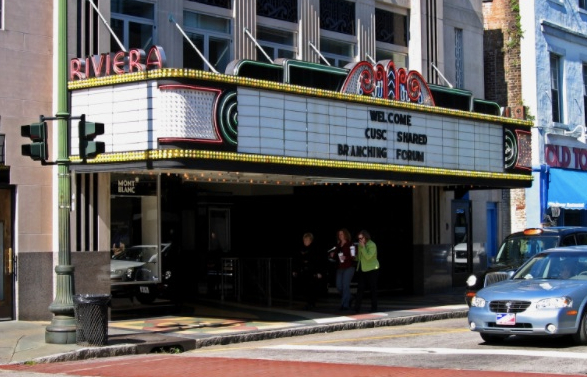
Welcome to Charleston!
Welcome to Charleston - one of the oldest cities & most historic cities in the United States of America!
This tour will help you get to know this beautiful campus nestled right here in the heart of Washington, DC.
Before we begin, let me briefly explain how UC Places works.
It uses your location to play audio automatically, at the right time and place. That way, you may explore on your own schedule with step by step navigation and audio commentary. After tapping the ‘Start Tour’ option, you heard the tour intro.
I suggest that before we begin this tour, you look at the route and the Points of Interest, or POI’s on the map I have planned for you. This will come in handy if there are any issues with the GPS tour technology due to all the tall buildings here.
Every time you reach a POI, I will automatically narrate that location. If you can see on the map that you're in the right spot but the audio isn't playing, give it a few seconds. Usually the gps will find you. If it doesn’t, you may always forward the audio to the next track, and if you wish to replay the audio for any POI, simply use the audio control buttons on the screen bottom. Don't worry if I'm silent at times when I'm not giving directions or telling stories. Remember, there's a map on your screen if you ever feel lost.
When you are ready, head in through the gates and meet me at the statue that is straight ahead of you.
This tour will help you get to know this beautiful campus nestled right here in the heart of Washington, DC.
Before we begin, let me briefly explain how UC Places works.
It uses your location to play audio automatically, at the right time and place. That way, you may explore on your own schedule with step by step navigation and audio commentary. After tapping the ‘Start Tour’ option, you heard the tour intro.
I suggest that before we begin this tour, you look at the route and the Points of Interest, or POI’s on the map I have planned for you. This will come in handy if there are any issues with the GPS tour technology due to all the tall buildings here.
Every time you reach a POI, I will automatically narrate that location. If you can see on the map that you're in the right spot but the audio isn't playing, give it a few seconds. Usually the gps will find you. If it doesn’t, you may always forward the audio to the next track, and if you wish to replay the audio for any POI, simply use the audio control buttons on the screen bottom. Don't worry if I'm silent at times when I'm not giving directions or telling stories. Remember, there's a map on your screen if you ever feel lost.
When you are ready, head in through the gates and meet me at the statue that is straight ahead of you.
Read More
Place #2
![Map Pin]()
Distance: 0.11mi
, Attraction : Historic Charleston City Market
Meeting St / S Market St, Charleston, SC 29401, USA

Meet Me at the Market
As you near the intersection of Market & Meeting Streets, across the road you should see a yellow building directly opposite you. If you look in front of, or to either side of the building, you will likely see vendors selling goods - from sweetgrass baskets to local foods to jewelry and clothing. Welcome to the Charleston City Market! Remain in place for a moment as I tell you about it.
Charleston’s first public market was established in 1692 but was originally located just a few blocks away, at the corner of Broad and Meeting, where Charleston City Hall stands today. Almost a hundred years later, the Revolutionary War General Charles Pinckney upgraded the location by donating the strip of land in front of you for express use as a public market. Because of that, this land must remain in use as a market in perpetuity.
In the beginning, the market served primarily as a place to sell food. Vendors would pay $2.00 to rent a booth with a marble slab to keep their meat cold. This attracted vultures - so many in fact, that they soon became known as the “Charleston Eagle”. They were protected by law, however, because of their hard work as public servants - putting in long, hard days keeping the streets clean of scraps. Needless to say, it would have looked very different a couple centuries ago. However, if you try hard enough, you can still catch a whiff of the old market - ahh, the smells of the city. Well, despite the smell, the market would have also acted as a social center where the middle and lower classes would gather to drink and play games.
I now invite you to cross the street and walk through the first block of the present day market, where you are almost guaranteed to see sweetgrass baskets being woven and sold. Though today the makers of these baskets are primarily Gullah women, it would have often been enslaved males making the baskets a few hundred years ago. The Gullah are an African American cultural group who speak a unique creole language. They’ve been in the South Carolina Lowcountry for over 300 years and their legendary basket weaving skills have helped to preserve their history & culture. It’s a tradition dating back to the beginning of the transatlantic slave trade as the modern baskets strongly resemble those woven in West Africa before the European slave traders arrived. The shukublay baskets of Sierra Leone were coiled so tightly that they could hold water. When enslaved workers made these baskets on the plantation, they were used to separate the rice seed and chaff as well as to hold household goods. After emancipation, sale of the baskets became a way to make money for the artisans able to weave them. This money carried many families through the Great Depression and World War II. When Ida Jefferson Wilson lost her job picking strawberries in the 1930s, she set up the first basket stand along Highway 17 near Boone Hall Plantation. Like Ida before them, today’s weavers are fighting to ensure that this symbol of the Gullah people will be preserved for generations to come.
Charleston’s first public market was established in 1692 but was originally located just a few blocks away, at the corner of Broad and Meeting, where Charleston City Hall stands today. Almost a hundred years later, the Revolutionary War General Charles Pinckney upgraded the location by donating the strip of land in front of you for express use as a public market. Because of that, this land must remain in use as a market in perpetuity.
In the beginning, the market served primarily as a place to sell food. Vendors would pay $2.00 to rent a booth with a marble slab to keep their meat cold. This attracted vultures - so many in fact, that they soon became known as the “Charleston Eagle”. They were protected by law, however, because of their hard work as public servants - putting in long, hard days keeping the streets clean of scraps. Needless to say, it would have looked very different a couple centuries ago. However, if you try hard enough, you can still catch a whiff of the old market - ahh, the smells of the city. Well, despite the smell, the market would have also acted as a social center where the middle and lower classes would gather to drink and play games.
I now invite you to cross the street and walk through the first block of the present day market, where you are almost guaranteed to see sweetgrass baskets being woven and sold. Though today the makers of these baskets are primarily Gullah women, it would have often been enslaved males making the baskets a few hundred years ago. The Gullah are an African American cultural group who speak a unique creole language. They’ve been in the South Carolina Lowcountry for over 300 years and their legendary basket weaving skills have helped to preserve their history & culture. It’s a tradition dating back to the beginning of the transatlantic slave trade as the modern baskets strongly resemble those woven in West Africa before the European slave traders arrived. The shukublay baskets of Sierra Leone were coiled so tightly that they could hold water. When enslaved workers made these baskets on the plantation, they were used to separate the rice seed and chaff as well as to hold household goods. After emancipation, sale of the baskets became a way to make money for the artisans able to weave them. This money carried many families through the Great Depression and World War II. When Ida Jefferson Wilson lost her job picking strawberries in the 1930s, she set up the first basket stand along Highway 17 near Boone Hall Plantation. Like Ida before them, today’s weavers are fighting to ensure that this symbol of the Gullah people will be preserved for generations to come.
Read More
Tour itinerary stops | Additional places you'll see on this self-guided tour
Place 1
Welcome to Charleston!
Place 2
Meet Me at the Market
Place 3
Turn Right on Church
Place 4
Directions to the Magazine
Place 5
Fire Away! A Look at Charleston’s Powder Magazine
Place 6
A Glimpse of the “Holy City”
Place 7
Churches Everywhere!
Place 8
A Walk to St. Michael’s
Place 9
Four Corners of the Law
Place 10
Charleston & Slavery
Place 11
Unity Alley
Place 12
A Resilient City
Place 13
From the Bridge to the Castle
Place 14
The Walk to Exchange
Place 15
Independence in Charleston
Place 16
A Stroll Down Rainbow Row
Place 17
A Fire & A Wall
Place 18
Old Homes
Place 19
A Tale of Two Families
Place 20
And The War Came
Place 21
Finally, Some Shade!
Click below for full access to this tour
Have any questions about this tour? Or a general travel / self-guided tours question? That's completely natural
+ How long does this tour take?
Most travelers complete this tour in approximately 1 to 1.5 hours, depending on pace, time spent at each stop, and optional detours. Having said that, please remember that self-guided tours are extremly flexible (you can start, pause, continue anytime) and everyone has their own pace.
+ What does this tour include?
This self-guided walking tour includes 21 stops, covering top attractions such as Welcome to Charleston!, Meet Me at the Market, Turn Right on Church, Directions to the Magazine, Fire Away! A Look at Charleston’s Powder Magazine.
+ Where does the tour start?
The tour starts at Welcome to Charleston! (Address: 138 Market St, Charleston, SC 29401, USA). You can begin the tour there or join from any stop along the route.
+ What type of tour is this?
This is a self-guided walking tour designed to be completed on foot through walkable areas and city highlights.
+ Can I do this tour at my own pace?
Yes, this is a self-guided walking tour, so you can start anytime and explore at your own pace. You can pause, skip stops, or spend more time at places that interest you. You can even split it into multiple days. Explore however feels right for you.
+ Is this a walkable tour?
Yes, this tour is fully walkable and designed to follow a comfortable route through pedestrian-friendly areas.
+ Do I need anything in order to take the tour?
There is one thing that you need - A mobile phone (with the UCPlaces app installed and active location services, and a cellular data plan with a decent signal for downloading the tour) and comfortable walking shoes! But here are some recommendations for a great experience: 1. Make sure your phone is fully charged and bring a mobile charger/battery. 2. Bring earphones for the best experience. 3. Bring a bottle of water and dress appropriately according to the weather forecast.
+ How will I navigate from point to point during the tour?
The tour uses GPS-based navigation through the UCPlaces app, with automatic audio playback and step-by-step directions between stops. Just follow the route (cross streets carefully using crosswalks) and listen to the audio guide. Use the resume feature to continue the from where you recently stopped (or closed the app). Easily skip or go back to stops.
+ Is this tour suitable for families or groups?
Yes, self-guided tours are ideal for families and small groups, allowing everyone to explore comfortably without being tied to a fixed schedule.
+ What makes a self-guided tour better than a guided tour?
Self-guided tours are more flexible, affordable, and personalized. You can avoid crowds, choose your pace, and focus on the stops that interest you most.
+ I installed the app and it's now asking for GPS and media access permissions, why?
The app is your tour-guide, it needs to know where you are located on the map to be able to trigger the points of interest. It also needs access to audio and media files to provide you with this experience.
+ What happens if there are unexpected roadblocks or navigation issues?
We have been working hard to deliver a great experience. Though you may run into unexpected obstacles (the world is constantly changing), our app has multiple features and mechanisms in place to help you overcome them, including: AI assistance, force play an audio if you can't reach the stop, skip or return to stops, automatic rerouting and more.
+ Can I take the tour in my language?
Though all of our tours are primarily in English, many tours are muyltilingual (including: Spanish, German, Portuguese, French, Japanese, Hebrew, French, Arabic and more...). The tour language options depend on the specific tour - You can easily check which languages are available in the tour screen!