
Sofia's Best: Self-Guided Walking Tour of Main Sites
About this English self-guided 1h:49m walking tour in Sofia
Welcome to Sofia, the capital of Bulgaria and one of Europe's oldest continuously inhabited cities. I'm delighted you'll be joining me as we explore a place where nearly every street reveals another chapter of a story that stretches back more than 7,000 years.
Today, we'll walk through the very heart of the city, discovering magnificent churches and grand public buildings, ancient Roman streets, peaceful parks, lively squares, and some of Bulgaria's most important cultural and political landmarks. Along the way, you'll learn how Sofia has been shaped by Thracians, Romans, Byzantines, Bulgarians, Ottomans, and many others who have called this remarkable city home.
Before we begin, let's talk about the city's name.
Long before it became Sofia, this city was known as Serdica, named after the Serdi, a Thracian tribe that settled here centuries before the Romans arrived. When the Romans conquered the region in the 1st century AD, Serdica grew into one of the empire's most prosperous cities. Its location at the crossroads of important trade routes made it a thriving center of commerce, culture, and government.
The city became so important that the Roman Emperor Constantine the Great is said to have declared, "Serdica is my Rome." According to tradition, he even considered making it the capital of the Roman Empire before ultimately choosing Byzantium, the city that would later become Constantinople.
The name Sofia didn't appear until much later. It comes from the nearby Church of Saint Sofia, one of the oldest buildings in the city. Interestingly, the name doesn't refer to a woman named Sofia. Instead, it comes from the Greek word Sophia, meaning wisdom, and specifically refers to Holy Wisdom, an important concept in early Christianity. Over time, the church became such a prominent landmark that people gradually began referring to the entire city by its name.
As you'll soon discover, Sofia is a city of fascinating contrasts. Ancient Roman ruins lie beneath modern streets. Ottoman architecture stands just steps from Orthodox cathedrals. Communist-era government buildings share the skyline with elegant palaces and lively pedestrian boulevards. Somehow, all these different periods of history come together to create a city that feels both timeless and unmistakably modern.
A few quick tips before we set off. Please stay aware of your surroundings, especially when crossing streets, and always use designated crosswalks or pedestrian underpasses when directed. If you'd like to spend extra time exploring a church, museum, or landmark, simply pause the tour and resume whenever you're ready. This is your journey, so take it at your own pace.
Now, if you're ready, let's begin our walk through one of Europe's most underrated capitals and uncover the remarkable stories that have shaped Sofia for thousands of years.
- 1For the best experience, begin at the tour's recommended starting point and follow the stops in order.
- 2Want to start somewhere else? Simply use Start At on the tour screen, before tapping Start Tour, to begin from any stop.
- 3Need to detour or skip a stop along the way? Tap Tour Assistant (
![UCPlaces AI Bot Icon]() ) to use Force Play, Skip, and Back, for full flexibility.
) to use Force Play, Skip, and Back, for full flexibility.
 ) to use Force Play, Skip, and Back, for full flexibility.
Route Preview

Places (POIs) visited during this tour

Sofia Center, pl. "Sveti Aleksandar Nevski" 8, 1000 Sofia, Bulgaria
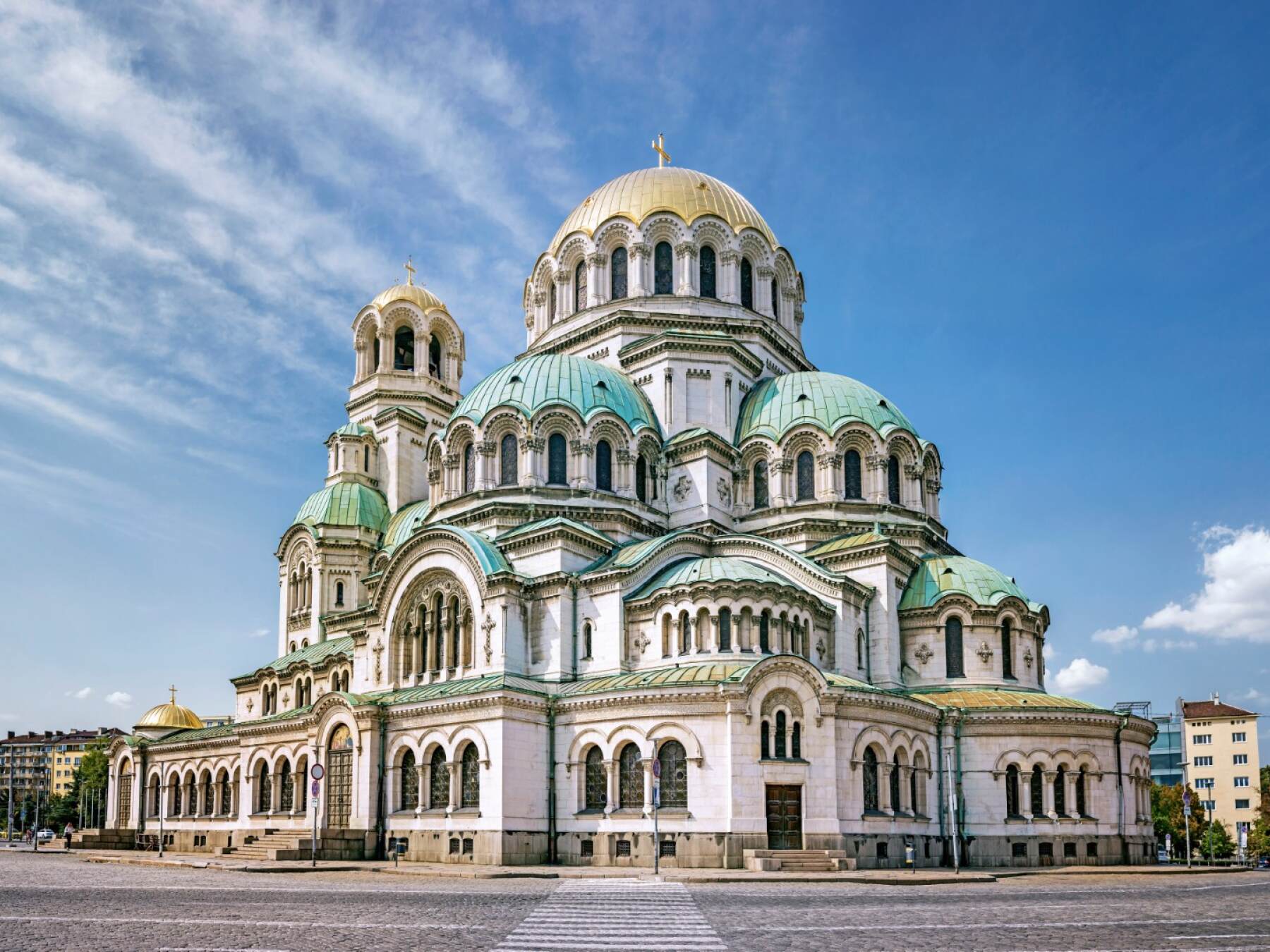
Although it looks centuries old, the cathedral was completed in 1912. It was built to honor the roughly 200,000 Russian soldiers who lost their lives during the Russo-Turkish War of 1877–1878, a conflict that ultimately led to Bulgaria's liberation after nearly five centuries under Ottoman rule. That's why the cathedral bears the name of Saint Alexander Nevsky, a revered 13th-century Russian prince and military leader.
Take a moment to admire the remarkable architecture. The cathedral was designed in the Neo-Byzantine style, inspired by the great churches of the Eastern Roman Empire. Its soaring central dome reaches almost 150 feet, while the gleaming gold-plated domes have become one of Sofia's defining landmarks. Inside, if it's open during your visit, you'll find magnificent frescoes, colorful marble from across Europe, intricate mosaics, and an atmosphere of quiet reverence that contrasts beautifully with the bustling city outside.
But this square is more than just home to a famous cathedral. It forms the historic heart of modern Sofia. Over the next couple of hours, we'll discover how this city has been shaped by ancient Romans, medieval Bulgarian kings, centuries of Ottoman rule, and the dramatic political changes of the twentieth century. Along the way, you'll see that Sofia isn't simply a city of monuments—it's a place where nearly every street tells another chapter of its remarkable story.
When you're ready, we'll continue our walk into the fascinating history that surrounds this magnificent cathedral.
Read More
Sofia Center, ul. "Oborishte" 4, 1000 Sofia, Bulgaria
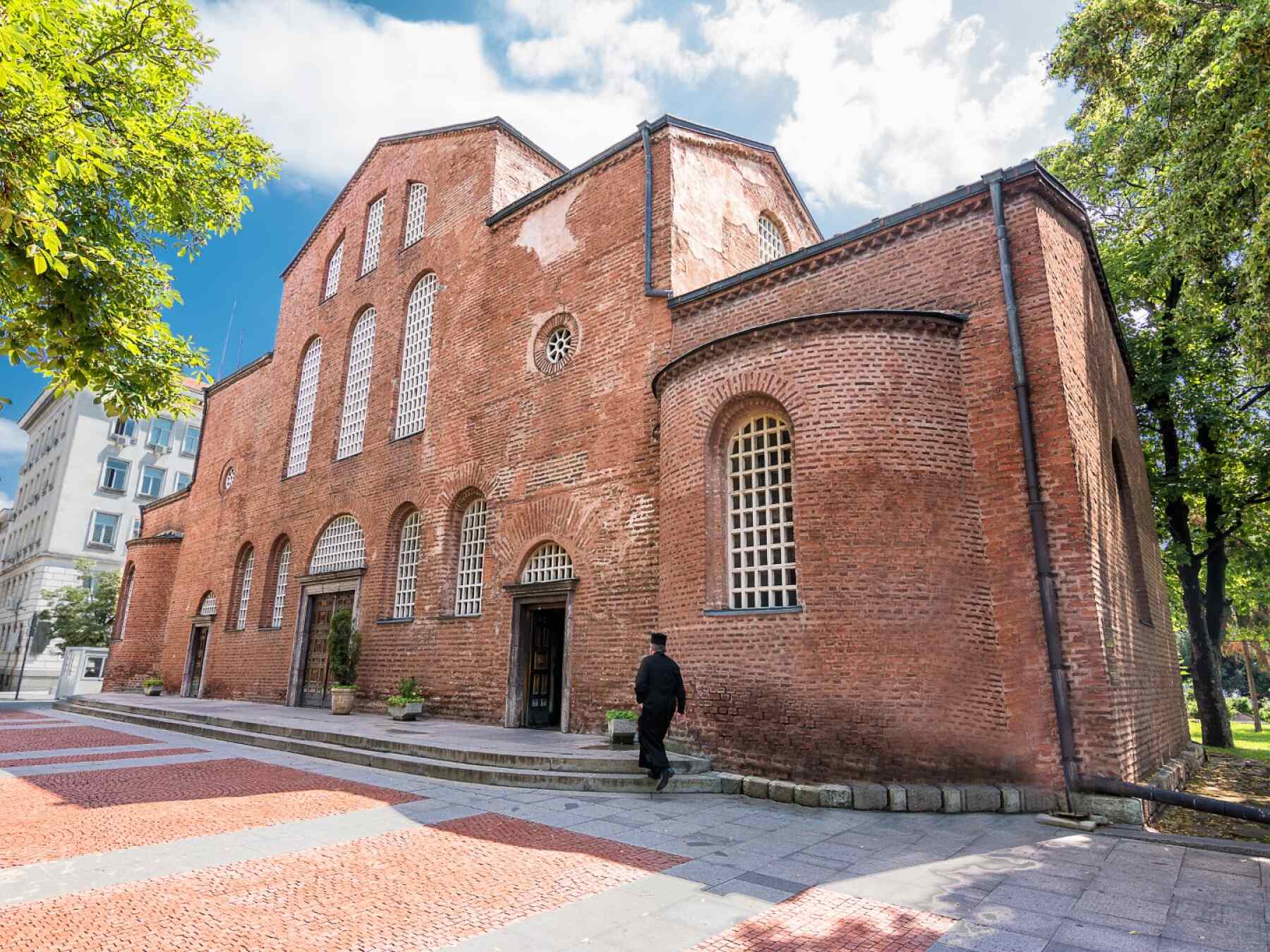
Built in the 6th century during the reign of the Byzantine Emperor Justinian I, Saint Sofia Church has witnessed nearly 1,500 years of history. Over the centuries, it has survived invasions, earthquakes, and changing empires. During the centuries of Ottoman rule, it was converted into a mosque, and even served as a warehouse before eventually being restored as a Christian church.
The church stands on an even older site. Beneath its foundations lie the remains of earlier churches and an extensive Roman necropolis, a reminder that this area has been a place of worship and remembrance since ancient times.
Before the 14th century, the city was known as Serdica, named after the Celtic Serdi tribe who settled here. As the Church of Saint Sofia became the city's most recognizable landmark, people gradually began referring to the city by the church's name instead. The name "Sofia" comes from the Greek word for "wisdom," but it refers to Holy Wisdom rather than to a saint named Sofia.
Just in front of the church is the Monument to the Unknown Soldier, one of Bulgaria's most important national memorials. It honors the countless Bulgarian soldiers who lost their lives defending their country but whose names were never known. An eternal flame burns continuously as a symbol of remembrance, while the bronze lion standing nearby—a proud national emblem of Bulgaria—keeps silent watch over the memorial.
Take a moment to appreciate how these two landmarks complement one another. Behind you stands the magnificent cathedral celebrating Bulgaria's liberation, while beside you is the ancient church that gave the city its name. Together with the memorial, they tell a story spanning nearly fifteen centuries of faith, resilience, and national identity.
Read More
Place 1
Alexander Nevsky Cathedral
Place 2
Saint Sofia Church & the Monument to the Unknown Soldier
Place 3
Russian Cultural and Information Centre
Place 4
Garden of the National Gallery
Place 5
The Royal Palace & Sofia City Garden
Place 6
Church of Saint Nicholas the Wonderworker
Place 7
Crystal Garden & the Central Military Club
Place 8
Old National Assembly & the Tsar Liberator Monument
Place 9
Sofia University "St. Kliment Ohridski"
Place 10
National Museum of Paleontology
Place 11
Sarmadzhiev House
Place 12
Prince's Garden & the Former Monument to the Soviet Army
Place 13
Ivan Vazov Street
Place 14
Ivan Vazov National Theatre
Place 15
Crossing Sofia City Garden
Place 16
National Archaeological Museum
Place 17
National Assembly of Bulgaria
Place 18
The Largo & Ancient Serdica
Place 19
Regional History Museum of Sofia
Place 20
Banya Bashi Mosque
Place 21
Ancient Serdica Archaeological Park
Place 22
The Square of Religious Tolerance
Place 23
Saint Nedelya Cathedral
Place 24
National Palace of Justice
Place 25
Vitosha Boulevard & Farewell