

Knoxville's Best: Self-Guided Walking Tour from Downtown to the University of Tennessee
About this English self-guided 1h:38m walking tour in Knoxville
Welcome to Knoxville, Tennessee, a city where frontier history, college traditions, artistic energy, and bold ambitions come together along the banks of the Tennessee River.
On this self-guided walking tour, you'll explore some of Knoxville's most fascinating landmarks and hidden stories. We'll trace the city's origins through the Treaty of the Holston and James White's Fort, discover how Tennessee took shape at Blount Mansion, stroll through the lively streets of downtown, and experience the creative spirit of the Old City. Along the way, you'll encounter iconic sights like the Tennessee Theatre, the giant basketball atop the Women's Basketball Hall of Fame, the golden Sunsphere from the 1982 World's Fair, and the beautiful campus of the University of Tennessee.
This tour covers approximately three miles and can be completed at a leisurely pace in about two to three hours. Feel free to pause whenever something catches your eye, stop for a meal in Market Square, or take time to enjoy the many parks and public spaces you'll encounter along the route.
If you're driving to the beginning of the tour, we recommend parking at 600 Neyland Drive Parking, conveniently located near our starting point along the Tennessee River.
As always with UCPlaces, the tour will guide you automatically as you walk, with stories beginning as you approach each point of interest. For the best experience, please remain aware of your surroundings, use designated crosswalks, and follow all local pedestrian signals.
So lace up your walking shoes and get ready to discover a side of Knoxville that many visitors overlook. From frontier beginnings to a World's Fair that welcomed millions, Knoxville's story is one of resilience, reinvention, and community.
Let's begin exploring.
- 1For the best experience, begin at the tour's recommended starting point and follow the stops in order.
- 2Want to start somewhere else? Simply use Start At on the tour screen, before tapping Start Tour, to begin from any stop.
- 3Need to detour or skip a stop along the way? Tap Tour Assistant (
![UCPlaces AI Bot Icon]() ) to use Force Play, Skip, and Back, for full flexibility.
) to use Force Play, Skip, and Back, for full flexibility.
 ) to use Force Play, Skip, and Back, for full flexibility.
Route Preview
- Category
- Language
- Mode
- Region
- Country
- City

Places (POIs) visited during this tour

Bicentennial Park, 296 Neyland Dr, Knoxville, TN 37902, USA
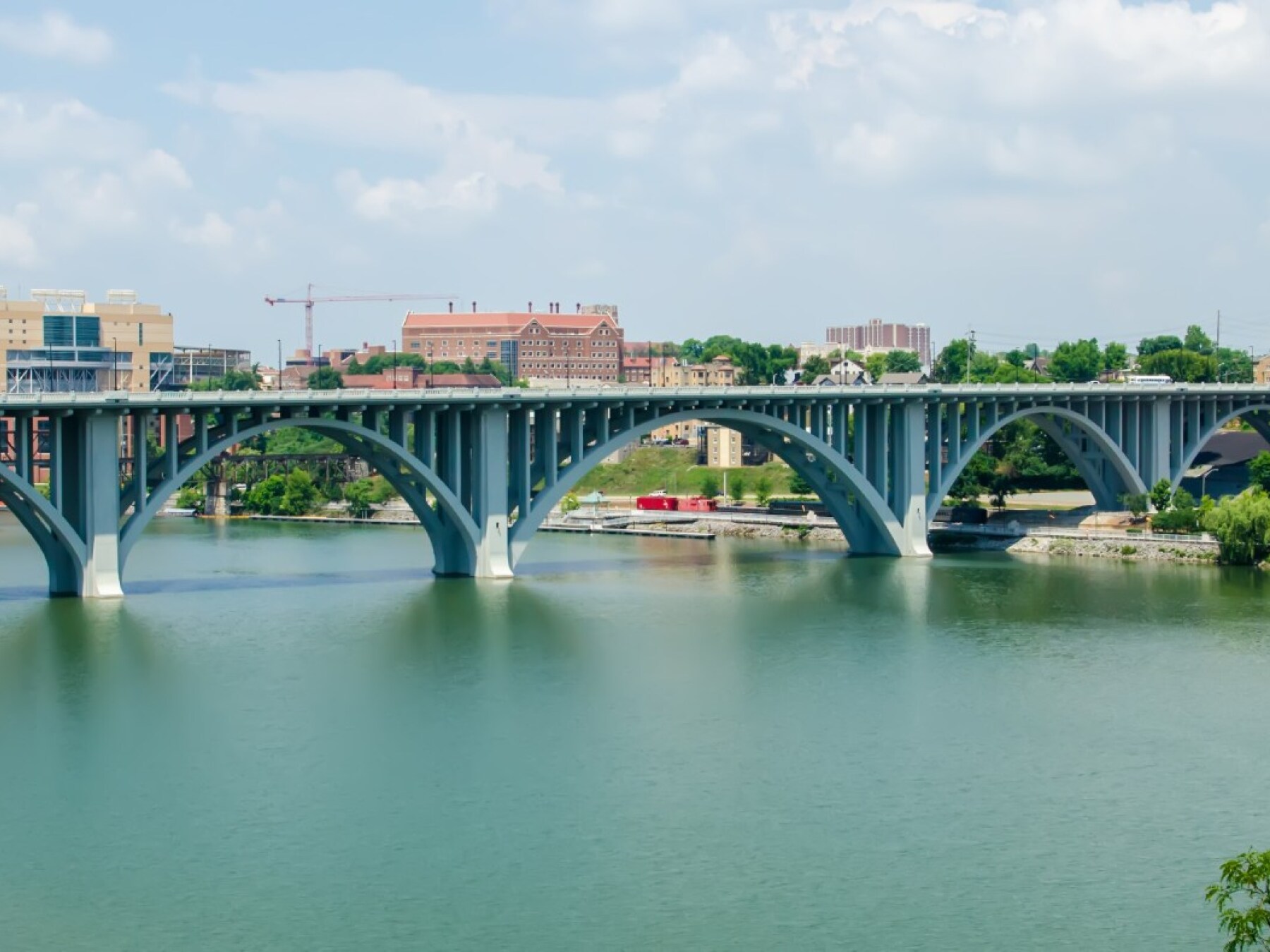
Just a short distance from here, an important chapter in American history unfolded. In 1791, the Treaty of the Holston was signed between representatives of the newly formed United States government and leaders of the Cherokee Nation. Negotiated by Governor William Blount on behalf of President George Washington, the treaty sought to establish peace, define territorial boundaries, and regulate relations between settlers and the Cherokee people.
While the agreement was intended to reduce conflict on the frontier, its promises were not always honored. Continued westward expansion placed increasing pressure on Cherokee lands, making the treaty an important but complicated milestone in the history of the region.
The river before you played a central role in that story. Long before highways and railroads connected East Tennessee to the rest of the country, people traveled these waters for trade, communication, and exploration. The river helped shape the growth of Knoxville, transforming it from a frontier settlement into the thriving city you see today.
As you continue your journey through Knoxville, you'll discover how layers of Native American heritage, frontier ambition, industrial growth, and cultural reinvention have all contributed to the city's unique character.
Read More
466 Neyland Dr, Knoxville, TN 37915, USA
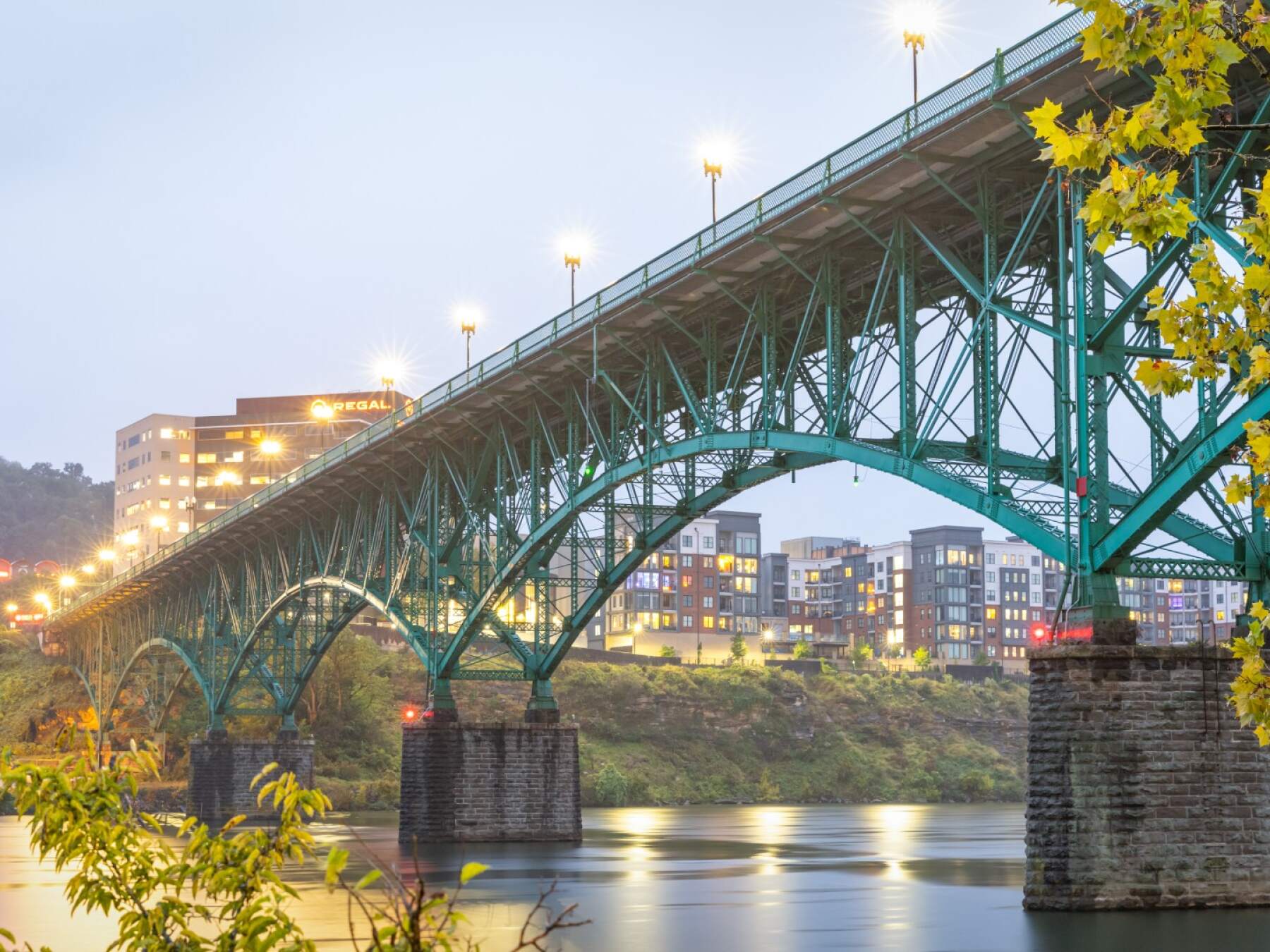
From here, take a moment to look behind you. The striking green steel bridge spanning the Tennessee River is the historic Gay Street Bridge, the oldest bridge across the river in Knoxville. Opened in 1898, its distinctive arches have become one of the city's most recognizable landmarks, linking downtown Knoxville with South Knoxville for well over a century.
This spot offers a unique perspective on Knoxville's evolution. In one direction stands the Hill Avenue Bridge, representing the city's growth during the automobile age. In the other is the Gay Street Bridge, a reminder of Knoxville's earlier days as a bustling river city. Between them lies a community that has continually reinvented itself while preserving the structures that tell its story.
Knoxville native and Pulitzer Prize-winning author Cormac McCarthy often drew inspiration from the city's bridges, riverfront, and overlooked spaces. Local lore even suggests that this area beneath the Hill Avenue Bridge helped inspire scenes in his acclaimed novel Suttree.
Read More
Place 1
Treaty of the Holston & the Tennessee River
Place 2
Hill Avenue Bridge & Gay Street Bridge: Knoxville's Bridges Through Time
Place 3
Women's Basketball Hall of Fame: Home of the Giant Basketball
Place 4
James White's Fort - Knoxville's First Settlement
Place 5
Blount Mansion: Where Tennessee Took Shape
Place 6
Gay Street: Knoxville's Main Stage
Place 7
Tennessee Theatre: Knoxville's Grand Palace
Place 8
Krutch Park: Knoxville's Urban Oasis
Place 9
Market Square: Knoxville's Gathering Place
Place 10
Knoxville Visitors Center: Your Gateway to the City
Place 11
Old City: Knoxville's Neighborhood of Reinvention
Place 12
Southern Railway Station: Knoxville's Gateway to the World
Place 13
World's Fair Park: Knoxville's Moment on the World Stage
Place 14
Sunsphere: Knoxville's Golden Icon
Place 15
Clinch Avenue Viaduct: Knoxville's Bridge Between Eras
Place 16
World's Fair Park: Knoxville's Backyard
Place 17
University of Tennessee & Ayres Hall: Welcome to Rocky Top
Place 18
Ayres Hall: A View from The Hill