

Downtown Houston Self-Guided Walking Tour: Bayous, Skylines & Big Texas Energy
About this English self-guided 1h:35m walking tour in Houston
Welcome to Houston, Texas — America’s energy capital, home of NASA mission control, one of the most diverse cities in the country… and a place that constantly surprises people.
Let’s be honest: Houston doesn’t always get the same tourist reputation as cities like New York, Chicago, or San Francisco.
But that’s part of what makes exploring it so interesting.
Houston is massive, ambitious, fast-growing, and endlessly dynamic. It’s a city built by entrepreneurs, immigrants, engineers, dreamers, oil executives, medical pioneers, artists, and people who looked at a hot, swampy bayou and somehow decided:
“Yep. Let’s build one of America’s largest cities right here.”
And they absolutely did.
On this walking tour, we’ll explore the heart of downtown Houston — from historic squares and beautiful old buildings to towering skyscrapers, performing arts venues, urban parks, and hidden reminders of the city’s frontier past.
Along the way, you’ll discover how Houston transformed from a muddy trading post into a global powerhouse connected to energy, shipping, medicine, aerospace, sports, and international business.
You’ll also quickly notice something unique about Houston: this city constantly reinvents itself.
Historic brick buildings stand beside futuristic towers. Tiny churches sit beneath billion-dollar skylines. Public parks appear between massive corporate headquarters. And somehow, despite its enormous size, downtown Houston can still feel surprisingly relaxed and approachable.
Now, a quick heads-up before we begin:
Houston weather can change quickly, and depending on the season, it may be hot, humid, or both at the same time. Stay hydrated, take your time, and don’t hesitate to pause the tour if you’d like to explore, cool off, grab food, or take photos.
And definitely bring your appetite. Houston has one of the best food scenes in America.
Alright, enough talk.
Let’s explore downtown Houston — a city powered by big ideas, big industries, and very big Texas energy.
- 1For the best experience, begin at the tour's recommended starting point and follow the stops in order.
- 2Want to start somewhere else? Simply use Start At on the tour screen, before tapping Start Tour, to begin from any stop.
- 3Need to detour or skip a stop along the way? Tap Tour Assistant (
![UCPlaces AI Bot Icon]() ) to use Force Play, Skip, and Back, for full flexibility.
 ) to use Force Play, Skip, and Back, for full flexibility.
Route Preview
- Category
- Language
- Mode
- Region
- Country
- City

Places (POIs) visited during this tour

900 Commerce St, Houston, TX 77002, USA
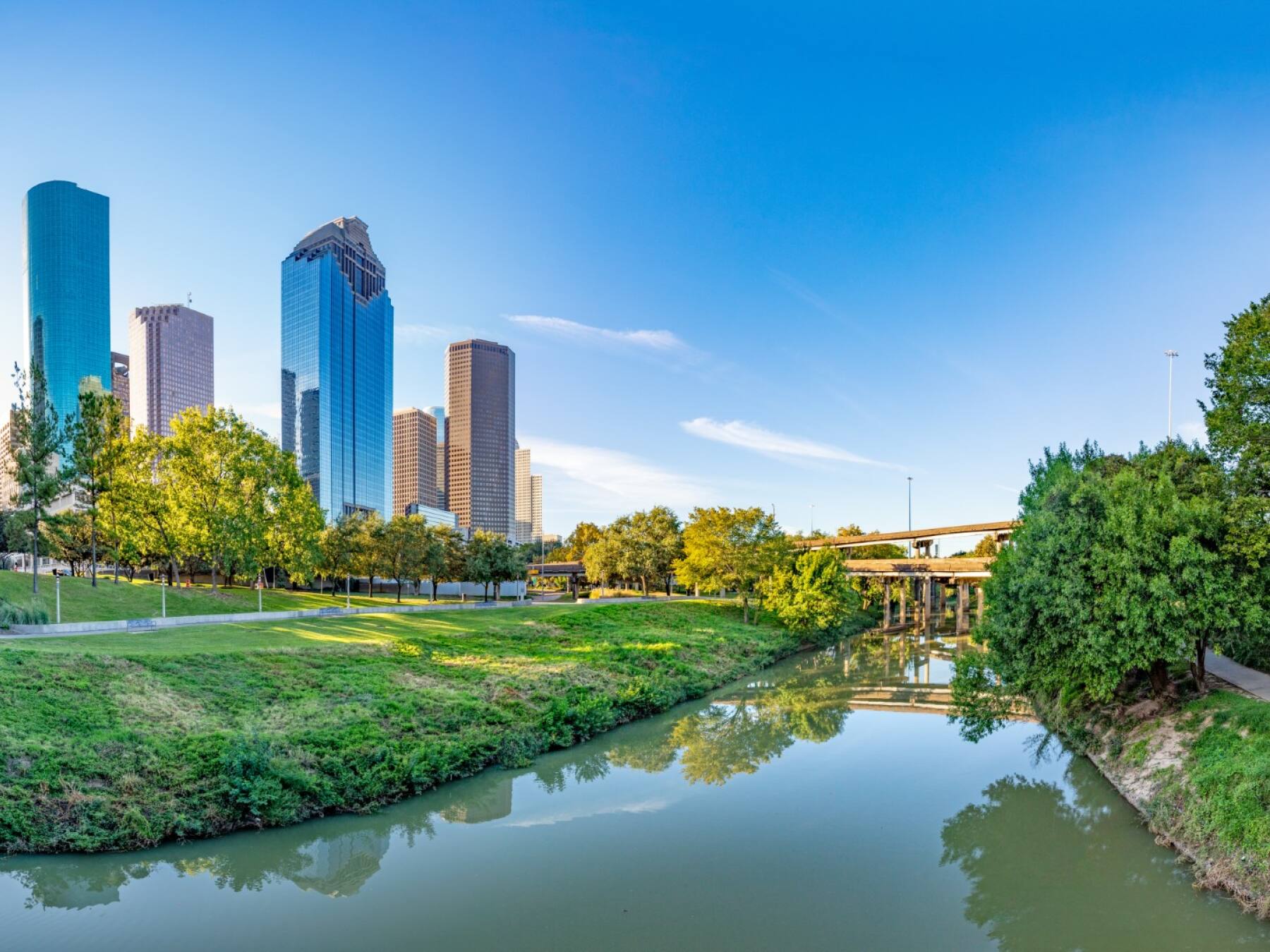
Right here, you’re getting your first real look at Buffalo Bayou, the slow-moving waterway that helped give birth to Houston itself.
Before Houston became America’s energy capital, before the skyscrapers, freeways, and endless suburban sprawl, this bayou was the reason the city existed at all. In the 1830s, the Allen brothers — the founders of Houston — saw commercial potential here and imagined a major trading city connected to the Gulf of Mexico.
At the time, this area was muddy, swampy, humid, mosquito-filled wilderness.
And somehow they looked at it and thought:
“You know what? Future mega-city.”
Honestly… impressive vision.
Take the path down toward the water and stroll a little to the right. From down there, you’ll get a fantastic contrast between nature and the modern skyline rising above it — a perfect introduction to Houston itself.
Buffalo Bayou was once crowded with ships carrying cotton, timber, and goods into the growing city. Over time, Houston expanded into one of the busiest port and energy hubs in the United States, despite being located nearly fifty miles inland.
That’s classic Houston behavior: refusing to let geography limit ambition.
Today, the bayou system also plays a major role in flood control, recreation, parks, biking trails, and city life. And if you know Houston’s history, you know water has always been both a blessing and a challenge here.
So as we kick off this tour, take a moment to enjoy the skyline, the trails, the bridges, and the surprisingly peaceful atmosphere along the water.
Because just a few blocks from here, Houston’s energy starts moving very fast.
Read More
301 Fannin St #245, Houston, TX 77002, USA
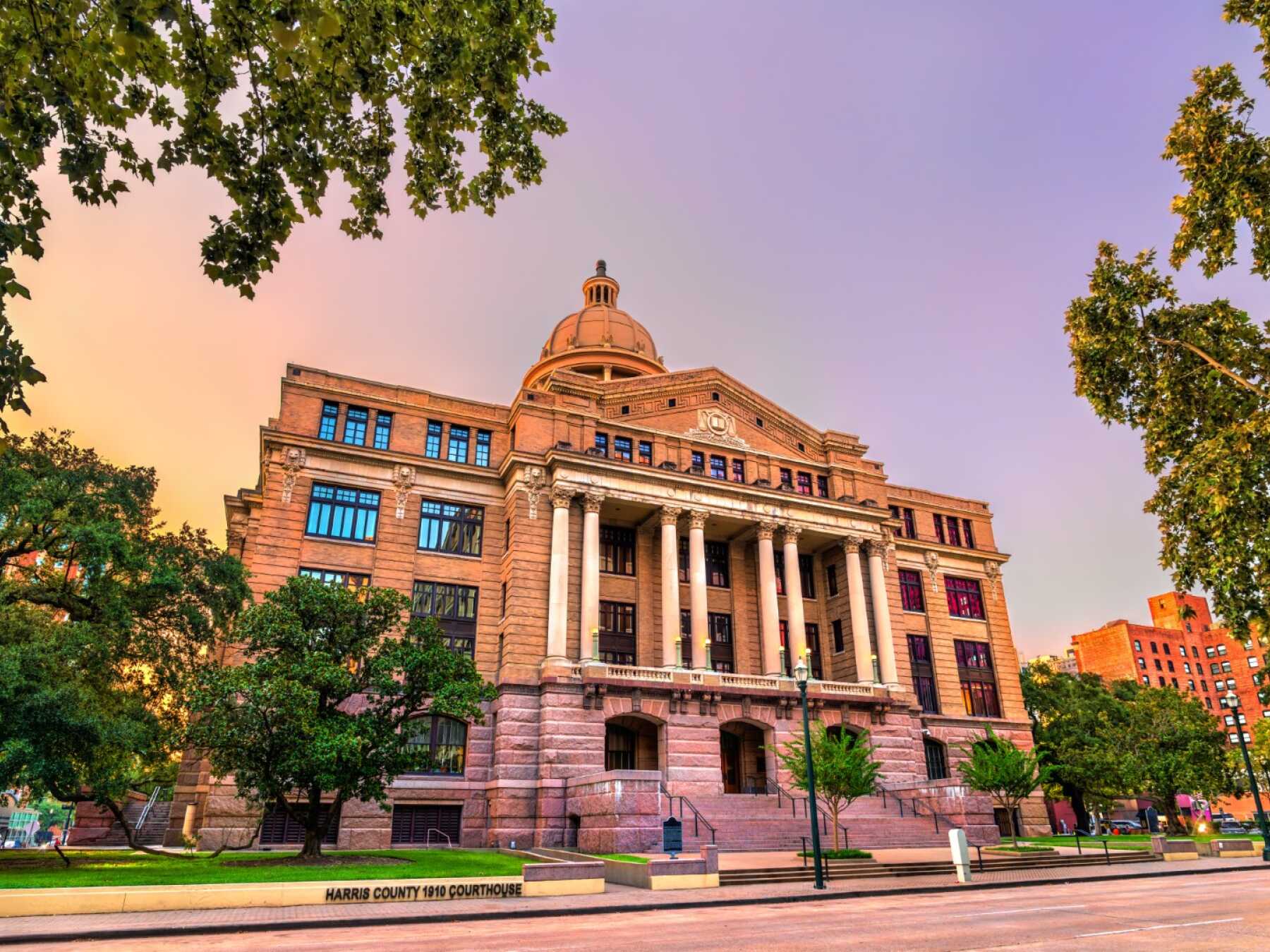
Take a good look at the architecture. With its massive dome, classical columns, and dramatic stone façade, this building was clearly designed to project authority, stability, and importance.
Basically, the architectural version of:
“Please take the law seriously.”
Completed in 1910, the courthouse reflects the Beaux-Arts style that was popular in major American cities during the late nineteenth and early twentieth centuries. At the time, Houston was rapidly growing thanks to railroads, shipping, oil discoveries, and booming commerce, and civic leaders wanted public buildings that matched the city’s rising ambitions.
And in Texas, subtlety has never really been the preferred approach.
Harris County itself is enormous. In fact, if it were a state, its population would still outrank several U.S. states. The county includes Houston and many surrounding communities, making this courthouse part of one of the largest judicial systems in the country.
Over the decades, countless trials, political disputes, business battles, criminal cases, and major legal decisions have passed through these halls. And considering Houston’s deep ties to energy, shipping, medicine, real estate, and immigration, the stories connected to this courthouse could probably fill entire libraries.
The building has also survived hurricanes, floods, economic booms, and dramatic changes in Houston’s skyline. While glass towers now surround downtown, the courthouse still stands as a reminder of the city’s earlier era — when Houston was transforming from a rough commercial town into a major American metropolis.
And honestly, it photographs extremely well too.
Notice how the historic architecture contrasts with the modern skyscrapers nearby. That blend of old Texas power and modern global business is part of what gives downtown Houston its unique character.
Read More
Place 1
Bayou Views: Where Houston Began
Place 2
Harris County Courthouse: Justice, Power, and Texas Grandeur
Place 3
Market Square Clock Tower: The Historic Heartbeat of Houston
Place 4
Market Square Park: Houston’s Original Gathering Place
Place 5
JPMorgan Chase Tower: Houston Reaches for the Sky
Place 6
Heart of Houston's Performing Arts
Place 7
Lynn Wyatt Square: Houston’s Modern Living Room
Place 8
Tranquillity Park: Houston’s Tribute to the Moon Landing
Place 9
Houston City Hall & Hermann Square: Government Meets the Skyline
Place 10
Sam Houston Park: A Glimpse Into Old Houston
Place 11
St. John Church: A Small Piece of Frontier Houston
Place 12
Julia Ideson Building: Houston’s Literary Palace
Place 13
Main Street Square: Downtown Houston Comes Alive
Place 14
Discovery Green: Houston’s Modern Urban Playground
Place 15
Discovery Green (Continued)
Place 16
Daikin Park: Houston’s Home for Baseball