

Lancaster's Best: Self-Guided (GPS) Audio Driving Tour, Pennsylvania - Iconic Sights, City Center to Amish Landscapes
Lancaster County, Pennsylvania: Self-Guided Driving Audio Tour of Amish Country Sights
About this English self-guided 1h:19m driving tour in Lancaster
Welcome to Lancaster, Pennsylvania, where history meets charm and horse-drawn buggies share the road with modern marvels! This self-guided GPS audio driving tour is your golden ticket to uncovering the very best of Lancaster, perfect for both first-time visitors eager to hit the highlights and returning tourists looking for a fresh perspective.
We've meticulously crafted a route that’s not just efficient but truly engaging, whisking you from the bustling city center to the serene landscapes of Amish Country without a single unnecessary detour. You'll kick off your adventure at the historic Lancaster Central Market, a feast for the senses, before marveling at the architectural grandeur of the Fulton Theatre. Dive into presidential history at Wheatland, the former home of James Buchanan, then journey into the heart of Amish culture at The Amish Farm and House and The Amish Village. Prepare for a nostalgic ride on the Strasburg Rail Road, a truly iconic experience, and indulge in local delights at Kitchen Kettle Village and Bird-in-Hand Farmers Market. Cap it all off with a picturesque stop at a classic covered bridge. This tour promises a seamless blend of iconic landmarks, popular historic monuments, and plenty of Instagrammable selfie spots, ensuring you capture every unforgettable moment of your Lancaster escapade. Get ready to discover why Lancaster County is truly a gem!
Top landmarks on this tour
 Historic Central Market
- Amish Farm and House
- The Amish Village
- Sight & Sound Theatres
- Bird-in-Hand Farmers Market
- Kitchen Kettle Village
- 1For the best experience, begin at the tour's recommended starting point and follow the stops in order.
- 2Want to start somewhere else? Simply use Start At on the tour screen, before tapping Start Tour, to begin from any stop.
- 3Need to detour or skip a stop along the way? Tap Tour Assistant (
![UCPlaces AI Bot Icon]() ) to use Force Play, Skip, and Back, for full flexibility.
 ) to use Force Play, Skip, and Back, for full flexibility.
Route Preview
- Category
- Language
- Mode
- Region
- Country
- City

Places (POIs) visited during this tour
101 W Grant St, Lancaster, PA 17603, USA

Opened in 1852 as Fulton Hall, it was named in honor of Lancaster County native Robert Fulton, the inventor of the steamboat. Designed by renowned Philadelphia architect Samuel Sloan, the building's Victorian grandeur, with its ornate façade and opulent interior, is truly a sight to behold. Over its nearly two centuries, the Fulton has hosted everything from vaudeville acts and silent films to today's critically acclaimed Broadway-caliber productions. Legendary performers like Mark Twain and Helen Hayes have graced its stage. During the Civil War, the theatre even served as a temporary hospital for wounded soldiers, a poignant reminder of its deep roots in the community's history.
Today, the Fulton continues its legacy, producing world-class musicals, plays, and family shows, all while preserving its historic charm. Standing here, you can almost hear the echoes of applause from generations past. It truly is a living piece of performing arts history.
Please turn right on West Vine Street and then right on South Water Court.
Read More
W. Orange & Nevin St., Lancaster, PA 17603, USA
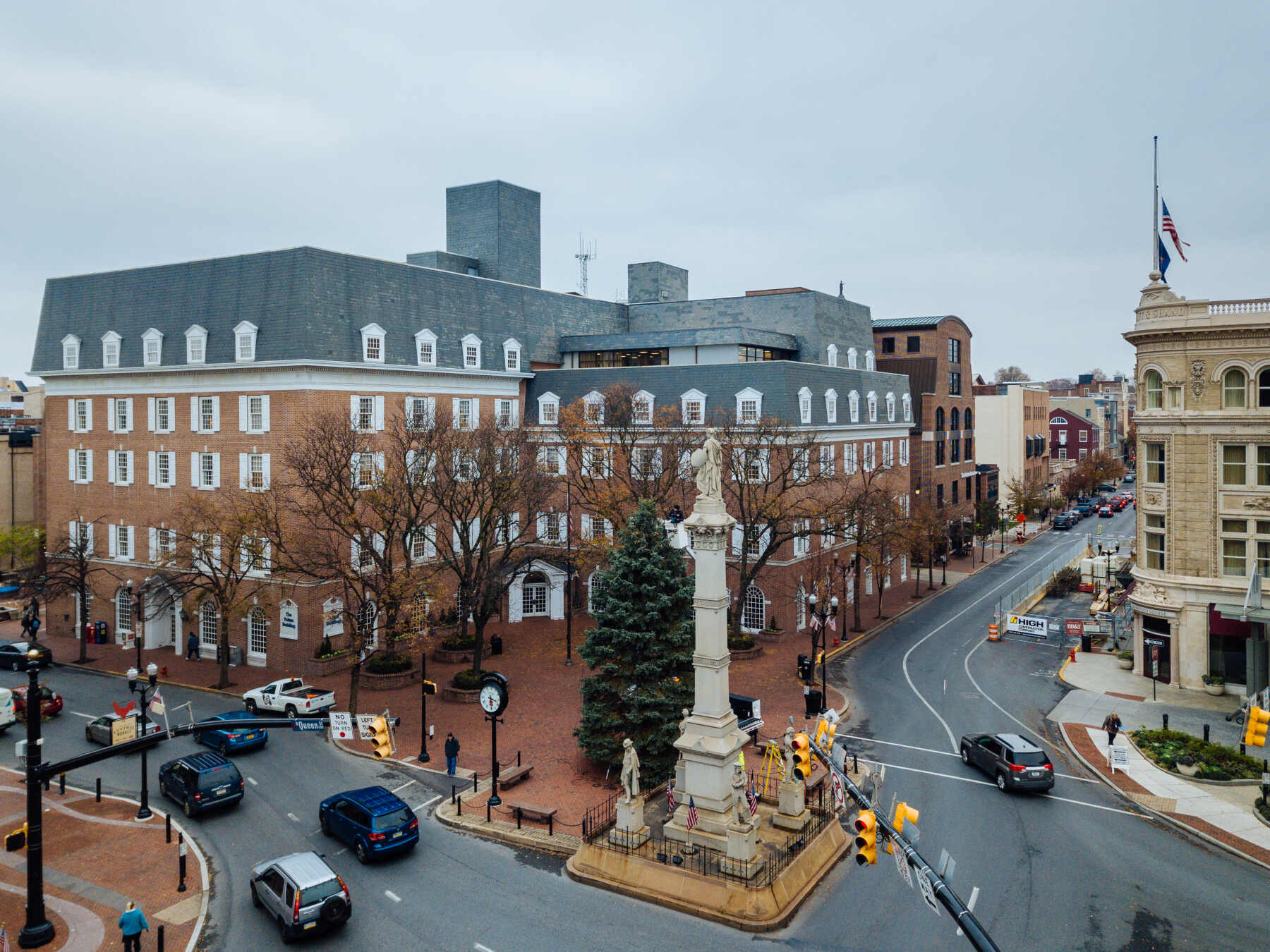
Lancaster, Pennsylvania has one of the richest and most layered histories in the Commonwealth. Founded in 1730, Lancaster quickly grew from a small frontier settlement into a thriving colonial town thanks to its fertile farmland and strategic location along early trade routes. In fact, Lancaster briefly served as the capital of Pennsylvania from 1799 to 1812, before Harrisburg took over that role.
The city played an important part in the American Revolution, supplying troops with weapons, food, and supplies. It was also a center of early American industry, particularly iron production, printing, and manufacturing. Lancaster County’s strong German influence — often called “Pennsylvania Dutch,” from "Deutsch" — shaped everything from architecture and farming practices to language and food traditions.
During the 19th century, Lancaster became a key stop on the railroad, fueling economic growth and making it a hub for commerce and innovation. At the same time, the surrounding countryside became home to Amish and Mennonite communities, whose traditions of simplicity and craftsmanship remain a defining part of the region today.
Through wars, industrial change, and modernization, Lancaster has managed to preserve its historic character while evolving into a vibrant small city — one where centuries-old traditions and contemporary culture continue to live side by side.
Read More
Place 1
Fulton Theatre
Place 2
History of Lancaster
Place 3
Amish History
Place 4
Fertility, Pennsylvania
Place 5
Biblical Tabernacle Experience
Place 6
America's Oldest Short-Line Railroad
Place 7
Aaron and Jessica's Buggy Rides
Place 8
Intercourse, Pennsylvania
Place 9
Historic Central Market
Place 10
Amish Farm and House
Place 11
The Amish Village
Place 12
Sight & Sound Theatres
Place 13
Bird-in-Hand Farmers Market
Place 14
Kitchen Kettle Village
Place 15
Historic Willow Hill Covered Bridge
Place 16
Amish Buggy Ride
Place 17
Lancaster History Museum
Place 18
National Toy Train Museum