

Brussels, Belgium: An Express Self-Guided GPS Walking Tour of History, Art and Culture
About this English self-guided 45m walking tour in Brussels
Welcome to this unforgettable gps-guided walking tour of Brussels, Belgium, where history, art, and delicious cuisine come together in one vibrant city. Today, we begin at the stunning Grand Place, Brussels’ central square and a UNESCO World Heritage site, surrounded by ornate guildhalls and the magnificent Town Hall. As we stroll through cobblestone streets, we’ll reach Place de l’Albertine, home to the impressive equestrian statue of King Albert I and offering panoramic views of the city from Mont des Arts, or “Hill of the Arts,” with its beautiful terraced gardens.
Along the way, we’ll pause to admire statues honoring Belgian heroes, such as the brave World War I spy Gabrielle Petit. We will also visit the Church of St. James on Coudenberg, a neoclassical masterpiece that once served as the royal chapel. Our journey continues to the Royal Palace, the grand official palace of Belgium’s monarch, where you can admire its elegant façade and imagine the ceremonies held inside.
No tour of Brussels is complete without tasting its cuisine. We’ll pass chocolate shops tempting you with pralines, waffle stalls filling the air with sweetness, and cafes serving Belgian specialties. Get ready to experience the best of Brussels’ culture, history, and culinary delights today.
Our tour will begin right in the middle of Grand Place. Just follow your navigation and I'll meet you there..
- 1For the best experience, begin at the tour's recommended starting point and follow the stops in order.
- 2Want to start somewhere else? Simply use Start At on the tour screen, before tapping Start Tour, to begin from any stop.
- 3Need to detour or skip a stop along the way? Tap Tour Assistant (
![UCPlaces AI Bot Icon]() ) to use Force Play, Skip, and Back, for full flexibility.
) to use Force Play, Skip, and Back, for full flexibility.
 ) to use Force Play, Skip, and Back, for full flexibility.
Route Preview
- Category
- Language
- Mode

Places (POIs) visited during this tour

Rue Charles Buls 16, 1000 Bruxelles, Belgium
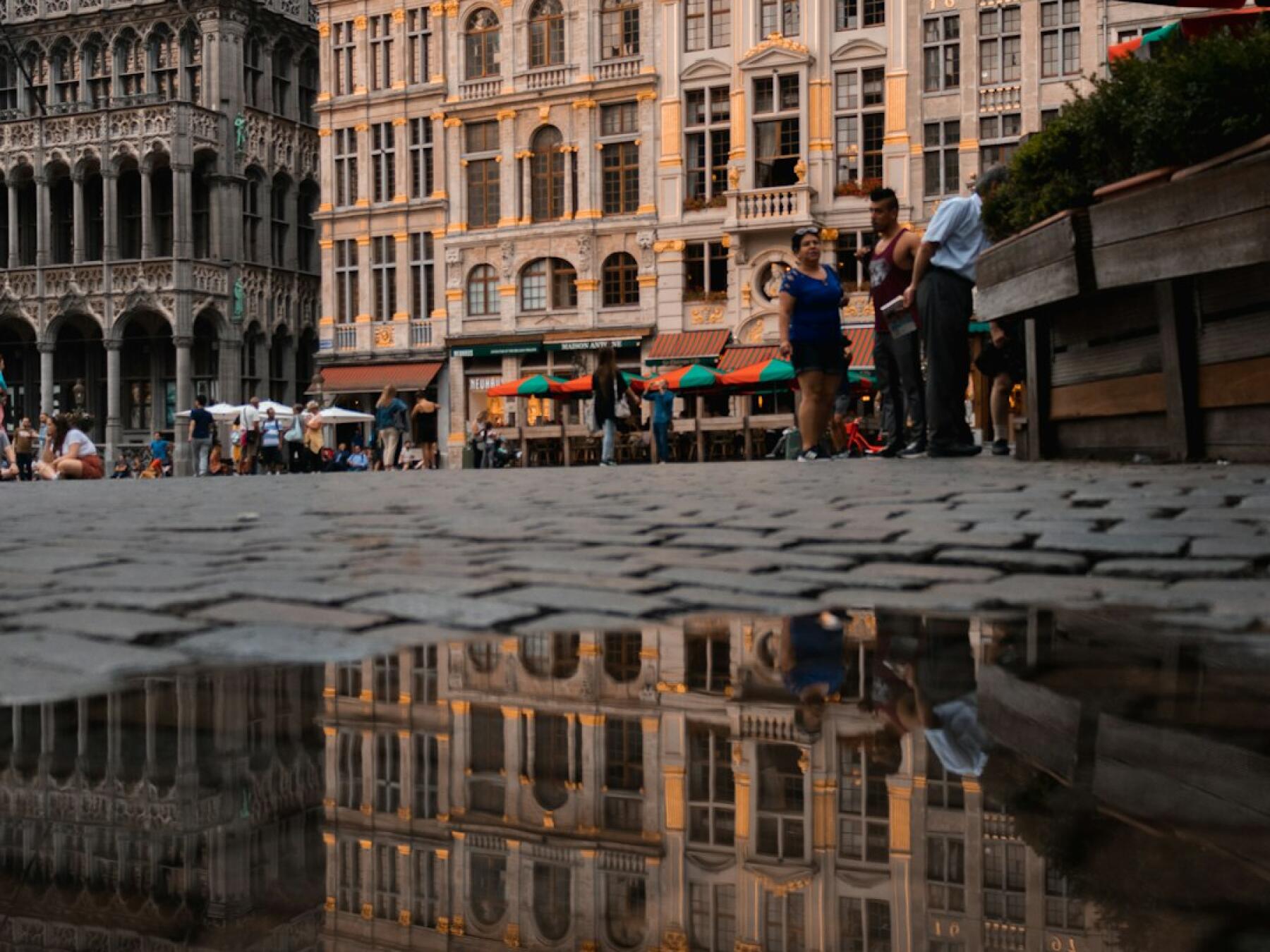
Do me a favor and let's stand here and take it all in. Find the magnificent Gothic building with the tall, elegant spire rising high above the square. At its peak, you’ll see a golden statue of St. Michael slaying the devil. Look closely at the façade—it’s covered with dozens of statues of nobles, saints, and allegorical figures. This impressive building has been Brussels’ city hall since the 1400s.
Did you find it? Ok, let's find another one.
Now rotate slowly to your right to face the long row of buildings with a unified stone façade topped with a series of busts. This is the Maison des Ducs de Brabant, or Houses of the Dukes of Brabant. Behind this classical-looking façade are six separate guildhalls rebuilt after the 1695 bombardment.
Turn slightly right again and you’ll see a building shaped like the stern of a ship, jutting out with wooden details—this is Le Cornet, the boatmen’s guildhouse. Its maritime design celebrates the vital river trade.
Now face the next building with a statue of a man holding a deer on its roof. This is Le Roy d’Espagne, the former bakers’ guildhall, now a lively café. The statue represents St. Hubert, the bakers’ patron saint.
Rotate to your right and find the building topped with a golden equestrian statue of Charles of Lorraine. This is the Maison des Brasseurs, the house of the brewers guild and now the Brewers’ Museum.
Look directly across the square from the Town Hall and you’ll see a grand neo-Gothic building with pointed arches and ornate stonework. This is the Maison du Roi, also called the King’s House or Broodhuis, formerly the bread market and now the Brussels City Museum.
Turn right and spot the building decorated with a golden tree at its peak. This is L’Arbre d’Or, or The Golden Tree, a richly detailed brewers’ guildhall.
Look just to the right of that for a building with classical columns and sculpted figures along the front. This is La Maison des Tailleurs, the house of the tailors guild.
Next, find a smaller, narrow building with a plaque on it commemorating Victor Hugo. This is Le Pigeon, the builders’ guildhall where the famous writer stayed during exile.
Turn slightly right again and you’ll see another maritime-themed building adorned with carvings of ships and waves. This is Maison des Bateliers, the house of the boatmen.
Finally, look at the smaller building with decorative gables and delicate stonework. This is the other Maison des Boulangers, the house of the bakers guild, distinct from Le Roy d’Espagne but equally important.
You’ve now made a full circle around Grand-Place. Each building tells a story of the guilds and history that shaped Brussels into the vibrant city it is today.
Let's follow our navigation toward our next stop. Make sure you took plenty of pictures before we go!
Read More
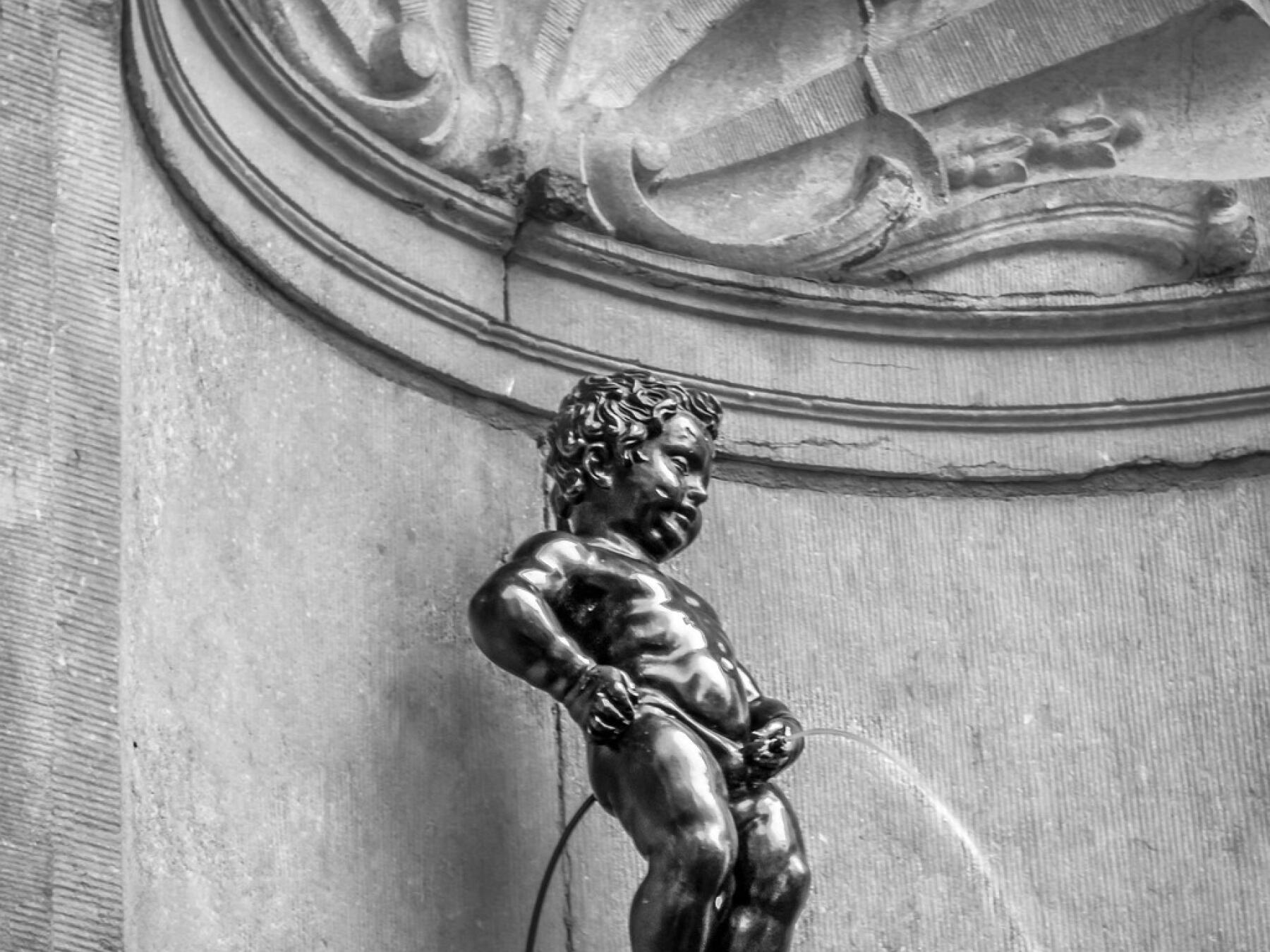
Manneken Pis, Rue des Grands Carmes 26, 1000 Bruxelles, Belgium
 Place 1
Grand Place
Place 2
Manneken Pis
Place 3
Garde Robe Manneken Pis
Place 4
Gabrielle Petit Statue
Place 5
Albertine Square
Place 6
King Albert I Statue
Place 7
Mont des Arts
Place 8
Royal Library of Belgium
Place 9
Museum of Musical Instruments
Place 10
Church of St. James
Place 11
Belvue Museum
Place 12
Royal Palace
Place 13
Brussels Park
Place 1
Grand Place
Place 2
Manneken Pis
Place 3
Garde Robe Manneken Pis
Place 4
Gabrielle Petit Statue
Place 5
Albertine Square
Place 6
King Albert I Statue
Place 7
Mont des Arts
Place 8
Royal Library of Belgium
Place 9
Museum of Musical Instruments
Place 10
Church of St. James
Place 11
Belvue Museum
Place 12
Royal Palace
Place 13
Brussels Park