

Tallinn Self-Guided (GPS) Audio Walking Tour, Estonia - Old Town Mains Sites, History & Heritage
About this English self-guided 1h:45m walking tour in Tallinn
Hello and welcome to this UCPlaces tour of Tallinn, Estonia. A city where medieval charm meets modern vitality, and every cobblestone whispers centuries of history. My name is Lisa. and it will be my pleasure showing you around as we step into the heart of Tallinn’s Old Town (Vanalinn), one of Europe’s most beautifully preserved medieval quarters and a UNESCO World Heritage Site.
Nestled along the Gulf of Finland, Tallinn’s historic center is a compact maze of red-tiled roofs, towering spires, and timeworn city walls that have stood witness to knights, merchants, and monarchs.
As you stroll through its narrow lanes and grand squares, you’ll encounter landmarks that reflect the city’s complex cultural heritage—shaped by Danish kings, German merchants of the Hanseatic League, Swedish nobility, and Russian tsars.
The journey begins at the Viru Gate, a picturesque entry point that still welcomes travelers as it did in the 14th century, ushering you into a world that feels frozen in time. From there, you’ll explore gothic town halls and centuries-old pharmacies, stately churches, and castles perched atop ancient limestone hills.
Along the way, you’ll not only see the architectural splendor of Tallinn but also uncover the stories behind each site: how a medieval apothecary became the oldest continuously operating pharmacy in Europe, why a Danish flag is said to have fallen from the sky during battle, and what secrets the cloaked monk statues might be keeping.
This tour is designed to be both walkable and immersive, with each stop only minutes apart, allowing you to experience the full depth of Tallinn’s past without rushing or missing the small details.
Whether you’re a first-time visitor or returning to uncover deeper layers of this captivating capital, this walk will guide you through Tallinn’s most significant cultural and historical treasures in a way that feels personal, enriching, and unforgettable. Lace up your walking shoes, keep your camera close, and get ready to travel not just through space, but through centuries of Baltic history.
The magic of Tallinn awaits you just beyond the gate.
- 1For the best experience, begin at the tour's recommended starting point and follow the stops in order.
- 2Want to start somewhere else? Simply use Start At on the tour screen, before tapping Start Tour, to begin from any stop.
- 3Need to detour or skip a stop along the way? Tap Tour Assistant (
![UCPlaces AI Bot Icon]() ) to use Force Play, Skip, and Back, for full flexibility.
 ) to use Force Play, Skip, and Back, for full flexibility.
Route Preview
- Category
- Language
- Mode

Places (POIs) visited during this tour

Viru 64, 10148 Tallinn, Estonia
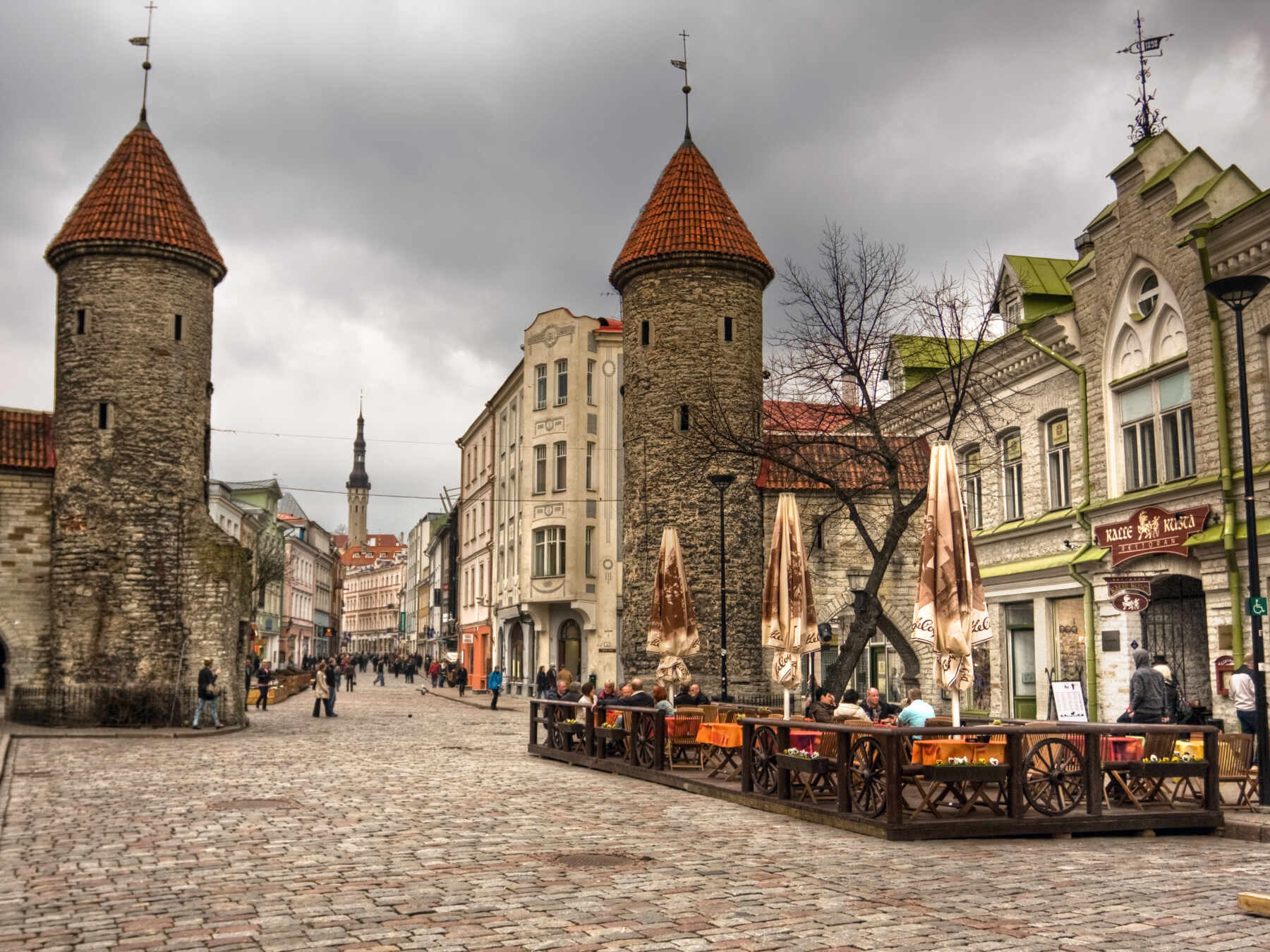
This is a good place to start as we are at the entry gates to the old city, near public transportation, including the Viru rail stop. We will walk towards the gate and pass both American and Estonian restaurants. See the Burger King and Mcdonald's? I wonder what those menus look like here.
The Viru Gate is one of the most iconic and photographed entrances to Tallinn’s Old Town, serving as a symbolic threshold between the modern city and the medieval heart of Estonia’s capital.
Originally part of a much larger defensive wall system constructed in the 14th century, the Viru Gate once formed the eastern entrance into the fortified city. The gate was part of a larger structure that included walls, a moat, and several outbuildings—all designed to control access and protect Tallinn from invaders. In its prime, the gate complex would have been heavily fortified and bustling with merchants, guards, and townspeople entering or leaving the city.
What remains today are the two cylindrical towers flanking what was once a much larger gate complex. These towers—capped with distinctive conical red roofs—are remnants of the original outer gate system. The main gate buildings and much of the surrounding wall were unfortunately demolished in the late 19th century to accommodate growing traffic and urban expansion.
The towers are constructed from limestone, the dominant building material in Tallinn's medieval structures. They exemplify Gothic military architecture, with their thick walls and narrow slit windows once used for archers. Today, their fairytale-like appearance contrasts sharply with the busy shopping street that lies just beyond them.
Today, the Viru Gate is more of a symbolic entrance than a functional one. Just outside the towers, you’ll find a lively flower market, which adds a burst of color and fragrance to the scene. It’s a popular photo spot and a favorite starting point for tourists beginning their exploration of Old Town.
As you pass through the gate and enter Viru Street (Viru tänav), you’re immediately immersed in the charm of Tallinn’s medieval center—lined with shops, cafes, and centuries-old buildings that have seen everything from Hanseatic trade to Soviet occupation.
Break on through, to the other side. Actually, just walk. I'm a fan of the music of The Doors.
Read More
Viru tänav, 10140 Tallinn, Estonia
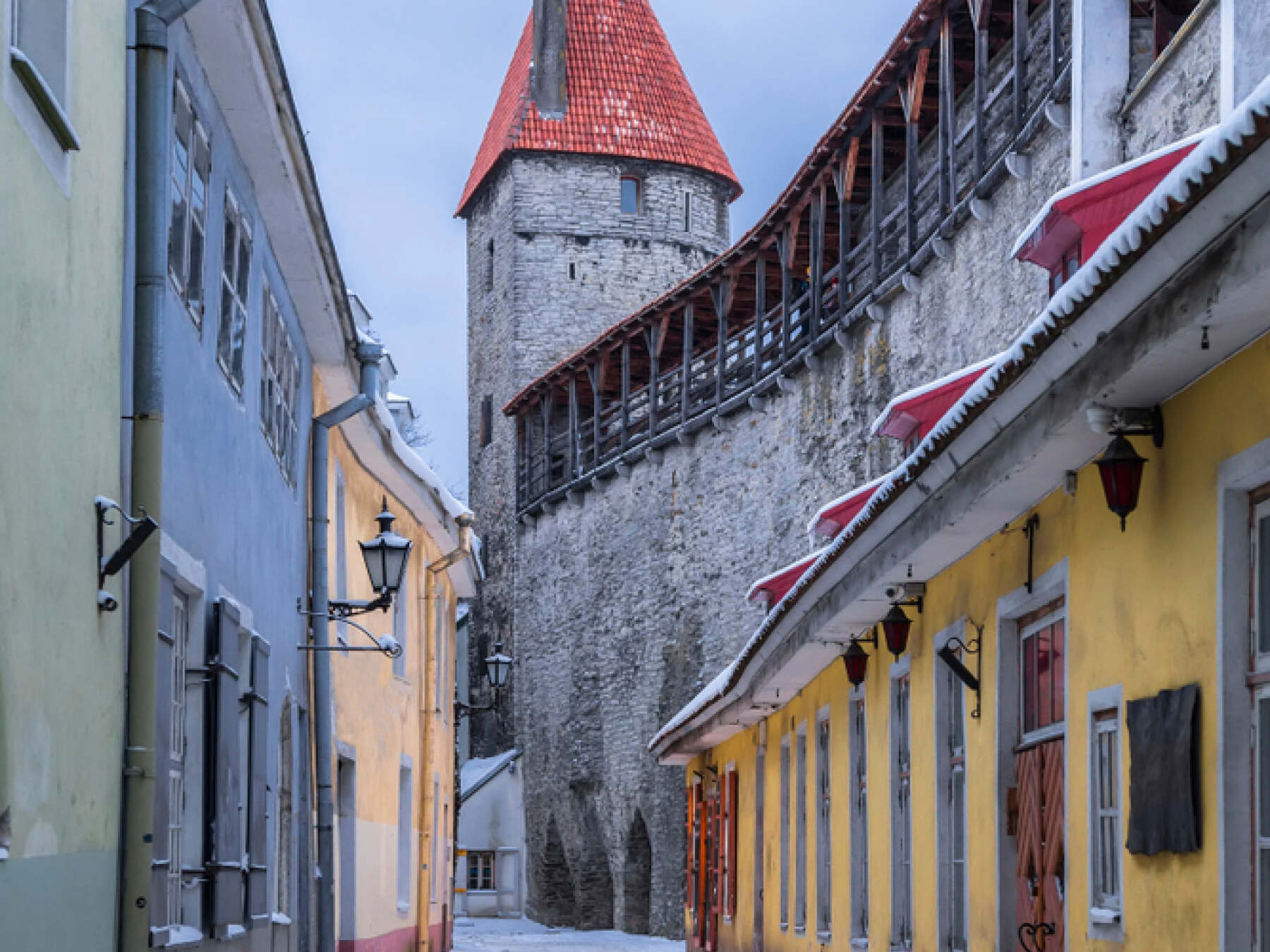
Walking along Muurivahe, you’ll be right next to a long stretch of Tallinn’s original 13th- to 16th-century city wall, remarkably well-preserved. You can see stone ramparts, arrow slits, and watchtowers, including Hellemann Tower, which is open to visitors. From the tower, you can access the wall walk, offering elevated views of the street, rooftops, and the Old Town beyond.
We will be making our way to Hellemann Tower and Wall Walk. This tower dates from the 14th century and lets visitors climb wooden staircases to walk along a section of the wall, just as guards once did.
Along the street’s edge, you’ll find craft and antique stalls—especially in warmer months—selling wool goods, linen, wooden toys, and handmade souvenirs. This market evokes Tallinn’s Hanseatic trading past, where merchants once sold goods in similar stalls within the protective reach of the walls.
Compared to nearby Viru Street, Muurivahe is quieter and less commercialized, making it a peaceful contrast and a perfect place to absorb the historical ambiance. It's especially atmospheric in the early morning or at dusk, with the shadows of the towers cast long on the stone.
Several charming courtyards and alleyways branch off Muurivahe, offering peaceful pockets of Old Town charm. Many of these lead to local cafés, workshops, and galleries. Keep an eye out for iron signs and stone plaques that often reveal the building's former use or guild affiliation.
Read More
Place 1
Viru Gate
Place 2
Muurivahe Street
Place 3
Hellemann Tower
Place 4
St. Catherine's Passage
Place 5
St. Catherine’s Church Ruins
Place 6
Vene Street (Vene tänav)
Place 7
Raeapteek Pharmacy
Place 8
Town Hall Square (Raekoja plats)
Place 9
Puha Vaimu Kogudus (Church of the Holy Spirit)
Place 10
Tallinn Town Hall
Place 11
Cuisine
Place 12
Language
Place 13
Tallinn Museum of Orders Knighthood
Place 14
The Eduard Vilde Monument
Place 15
Eduard Vilde Monument
Place 16
St. Nicholas' Church and Museum
Place 17
Short Leg Gate Tower
Place 18
Alexander Nevsky Cathedral
Place 19
Toompea Castle & Riigikogu (Parliament)
Place 20
Landskrone Torn (Landskrone Tower)
Place 21
St. Mary’s Cathedral (Dome Church)
Place 22
Piiskopiaia Vaateplats (Bishop’s Garden Viewing Platform)
Place 23
Kohtuotsa Viewing Platform
Place 24
Patkuli Viewing Platform
Place 25
Patkuli Staircase
Place 26
Nunna, Sauna, and Kuldjala Towers
Place 27
Pikk Street (Pikk tänav)
Place 28
House of the Brotherhood of the Blackheads
Place 29
Roheline Turg
Place 30
Church of St. Olaf (Oleviste kirik)
Place 31
Great Coastal Gate and Fat Margaret Tower