

Geneva Self-Guided (GPS) Audio Walking Tour, Switzerland - Old Town
About this English self-guided 1h:46m walking tour in Geneva
Hello and welcome to this UCPlaces walking tour of Old Town Geneva Switzerland. My name is Dave, and it will be my pleasure to be your co-pilot today, as we embark on a captivating journey beginning along the serene banks of the Rhône River, where the city’s rich history meets its vibrant present.
As you stroll through the charming cobbled streets and picturesque squares, you’ll venture through centuries of cultural and historical significance. From ancient Roman marketplaces to the heart of the Protestant Reformation, each stop offers a glimpse into Geneva’s fascinating past.
Discover architectural gems like the iconic St. Pierre Cathedral, the Maison Tavel, and the historic Hôtel de Ville, all within a leisurely walk from one another. Along the way, enjoy breathtaking views from the Promenade de la Treille and immerse yourself in the legacy of the Reformation at the famous Reformation Wall.
We will conclude with an unforgettable moment at the water’s edge, where the majestic Jet d’Eau fountain rises dramatically from Lake Geneva, offering a spectacular finale to your exploration of this enchanting city. With each step, Old Town Geneva reveals its timeless charm, making this walking tour an enriching experience for history enthusiasts and curious travelers alike.
Today’s tour will take us roughly two and half hours, covering two miles, across relatively level terrain, making for a comfortable experience. We begin today at a convenient location, near the main train station, and next to parking lots, for those who drove here. This is also a drop off point for some cruise ships and ferries. Follow your GPS navigation, and we will begin shortly.
- 1For the best experience, begin at the tour's recommended starting point and follow the stops in order.
- 2Want to start somewhere else? Simply use Start At on the tour screen, before tapping Start Tour, to begin from any stop.
- 3Need to detour or skip a stop along the way? Tap Tour Assistant (
![UCPlaces AI Bot Icon]() ) to use Force Play, Skip, and Back, for full flexibility.
 ) to use Force Play, Skip, and Back, for full flexibility.
Route Preview
- Category
- Language
- Mode
- Region
- Country
- City

Places (POIs) visited during this tour

Quai du Seujet 26, 1201 Genève, Switzerland
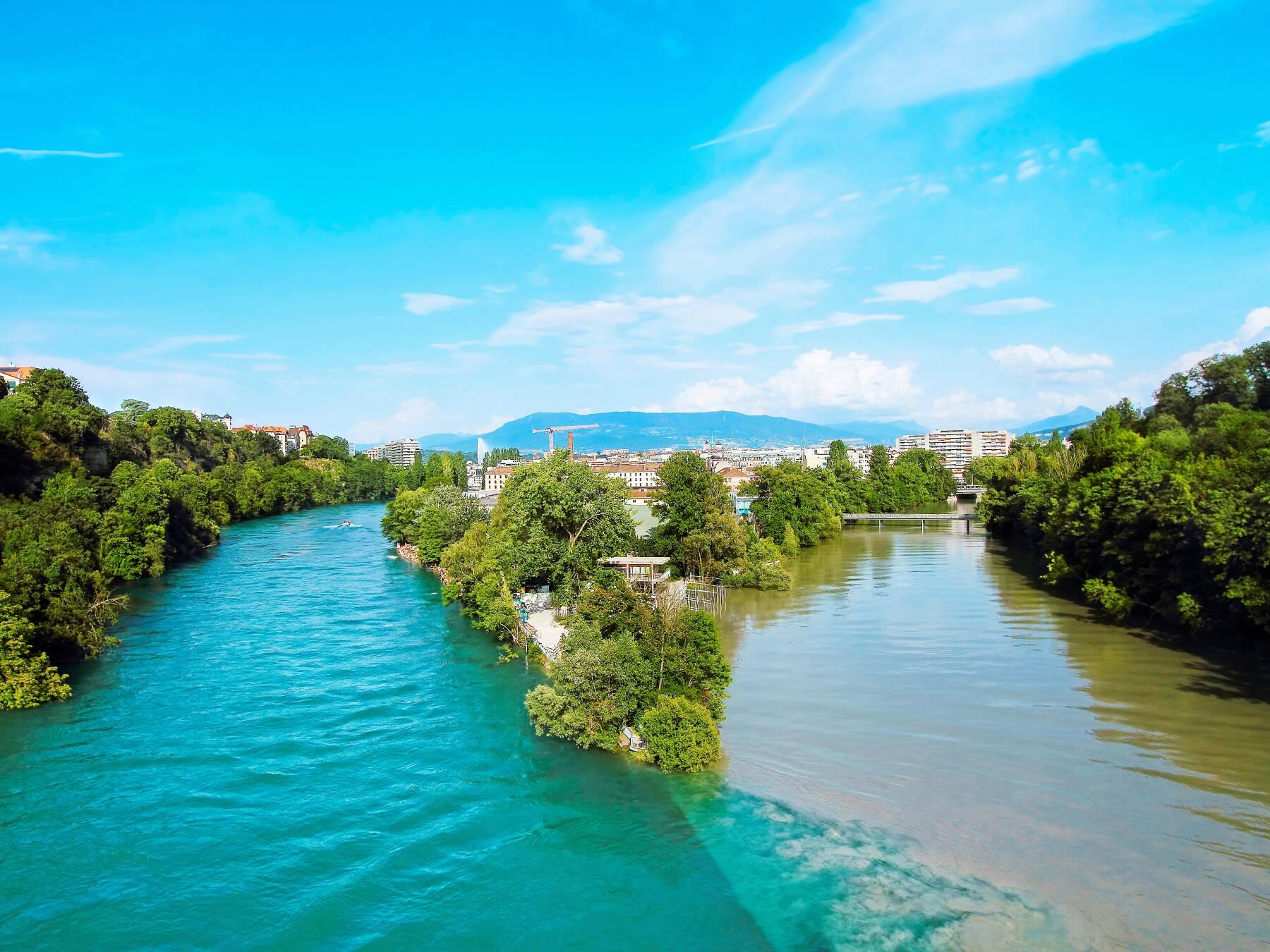
Here on the banks of the Rhone, we see one of Europe’s most important waterways, and its relationship with Geneva is deeply intertwined with the city’s history, culture, and economy.
Originating from the Rhône Glacier in the Swiss Alps, the river flows through Lake Geneva (Lac Léman) before continuing its journey through southeastern France and eventually emptying into the Mediterranean Sea. Its crystal-clear waters, particularly striking as they leave Lake Geneva, have made it a symbol of the city’s natural beauty.
Historically, the Rhône played a crucial role in Geneva’s development. As a natural trade route, it facilitated commerce between Switzerland, France, and other regions of Europe, contributing significantly to Geneva’s prosperity during the Middle Ages and Renaissance. The river was also a vital defense line, with Geneva’s fortifications strategically built along its banks to protect the city from invaders.
The Rhône’s presence shaped the city's layout, with bridges like the Pont du Mont-Blanc connecting the Old Town to the newer parts of Geneva. Today, the Rhône is not only a scenic highlight but also an essential water source and a hub for recreational activities. Its confluence with the Arve River is a striking natural phenomenon, and its proximity to the iconic Jet d’Eau fountain underscores its lasting significance to Geneva’s identity and charm.
About a half mile down to the right, the Confluence of the Rhône and Arve Rivers takes place, best viewed from the Jonction Bridge (Pont de la Jonction). This dramatic meeting of two rivers creates a vivid contrast: the Rhône’s clear, turquoise waters flowing from Lake Geneva collide with the milky, sediment-rich waters of the Arve, which originate in the glaciers of the Mont Blanc massif.
From the Jonction Bridge, you get a breathtaking view of this merging point, where the two rivers run side by side before blending into one. The difference in color is so distinct that it almost appears as though a line has been drawn between them, making it a favorite spot for photographers and nature lovers alike.
Historically, the confluence has been significant for Geneva’s development, serving as a natural landmark and influencing trade, settlement, and infrastructure in the city. Today, the surrounding Jonction neighborhood is known for its bohemian atmosphere, with art spaces, parks, and walking trails, making it a great place to explore.
Continue across the Barrage-du-Seujet walkway.
Read More
Rue de la Coulouvrenière 7, 1204 Genève, Switzerland
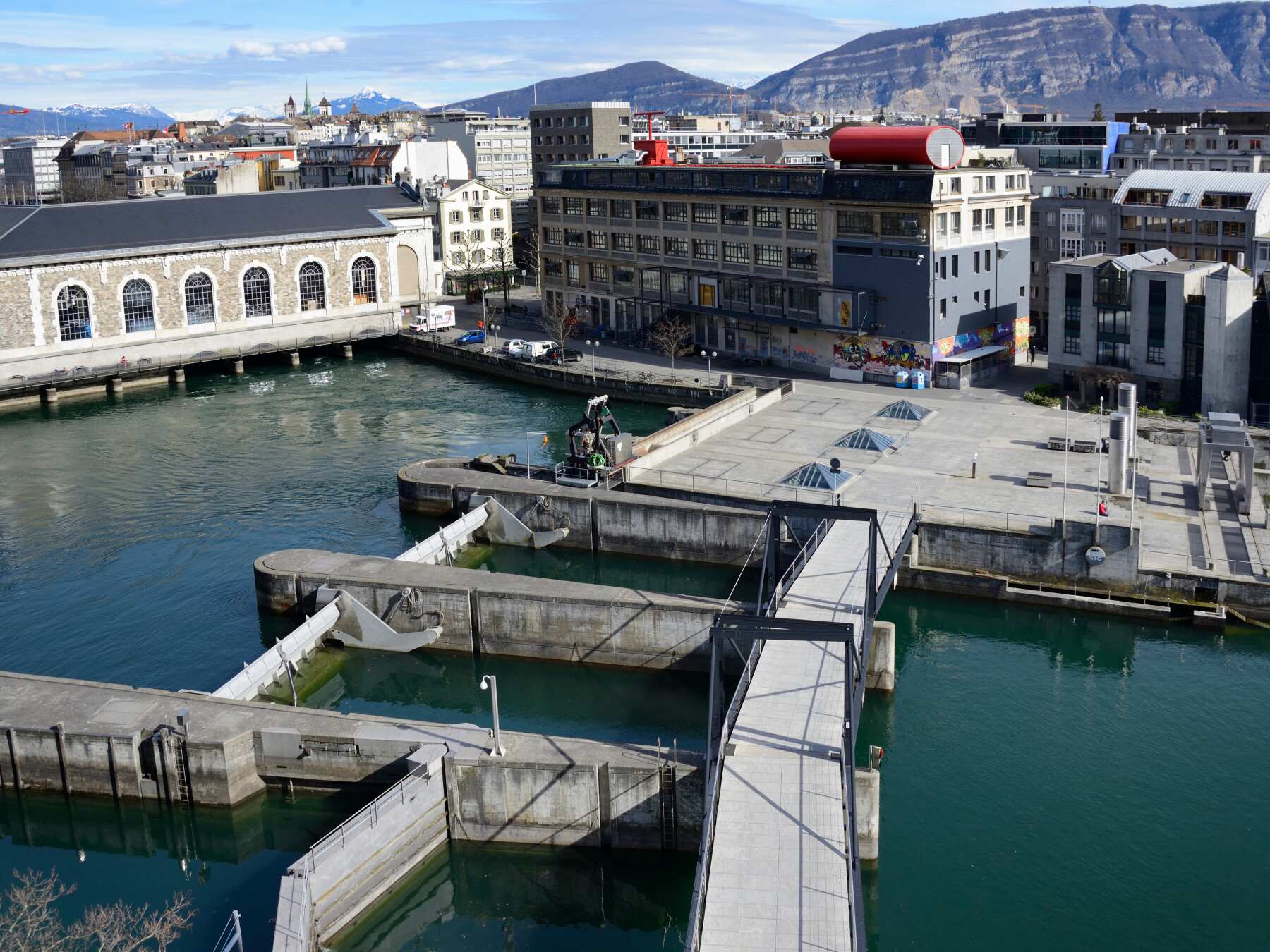
This self-managed, non-profit venue hosts a wide array of artistic and cultural events, including concerts, club nights, theater performances, film screenings, and art exhibitions. It’s renowned for supporting independent artists, musicians, and filmmakers, making it a haven for creativity and counterculture in a city often associated with diplomacy and finance.
The building itself, with its industrial architecture, graffiti-covered walls, and raw atmosphere, stands in stark contrast to the polished image of Geneva.
L'Usine comprises several spaces, such as: Le Zoo, a popular club for electronic music and techno lovers. La Salle PTR (Petite Reine), a concert hall showcasing rock, punk, and metal bands. Le Spoutnik, an independent cinema focused on avant-garde and experimental films.
There are additional theater spaces and art studios that offer a platform for innovative performances and exhibitions.
L'Usine is more than just a venue; it’s a symbol of Geneva’s diverse cultural landscape, championing freedom of expression, creativity, and inclusivity.
We will be making a left onto Rue de la Coulouvreniere, followed by a quick right down Rue du Tir.
Read More
Place 1
Rhone
Place 2
L'Usine
Place 3
Younger Population
Place 4
Cimetière des Rois
Place 5
Story Time
Place 6
Synagogue Beth-Yaacov
Place 7
Tram
Place 8
Skating
Place 9
Frankenstein
Place 10
Place de Neuve
Place 11
Bathroom Break
Place 12
Parc des Bastions
Place 13
Reformation Wall
Place 14
Directions
Place 15
La Promenade de la Treille
Place 16
Cuisine
Place 17
Place du-Bourg-de-Four
Place 18
Architecture
Place 19
Passage des Degrés-de-Poules
Place 20
Saint Pierre Cathedral
Place 21
Archaeological Site and Main Entrance to Cathedral
Place 22
Hôtel de Ville
Place 23
L'Ancien Arsenal (The Old Arsenal)
Place 24
Maison Tavel
Place 25
Fontaine du Perron
Place 26
The Passage de Monetier
Place 27
Swiss Miss
Place 28
Temple of Madeleine
Place 29
Place de la Madeleine
Place 30
Swiss Watch Making
Place 31
Rue de la Croix
Place 32
Story Time
Place 33
Refreshments
Place 34
Jardin Anglais
Place 35
Fontaine des Quatre-Saisons
Place 36
Jet d’Eau