

Joshua Tree National Park Self-Guided (GPS) Audio Driving Tour, California - Desert Road Trip, Cacti Heaven & Scenic Vistas
About this English self-guided 2h:01m driving tour in Joshua Tree
Welcome to Joshua Tree National Park!
Get ready to explore one of nature’s most mesmerizing playgrounds! Located where the Mojave and Colorado Deserts meet, Joshua Tree National Park is a wonderland of rugged landscapes, otherworldly rock formations, and the iconic Joshua trees that stretch their arms skyward in greeting.
Whether you're here for a day, a weekend, or longer, Joshua Tree offers something magical for everyone. Wander through lush oases where the water flows quietly beneath the desert sun. Hike trails that wind between surreal, weather-sculpted boulders and spiny forests of cholla cacti. And when the sun dips below the horizon, get ready to experience a night sky so full of stars, you'll feel like you've stepped into a cosmic dream.
This park is more than just a collection of scenic vistas - it’s a place that calls to your sense of adventure. Climb high on rocky outcroppings, discover the whispers of history in abandoned mines, or simply sit back and watch the desert’s endless horizons shift and change with the light.
From sunrise at Keys View, where you can spot the sprawling Coachella Valley, to an enchanting walk under the glow of the moon at Arch Rock, every corner of Joshua Tree promises a story and a memory.
So lace up your hiking boots, pack plenty of water, and let the magic of this desert wonderland captivate your heart. Let’s explore Joshua Tree National Park—you’ll leave with sand in your shoes and stars in your soul!
- 1For the best experience, begin at the tour's recommended starting point and follow the stops in order.
- 2Want to start somewhere else? Simply use Start At on the tour screen, before tapping Start Tour, to begin from any stop.
- 3Need to detour or skip a stop along the way? Tap Tour Assistant (
![UCPlaces AI Bot Icon]() ) to use Force Play, Skip, and Back, for full flexibility.
) to use Force Play, Skip, and Back, for full flexibility.
 ) to use Force Play, Skip, and Back, for full flexibility.
Route Preview
- Category
- Language
- Mode
- Region
- Country
- City

Places (POIs) visited during this tour

6535 Park Blvd, Joshua Tree, CA 92252, USA
Park rangers and knowledgeable staff are on hand to provide maps, suggest trails, and share tips about current conditions like wildlife activity, weather, or blooming flowers, and discover a small but informative set of exhibits that introduce you to the park's geology, unique ecosystems, and fascinating cultural history. You can also of course pick up any maps and permits you might need here, as well as this being a good stop to use the restroom if you might need it before our drive today!
So, if you would like to take a look inside now is your chance, or we shall continue on and traverse into the beautiful world of Joshua Tree!
7950 Quail Springs Rd, Joshua Tree, CA 92252, USA
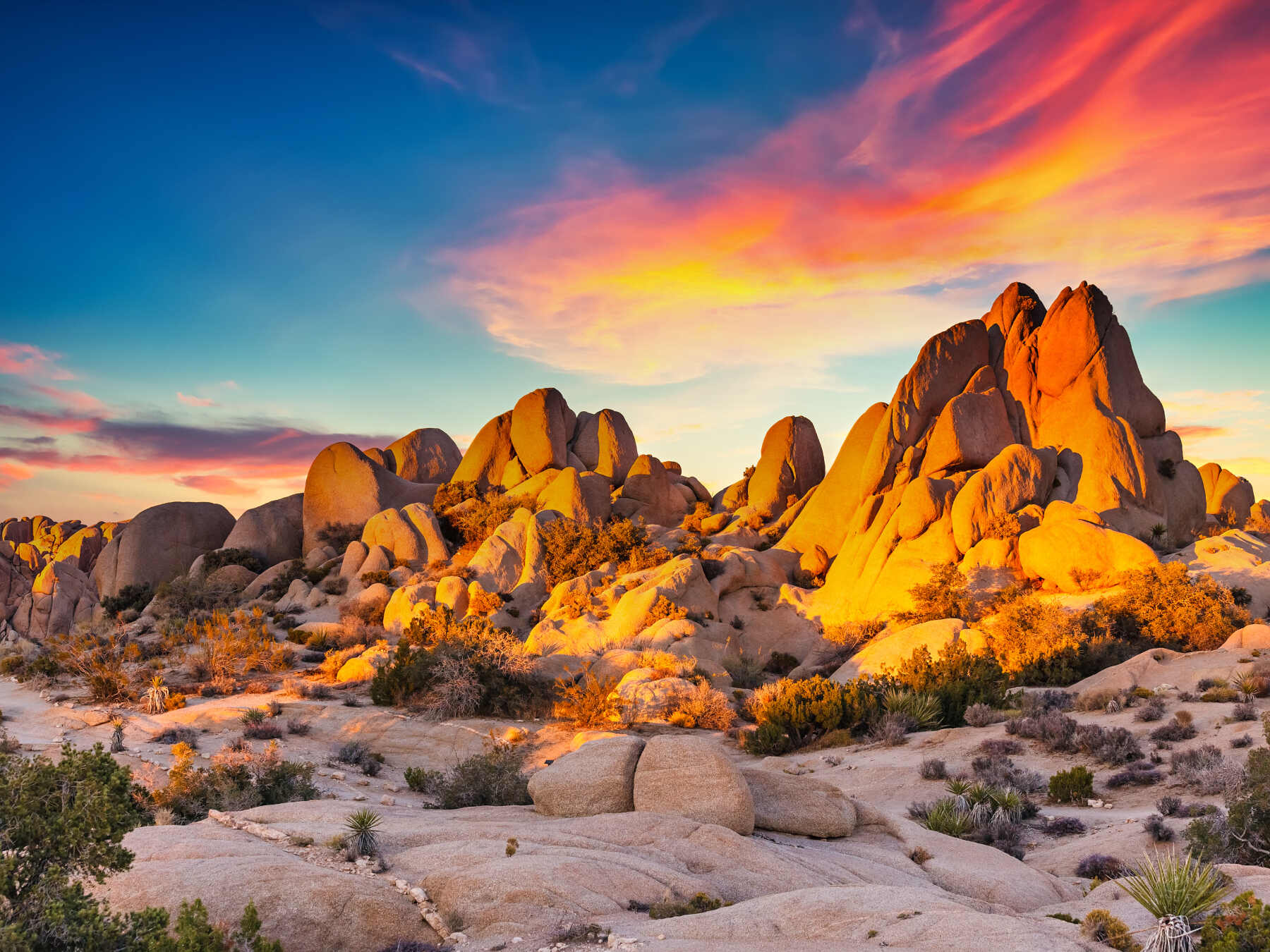
Joshua Tree's striking landscapes began forming millions of years ago. Erosive forces sculpted the park’s granite boulders, while tectonic activity gave rise to rugged mountains. Over time, two distinct deserts—the higher, cooler Mojave Desert and the lower, hotter Colorado Desert—converged, creating the park’s unique ecosystems.
As time went on and humans came to be, Native American tribes, including the Serrano, Cahuilla, and Chemehuevi, lived in the region for thousands of years. They hunted, foraged, and left behind artifacts like petroglyphs and rock mortars used for grinding seeds and nuts. Oases such as Oasis of Mara were vital for their survival. They used the Joshua tree for food, fiber, and tools, embedding the plant deeply into their cultural practices.
During the mid-1800s, gold and silver drew miners to the area, leaving remnants such as the Lost Horse Mine and other abandoned mining operations. Though the mines yielded little profit, they left an enduring mark on the landscape. From the 1910s to the 1930s, settlers took advantage of the Homestead Act, attempting to farm and ranch in the unforgiving desert. Many abandoned their efforts, though some historical homesteads, like Keys Ranch, still stand today.
In the 1930s, a Pasadena-based horticulturist named Minerva Hoyt campaigned tirelessly to protect the desert and its Joshua trees from unchecked development and exploitation. Her efforts led to the area being designated Joshua Tree National Monument in 1936 by President Franklin D. Roosevelt. In 1994, under the California Desert Protection Act, Joshua Tree was upgraded to a national park. This act expanded its boundaries to 790,636 acres and emphasized its ecological and cultural importance.
Today, the park preserves one of the most diverse desert ecosystems in the world, home to species like the desert tortoise, bighorn sheep, and hundreds of bird species. Conservation efforts are ongoing to protect this fragile desert ecosystem, as it’s so important we do not lose this amazing desert landscape and its inhabitants.
Read More
Place 1
Joshua Tree Visitor Center
Place 2
History of Joshua Tree
Place 3
The Joshua Tree
Place 4
Keys Ranch
Place 5
Barker Dam
Place 6
Hidden Valley
Place 7
Cap Rock
Place 8
Ryan Mountain
Place 9
Skull Rock
Place 10
Arch Rock
Place 11
Cholla Cactus Garden