Duplicating
Tour copied successfully!

Places (POIs) visited during this tour

Place #1
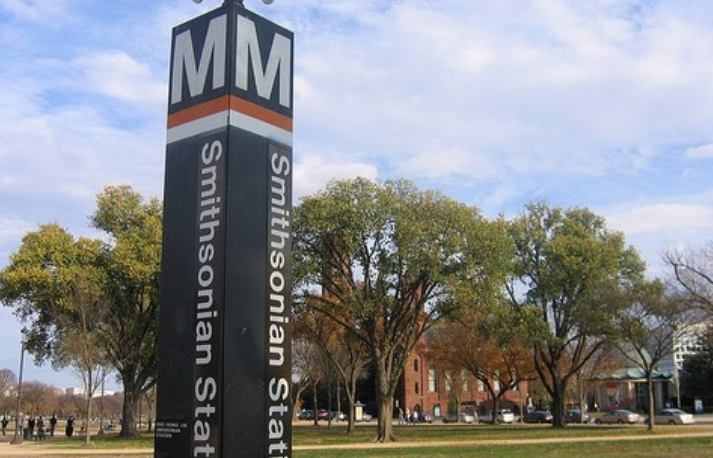
Distance: 0.90mi , Attraction : The Smithsonian Station
Map Pin
1300 12th St Expy, Washington, DC 20560, USA
POI 1 Tour Image
You’ve Arrived!
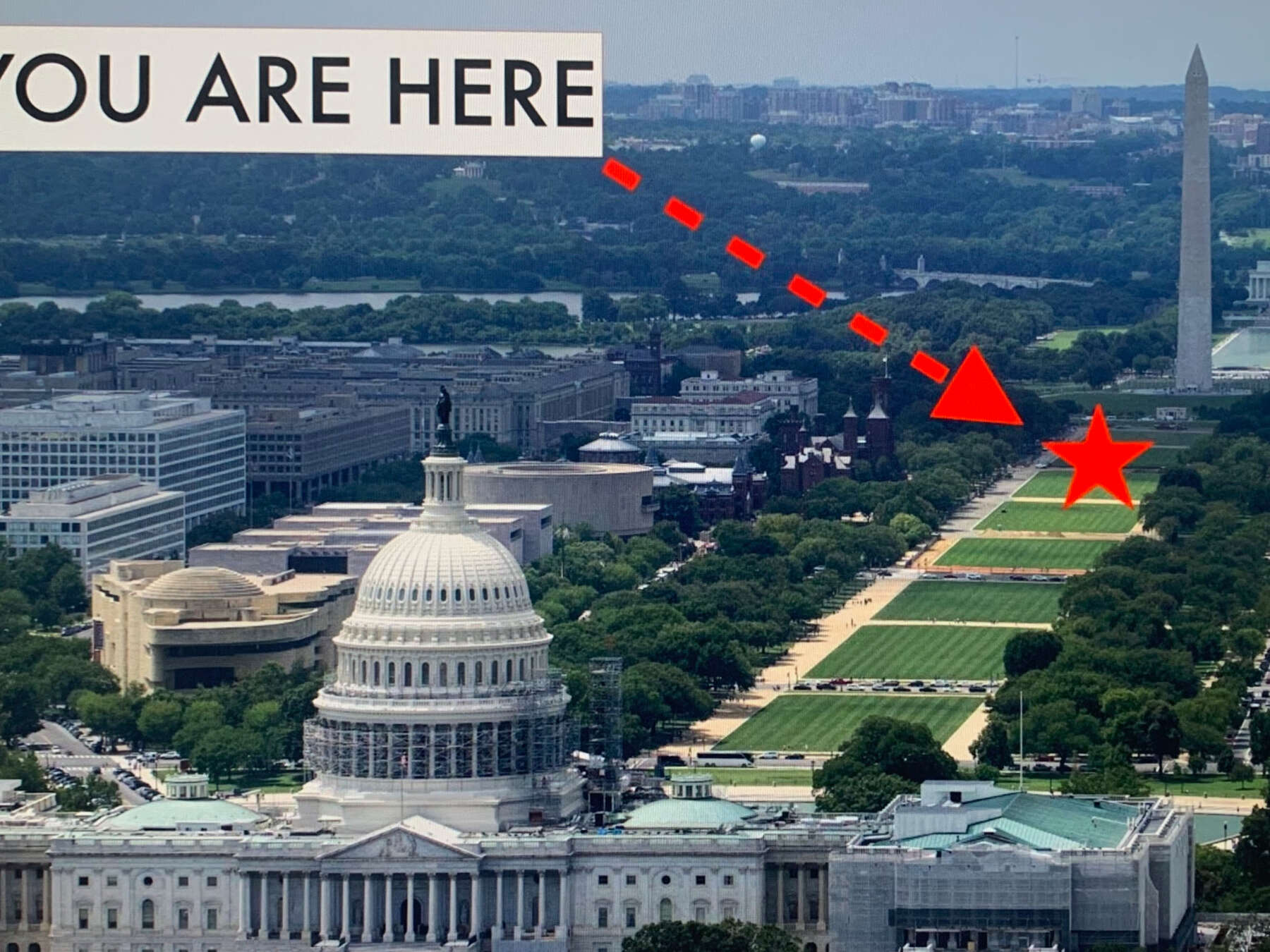
Whatever mode of transportation you use to get here, a good starting point is near the Smithsonian Station Metro Stop located just off the intersection of 12th St. & Jefferson Drive. Once you arrive, it's a short walk to our first point of interest - the National Mall. Here are the instructions: Find the metro entrance and look beyond it - you'll see a broad gravel path flanked by grass that leads from the roadway toward the center of the National Mall. Take that path, and position yourself in the center of the Mall. It's a tough spot to miss. You'll see a large, grassy expanse on either side with the United States Capitol Building to the east and the Washington Monument to the west. I'll meet you there!

  https://www.wmata.com/rider-guide/stations/smithsonian.cfm
Place #2
Distance: 1.14mi , Attraction : National Mall Sites & The Smithsonian
Map Pin
1300 12th St Expy, Washington, DC 20560, USA
POI 2 Tour Image
The National Mall & The Smithsonian
What a view! You are now standing on the Eastern Side of the National Mall - that is, the strip of land between the Washington Monument & the Capitol Building. Let's give you a 360 degree orientation. Look toward the white dome of the United States Capitol Building. The dome represents the center of Washington, DC and is west of you. To your right front is a medieval looking building made of red sandstone. This is the Smithsonian Castle, the headquarters of the largest collection of museums in the world - the Smithsonian Institute. To your left front, directly opposite the Castle, you'll see the golden dome of the Smithsonian Museum of Natural History (that's where the Hope Diamond & Dinosaur bones are kept). To your immediate left (in the distance), you'll see the tall, gray clock tower of the Old Post Office, and as you stay in place but continue to rotate toward your left rear, you'll see the boxy, slightly pinkish exterior of the Smithsonian Museum of American History, partially obscured by trees. Inside you'll find the Star Spangled Banner, dresses of the First Ladies, and Dorothy's Ruby Slippers. Keep rotating left and you'll see a giant marble obelisk - the Washington Monument (more on that later). Turn a bit further and on the opposite side of the mall from the American History Museum, you should see a building fronted with stately columns. That's the United States Department of Agriculture or USDA for short. Not only do they inspect meat, but they've also got a nuclear fallout shelter in their basement, so make sure you're nice to the doorman. Keep spinning your view ends back at the castle & the Capitol Dome. Ok enough spinning. I'm getting dizzy. Now a bit of history for you. Begun in 1793, the Capitol was first occupied by Congress in 1800, and it was much smaller than what you see today. Weighing in at 9 million pounds, the dome is actually made of cast iron - not stone. A later addition, it wasn't completed until 1866, immediately after the Civil War. Look closely. On either side of the dome, stand two flagpoles. The left pole tops the Senate chamber, the right marks the House of Representatives. Together, both chambers comprise the legislative branch of the US government - the lawmakers. If a flag flies on either pole, it means that respective chamber is in session. This tradition recalls a time before smartphones when a hoisted flag visually alerted nearby Congressmen that their workday had begun. The statue atop the building is an allegorical female figure grandly entitled, Freedom Triumphant in War & Peace. You can call her Freedom (and just between you & me, she ain't free and she ain't easy). By unwritten rule, she's also the tallest statue in the city at 19 ½ feet. Returning your gaze to the Smithsonian Castle, notice the building's distinctive red color & romanesque architecture. Completed in 1855, it was designed by James Renwick Jr. - the same architect responsible for St. Patrick's Cathedral on New York City's 5th Avenue. Nowadays the castle is primarily an office building, but there is a cafe & some exhibit space on the ground floor. Back when it was the only building in the Smithsonian, it housed the entire museum collection and was nearly gutted by fire in 1865. As you can see, the building survived. But how did it get there in the first place? I'll tell you the story as we walk Face the Washington Monument. On either side of the grass in front of you are two gravel paths leading toward 14th Street. Take the path on your right and follow it toward the Washington monument until you reach the road. As you walk, the Smithsonian American History Museum should be on your right. Now for the story. James Smithson was a British scientist who died in 1829. In and of itself, that fact is unremarkable. Upon his death, however, James saw fit to leave his personal fortune of $500,000 (roughly $14 million in today's money) - to the United States Government. In his will, James specified the express purpose of this money was to found, "...in Washington, under the name of the Smithsonian Institution, an establishment for the increase and diffusion of knowledge among men". Why? Firstly, as a scientist James was an admirer of American founding fathers like Thomas Jefferson & Benjamin Franklin - fellow scientists & intellectuals who also lived a life of the mind. Most importantly, James was born the illegitimate son of an English nobleman who (because of his illegitimacy) never acknowledged James' as his rightful heir - this left James with a lifelong chip on his shoulder, forever after disgusted by the concept of inherited titles of nobility. Understandably, James would become a great admirer of the American Constitution - a document which expressly forbids the creation of noble titles & privileges throughout the land. And that's why we got the cash. Thank you James! Continue toward 14th Street, when the path ends, turn right and locate your first crosswalk at the intersection of Madison Drive & 14th Street. Turn left and cross 14th Street. As you do so, you'll see the distinctive, three tiered bronze exterior of the Smithsonian National Museum of African American History & Culture to your right front and a small grassy hill to the left. Stay along the side of the street nearer the hill for your next stop.

Read More

  https://www.si.edu
Tour itinerary stops | Additional places you'll see on this self-guided tour

Map Pin Place 1 You’ve Arrived!
Map Pin Place 2 The National Mall & The Smithsonian
Map Pin Place 3 The National Museum of African American History & Culture
Map Pin Place 4 The 15th Street Crosswalk
Map Pin Place 5 A Monumental View / Restrooms / Giftshop
Map Pin Place 6 The Center of it All
Map Pin Place 7 The South Lawn View
Map Pin Place 8 The Walk to WWII
Map Pin Place 9 The 17th Street Crosswalk
Map Pin Place 10 A Memorial to the Greatest Generation
Map Pin Place 11 A Hidden Treasure of the National Mall
Map Pin Place 12 The Walk to Vietnam
Map Pin Place 13 Honoring Nurses
Map Pin Place 14 The Wall
Map Pin Place 15 Monument Wars
Map Pin Place 16 Washington’s Most Iconic View
Map Pin Place 17 Enshrined Forever
Map Pin Place 18 The Forgotten War
Map Pin Place 19 Inside the Korean War Veterans Memorial
Map Pin Place 20 Thanks For Touring With Us!


This is a premium tour, click below for complete access!

 
How to take a UCPlaces tour
Taking a UCPlaces tour is fun and easy.
Download the app (Android or iOS), purchase the tour (either here on the website, or from within the app).
That's it, you're ready to go!
When you want to start the tour, find the tour in the app (via a quick in-app search or by clicking the tour link received in your confirmation email) and click "Start Tour" (headphones recommended for best experience.)
* After purchasing a tour you will receive a purchase confirmation email including the tour link and instructions on how to take the tour, so you don't have to remember anything now.
How does the tour work?
UCPlaces acts as your personal tour guide, providing self-guided audio tours fully navigated within our app using GPS-based navigation. You won't need to switch between external navigation apps.
Whenever you approach a point of interest (POI) on the tour, our app will automatically play the relevant audio story at the right time and place.
If you start the tour before reaching the first POI, the app will navigate you to the starting point and then begin the tour.
How is this more convenient than a traditional tour?
UCPlaces offers an innovative and flexible way to explore exciting destinations on your terms.
Here are some key advantages over traditional tours:
  • No need to commit upfront or purchase in advance; buy a tour only when you're ready to go.
  • Walk at your own pace.
  • No waiting for groups; go on your schedule.
  • Take the tour in your preferred language.
  • Start, stop and continue the tour whenever you want.
  • Returning to the same destination? Take the tour again, and again, and again... And bring a friend!
  • Enjoy preferred prices.

What's included?
  • A self-guided audio tour taken via the UCPlaces app [Android / iOS (iPhone) / Apple CarPlay].
  • Tour route map and in-app GPS navigation (via the UCPlaces app).
  • Audio stories for places visited during the tour.
  • Apple CarPlay connection (for iOS users); for a seamless driving tour experience.
What's NOT included?
  • Earphones (highly recommended).
  • Smartphone.
  • Any kind of transportation (including tickets and passes).
  • Tickets to the attractions on your tour.
  • Food and drinks
  • Physical tour guide.

Have any questions about this tour? Or a general travel / self-guided tours question? That's completely natural

+ How long does this tour take?
Most travelers complete this tour in approximately 1 to 1.5 hours, depending on pace, time spent at each stop, and optional detours. Having said that, please remember that self-guided tours are extremly flexible (you can start, pause, continue anytime) and everyone has their own pace.
+ What does this tour include?
This self-guided walking tour includes 20 stops, covering top attractions such as You’ve Arrived!, The National Mall & The Smithsonian, The National Museum of African American History & Culture, The 15th Street Crosswalk, A Monumental View / Restrooms / Giftshop.
+ Where does the tour start?
The tour starts at You’ve Arrived! (Address: 1300 12th St Expy, Washington, DC 20560, USA). You can begin the tour there or join from any stop along the route.
+ What type of tour is this?
This is a self-guided walking tour designed to be completed on foot through walkable areas and city highlights.
+ Can I do this tour at my own pace?
Yes, this is a self-guided walking tour, so you can start anytime and explore at your own pace. You can pause, skip stops, or spend more time at places that interest you. You can even split it into multiple days. Explore however feels right for you.
+ Is this a walkable tour?
Yes, this tour is fully walkable and designed to follow a comfortable route through pedestrian-friendly areas.
+ Do I need anything in order to take the tour?
There is one thing that you need - A mobile phone (with the UCPlaces app installed and active location services, and a cellular data plan with a decent signal for downloading the tour) and comfortable walking shoes! But here are some recommendations for a great experience: 1. Make sure your phone is fully charged and bring a mobile charger/battery. 2. Bring earphones for the best experience. 3. Bring a bottle of water and dress appropriately according to the weather forecast.
+ How will I navigate from point to point during the tour?
The tour uses GPS-based navigation through the UCPlaces app, with automatic audio playback and step-by-step directions between stops. Just follow the route (cross streets carefully using crosswalks) and listen to the audio guide. Use the resume feature to continue the from where you recently stopped (or closed the app). Easily skip or go back to stops.
+ Is this tour suitable for families or groups?
Yes, self-guided tours are ideal for families and small groups, allowing everyone to explore comfortably without being tied to a fixed schedule.
+ What makes a self-guided tour better than a guided tour?
Self-guided tours are more flexible, affordable, and personalized. You can avoid crowds, choose your pace, and focus on the stops that interest you most.
+ I installed the app and it's now asking for GPS and media access permissions, why?
The app is your tour-guide, it needs to know where you are located on the map to be able to trigger the points of interest. It also needs access to audio and media files to provide you with this experience.
+ What happens if there are unexpected roadblocks or navigation issues?
We have been working hard to deliver a great experience. Though you may run into unexpected obstacles (the world is constantly changing), our app has multiple features and mechanisms in place to help you overcome them, including: AI assistance, force play an audio if you can't reach the stop, skip or return to stops, automatic rerouting and more.
+ Can I take the tour in my language?
Though all of our tours are primarily in English, many tours are muyltilingual (including: Spanish, German, Portuguese, French, Japanese, Hebrew, French, Arabic and more...). The tour language options depend on the specific tour - You can easily check which languages are available in the tour screen!