

Rome's Best: Self-Guided Audio Walking Tour (GPS) - Main Sites, Piazzas, Fountains & History
Places: 14 POIs
Distance: 1.24 mi
Duration: 52m
GPS-guided narration through
Your Smartphone
Tour #1723
About this English self-guided 52m walking tour in Rome
Welcome to Historic America & UCPlaces' audio walking tour of Rome! I'm your tour guide, Aaron Killian. Today we'll be walking through the historic core of this eternal city!
We will wend our way through grand Renaissance piazzas, admire the great fountains adored by generations of Romans, enjoy the magnificence of the city's palaces, marvel at the great monuments of the city's ancient founders, and take glimpses back into the majestic history of this city and its people.
We can't wait to share all this and more with you!
To get started, make your way to the palace with the French flag - otherwise known as the Palazzo Farnese.
- 1For the best experience, begin at the tour's recommended starting point and follow the stops in order.
- 2Want to start somewhere else? Simply use Start At on the tour screen, before tapping Start Tour, to begin from any stop.
- 3Need to detour or skip a stop along the way? Tap Tour Assistant (
![UCPlaces AI Bot Icon]() ) to use Force Play, Skip, and Back, for full flexibility.
) to use Force Play, Skip, and Back, for full flexibility.
 ) to use Force Play, Skip, and Back, for full flexibility.
Route Preview
- Category
- Language
- Mode

Places (POIs) visited during this tour
Place #1
![Map Pin]()
Recommended Starting Point
Distance: 0.02mi
, Attraction : Public Square

Piazza Farnese, 67, 00186 Roma RM, Italy
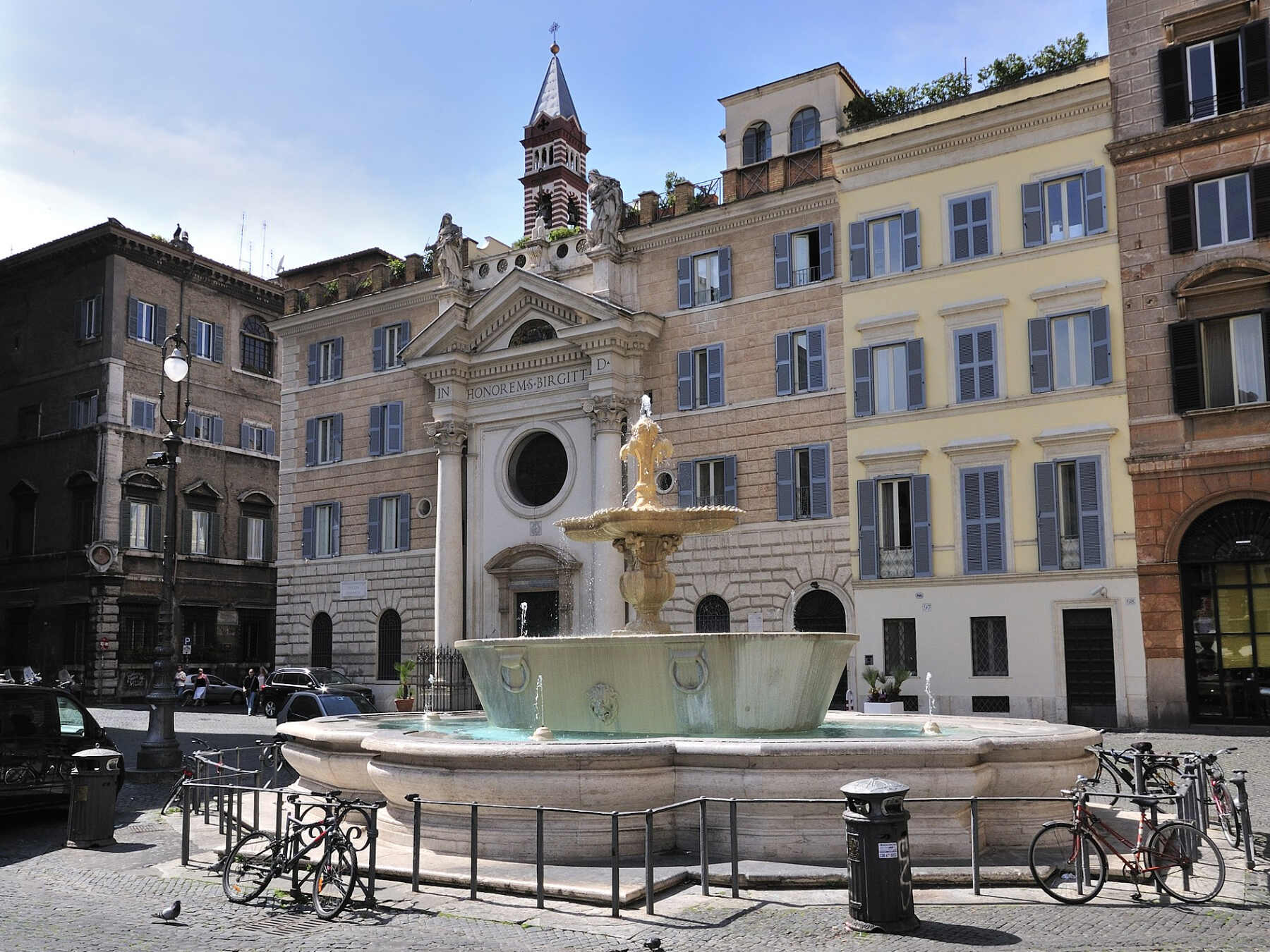
Piazza Farnese
Once again, welcome to Historic America & UCPlaces' audio walking tour of Rome. We're glad you could join us! I'm Aaron, your guide (but I also respond to professional history nerd). This is the part of the tour where I fit in my shameless plug for our websites (www.historicamerica.org & www.ucplaces.com) and invite you to use #historicamericatours on social media while traveling alongside us today. Let's begin the journey.
Behold, one of Rome's great Renaissance palaces (the one with the French flag). This is the Palazzo Farnese. Way back in the 1500s, the palace was built by Italian nobles from the Farnese family in order to show off their newly achieved wealth.
Sparing no expense, they hired none other than Michelagelo to design the place. I'm sure you would too if money was no object! Michelagelo emphasized symmetry in his work and made sure the central balcony was the focus of the facade. That's where the Farneses would give their speeches to the crowd gathered down in the piazza below where you now stand.
Michelagelo's clever design, including the enlarged central window and jutting roofline, has become the standard for Roman architecture since the Renaissance. We will see plenty of the buildings he inspired along the way today.
Notice the old rustic looking stones by the main doorway, the half columns (pilasters) embedded in the facade, the triangular and arched pediments above the windows, and the balustrade railing of the balcony. These will all be common features you can spot on other buildings along the way. Keep a sharp eye out for these and you'll be an expert in Renaissance architecture in no time!
If you are wondering about the French flags and security presence, the Farnese's palace is now home to the French embassy.
Now walk over towards the twin fountains behind you in the piazza.
Behold, one of Rome's great Renaissance palaces (the one with the French flag). This is the Palazzo Farnese. Way back in the 1500s, the palace was built by Italian nobles from the Farnese family in order to show off their newly achieved wealth.
Sparing no expense, they hired none other than Michelagelo to design the place. I'm sure you would too if money was no object! Michelagelo emphasized symmetry in his work and made sure the central balcony was the focus of the facade. That's where the Farneses would give their speeches to the crowd gathered down in the piazza below where you now stand.
Michelagelo's clever design, including the enlarged central window and jutting roofline, has become the standard for Roman architecture since the Renaissance. We will see plenty of the buildings he inspired along the way today.
Notice the old rustic looking stones by the main doorway, the half columns (pilasters) embedded in the facade, the triangular and arched pediments above the windows, and the balustrade railing of the balcony. These will all be common features you can spot on other buildings along the way. Keep a sharp eye out for these and you'll be an expert in Renaissance architecture in no time!
If you are wondering about the French flags and security presence, the Farnese's palace is now home to the French embassy.
Now walk over towards the twin fountains behind you in the piazza.
Read More
Place #2
![Map Pin]()
Distance: 0.59mi
, Attraction : Fountain
Via Dei Baullari, 106, 00186 Roma RM, Italy
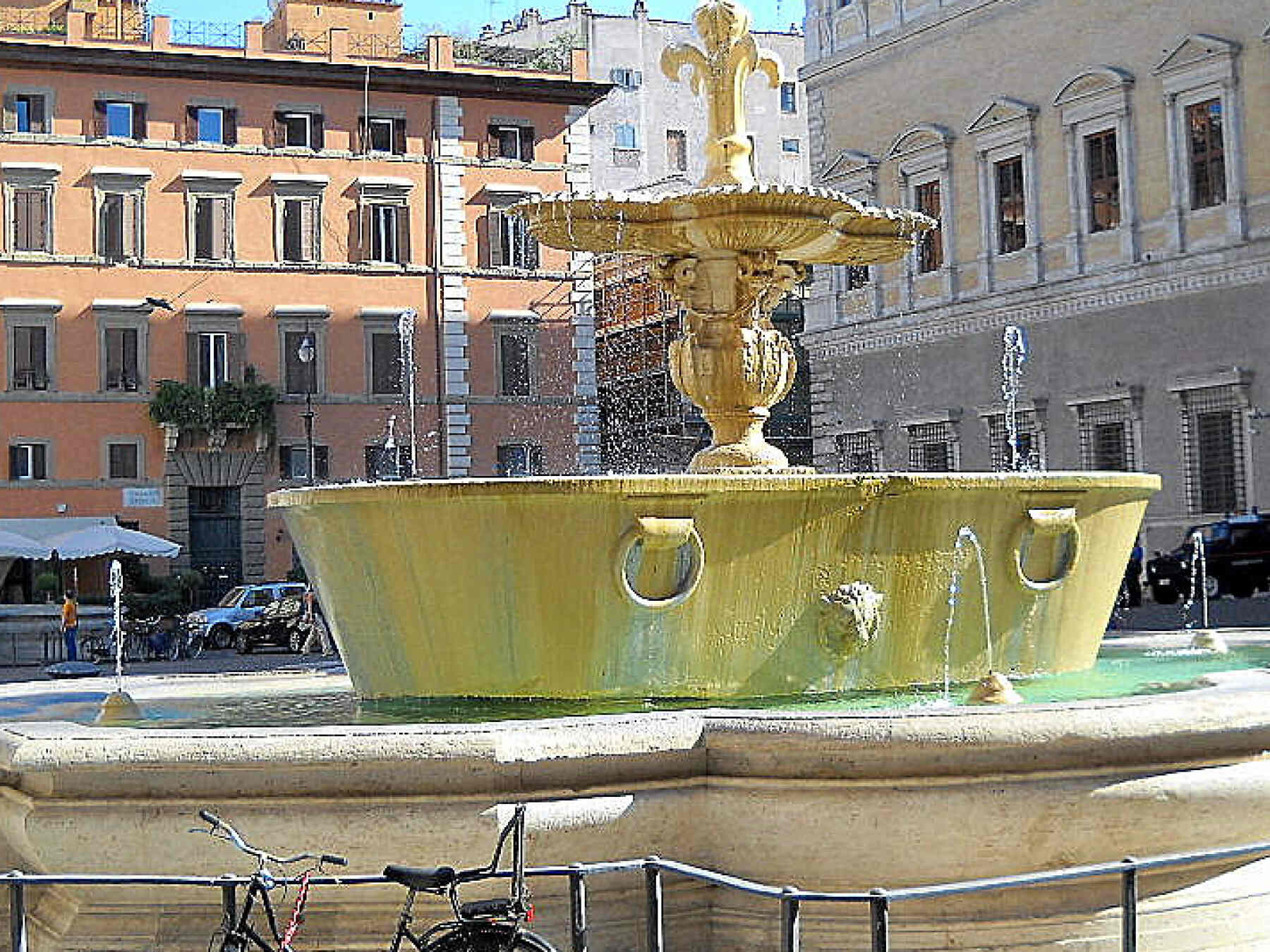
Piazza Farnese Fountain
Romans love water. Always have. You will see lots of spectacular fountains on the tour today. They're everywhere!
Beginning in ancient times, the Romans could rely on waters flowing from municipal aqueducts, marvels of ancient civic engineering, to drink and wash with. These two fountains date from the third century and were once tubs in the great public baths of the emperor Carcalla.
The Romans loved a good bath almost as much as they loved conquering new nations to enlarge their empire! Emperors were constantly building great public works to impress their citizens and win their love, and baths were a popular means toward achieving this end.
The water which flows from these fountains comes from an ancient Roman aqueduct, the Acqua Vergine. The Romans were so skilled at hydraulic engineering that even now after the better part of two millennia, the Acqua Vergine still brings flowing waters into the heart of the city! In fact the Acqua Vergine feeds just about all the fountains we will see today.
Now turn your back to the palace and walk past the fountains. Walk along the Via Dei Baullari for one block until you emerge at our next stop: the Campo de' Fiori, a bustling public market on a small square
Beginning in ancient times, the Romans could rely on waters flowing from municipal aqueducts, marvels of ancient civic engineering, to drink and wash with. These two fountains date from the third century and were once tubs in the great public baths of the emperor Carcalla.
The Romans loved a good bath almost as much as they loved conquering new nations to enlarge their empire! Emperors were constantly building great public works to impress their citizens and win their love, and baths were a popular means toward achieving this end.
The water which flows from these fountains comes from an ancient Roman aqueduct, the Acqua Vergine. The Romans were so skilled at hydraulic engineering that even now after the better part of two millennia, the Acqua Vergine still brings flowing waters into the heart of the city! In fact the Acqua Vergine feeds just about all the fountains we will see today.
Now turn your back to the palace and walk past the fountains. Walk along the Via Dei Baullari for one block until you emerge at our next stop: the Campo de' Fiori, a bustling public market on a small square
Tour itinerary stops | Additional places you'll see on this self-guided tour
Place 1
Piazza Farnese
Place 2
Piazza Farnese Fountain
Place 3
Campo de' Fiori
Place 4
Corso Vittorio Emanuele II
Place 5
Piazza Navona
Place 6
Pantheon
Place 7
Piazza Capranica
Place 8
Piazza di Montecitorio
Place 9
The Column of Marcus Aurelius
Place 10
Via del Corso
Place 11
Trevi Fountain
Place 12
Palazzo di Propaganda Fide
Place 13
Column of the Immaculate Conception
Place 14
Spanish Steps
Click below for full access to this tour
Have any questions about this tour? Or a general travel / self-guided tours question? That's completely natural
+ How long does this tour take?
Most travelers complete this tour in approximately 0.5 to 1 hours, depending on pace, time spent at each stop, and optional detours. Having said that, please remember that self-guided tours are extremly flexible (you can start, pause, continue anytime) and everyone has their own pace.
+ What does this tour include?
This self-guided walking tour includes 14 stops, covering top attractions such as Piazza Farnese, Piazza Farnese Fountain, Campo de' Fiori, Corso Vittorio Emanuele II, Piazza Navona.
+ Where does the tour start?
The tour starts at Piazza Farnese (Address: Piazza Farnese, 67, 00186 Roma RM, Italy). You can begin the tour there or join from any stop along the route.
+ What type of tour is this?
This is a self-guided walking tour designed to be completed on foot through walkable areas and city highlights.
+ Can I do this tour at my own pace?
Yes, this is a self-guided walking tour, so you can start anytime and explore at your own pace. You can pause, skip stops, or spend more time at places that interest you. You can even split it into multiple days. Explore however feels right for you.
+ Is this a walkable tour?
Yes, this tour is fully walkable and designed to follow a comfortable route through pedestrian-friendly areas.
+ Do I need anything in order to take the tour?
There is one thing that you need - A mobile phone (with the UCPlaces app installed and active location services, and a cellular data plan with a decent signal for downloading the tour) and comfortable walking shoes! But here are some recommendations for a great experience: 1. Make sure your phone is fully charged and bring a mobile charger/battery. 2. Bring earphones for the best experience. 3. Bring a bottle of water and dress appropriately according to the weather forecast.
+ How will I navigate from point to point during the tour?
The tour uses GPS-based navigation through the UCPlaces app, with automatic audio playback and step-by-step directions between stops. Just follow the route (cross streets carefully using crosswalks) and listen to the audio guide. Use the resume feature to continue the from where you recently stopped (or closed the app). Easily skip or go back to stops.
+ Is this tour suitable for families or groups?
Yes, self-guided tours are ideal for families and small groups, allowing everyone to explore comfortably without being tied to a fixed schedule.
+ What makes a self-guided tour better than a guided tour?
Self-guided tours are more flexible, affordable, and personalized. You can avoid crowds, choose your pace, and focus on the stops that interest you most.
+ I installed the app and it's now asking for GPS and media access permissions, why?
The app is your tour-guide, it needs to know where you are located on the map to be able to trigger the points of interest. It also needs access to audio and media files to provide you with this experience.
+ What happens if there are unexpected roadblocks or navigation issues?
We have been working hard to deliver a great experience. Though you may run into unexpected obstacles (the world is constantly changing), our app has multiple features and mechanisms in place to help you overcome them, including: AI assistance, force play an audio if you can't reach the stop, skip or return to stops, automatic rerouting and more.
+ Can I take the tour in my language?
Though all of our tours are primarily in English, many tours are muyltilingual (including: Spanish, German, Portuguese, French, Japanese, Hebrew, French, Arabic and more...). The tour language options depend on the specific tour - You can easily check which languages are available in the tour screen!