
For years, the promise of autonomous vehicles has been framed around efficiency.
Supporters point to fewer accidents, improved accessibility, reduced congestion, and the ability to reclaim time previously spent behind the wheel. Most industry discussions have focused on operational questions: fleet management, regulations, charging infrastructure, and cost per mile.
But another question is beginning to emerge
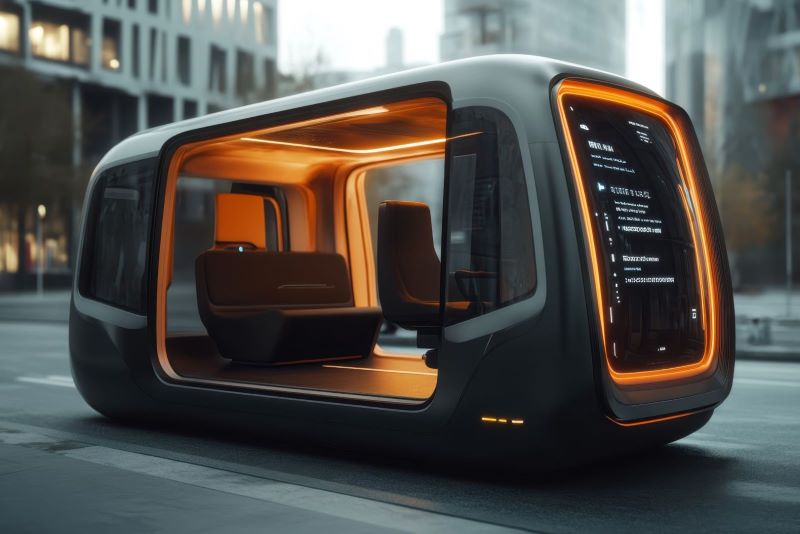
One possibility is that autonomous vehicles could reshape parts of the tourism industry.
Traditionally, sightseeing has relied on a mix of walking tours, hop-on-hop-off buses, private guides, and organized group excursions. While these formats remain popular, they also come with limitations including fixed schedules, language barriers, and the need to coordinate around group itineraries.
Autonomous vehicles may eventually offer an alternative.
Instead of booking transportation from point A to point B, travelers could choose destination-based experiences tailored to their interests. A visitor arriving in Boston might select a historical route through the city’s most significant landmarks. In Los Angeles, the experience could focus on architecture, entertainment history, or scenic coastal drives. National parks could provide educational journeys highlighting geology, wildlife, and conservation efforts.
The concept aligns with broader shifts already taking place in travel behavior.
Travelers increasingly seek experiences that are more flexible and personalized. According to industry trends, demand for self-guided experiences has grown as visitors prioritize independence, authenticity, and the ability to explore on their own schedules.
Autonomous vehicles could support these preferences by removing the responsibility of driving while preserving the privacy and flexibility many travelers value.
The implications extend beyond tourism operators.
Cities may see opportunities to distribute visitors more effectively across neighborhoods and attractions. Mobility providers could explore new service categories beyond conventional transportation. Hotels and destination partners may identify ways to extend the guest experience beyond their physical properties.
At the same time, questions remain.
Would travelers embrace sightseeing inside autonomous vehicles? How would such experiences be regulated? Would they complement existing tour operators or compete with them? And perhaps most importantly, would people view autonomous tours as transportation products or travel experiences?
Answers to those questions may still be years away.
Yet history suggests that major technological shifts often create entirely new categories of consumer behavior that were difficult to predict in advance. Ride-hailing changed urban transportation. Home-sharing altered lodging. Mobile devices transformed how travelers navigate unfamiliar destinations.
Autonomous mobility may similarly expand beyond its original purpose.
The future of robotaxis will almost certainly include daily commuting, airport transfers, and local errands.
Whether it also includes sightseeing remains to be seen.
But as cities prepare for an autonomous future, tourism may prove to be one of the most intriguing opportunities hiding in plain sight.