

Chicago's Magnificent Mile Self-Guided (GPS) Audio Walking Tour, Illinois - Architecture, history, shopping & hidden gems
Places: 14 POIs
Distance: 1.71 mi
Duration: 1h:02m
GPS-guided narration through
Your Smartphone
Tour #449
About this English self-guided 1h:02m walking tour in Chicago
Welcome to this self-guided audio walking tour of Chicago's Magnificent Mile, Illinois.
High end shopping, architecture, history and hidden gems await on this self-guided journey.
- 1For the best experience, begin at the tour's recommended starting point and follow the stops in order.
- 2Want to start somewhere else? Simply use Start At on the tour screen, before tapping Start Tour, to begin from any stop.
- 3Need to detour or skip a stop along the way? Tap Tour Assistant (
![UCPlaces AI Bot Icon]() ) to use Force Play, Skip, and Back, for full flexibility.
) to use Force Play, Skip, and Back, for full flexibility.
 ) to use Force Play, Skip, and Back, for full flexibility.
Route Preview
- Category
- Language
- Mode
- Region
- Country
- City

Places (POIs) visited during this tour
Place #1
![Map Pin]()
Recommended Starting Point
Distance: 0.32mi

180 Michigan Ave # 909, Chicago, IL 60601, USA
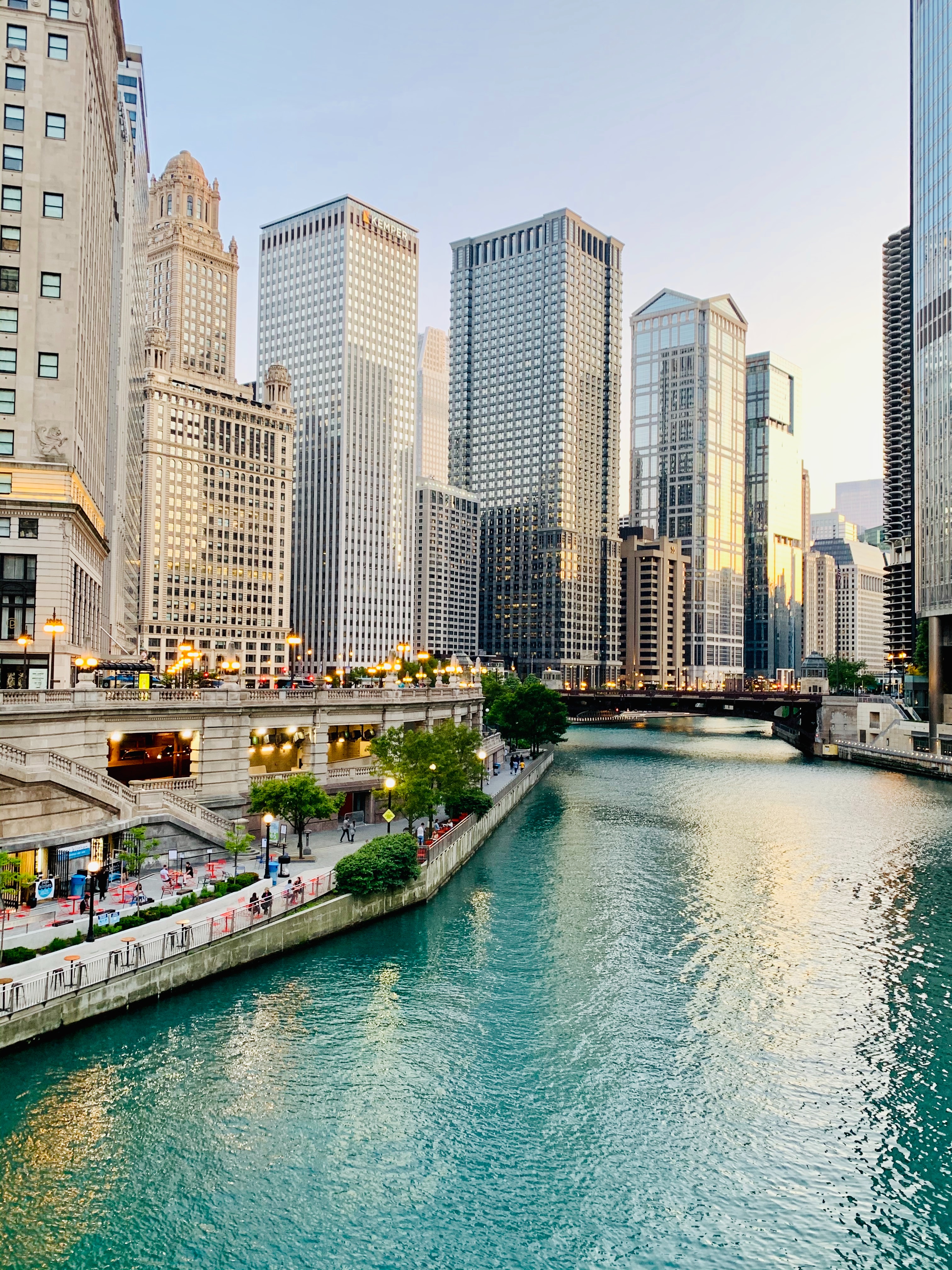
Michigan Ave and E Lake Street (190 Michigan Avenue)
This is just an intro spot for the tour - nothing particularly significant about the spot itself.
Place #2
![Map Pin]()
Distance: 0.41mi
, Attraction : Old Fort Deaborn
350 Michigan Ave, Chicago, IL 60601, USA
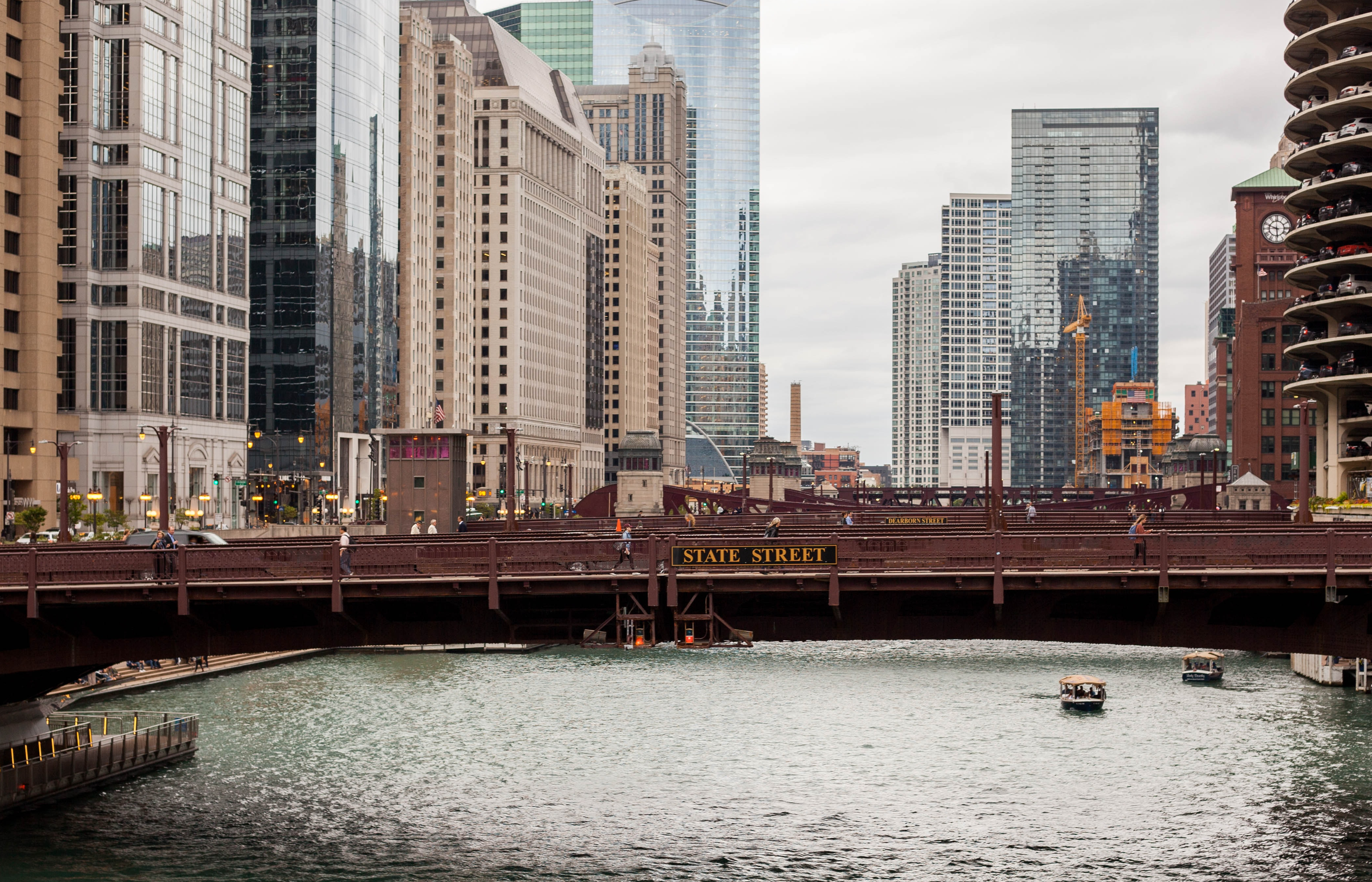
DuSable Bridge
You now stand at the intersection of Wacker Drive & Michigan Avenue. Pause here for a moment so I can get you oriented and tell a quick story. Ahead of you across the intersection, the DuSable bridge spans the Chicago River. The width of the bridge is marked by the ornately carved bridge houses, two of which sit on either side of Michigan Avenue in front of you. The space between you and the left bridge house marks the one-time location of Fort Dearborn - a US Army fort whose abandonment led to a fierce battle and a defining moment in the history of Chicago. As was mentioned, the Chicago River serves as a connection between the water systems of the Great Lakes & the Mississippi. After completing the Louisiana Purchase, President Thomas Jefferson sent US Army Officer John Whistler to this strategic crossroads. Whistler built a fort named after Henry Dearborn, the Secretary of War, on this very spot. Clear your mind and you can almost picture the scene. It's 1803. The landscape around you is almost entirely open; a gently swaying landscape of tallgrass prairie bisected by lakes & rivers which smell faintly of wild onions, except for an upturned patch of earth ahead, where a small log fort is being constructed on the riverbank by a crew of rough hewn men in shirtsleeves. Its surrounding palisade & block houses slowly rise out of the earth as the dull thump of sledge hammers and the thwack of axes fills the air. You notice a surrounding settlement has sprung up about the skeleton of the fort; a ramshackle assortment of huts for settlers, soldiers, merchants and traders. In the distance, and seemingly on all sides, thousands of people from the indigenous Potawatomi Tribe look on … tensely. The fort was completed in 1804 and would remain intact until the war of 1812. In that year war broke out with the British and their Native American allies - including the Potawatomi. Soon after, American settlers farther downriver were murdered by local tribesmen while US soldiers were driven out of Michigan territory to the north. Fearing that Fort Dearborn could not be held, American forces evacuated the fort & settlement on a sultry August day. As the mixed group of just under 100 American soldiers and civilians (including women & children) drew a few miles beyond the fort, they collided with a large, hostile band of Potawatomi and were quickly overwhelmed. During the brief yet sharp fight, the American commander - Captain Wells - fell bravely and (according to eyewitness accounts) had his heart cut out by Potowatomi warriors in order to absorb his courage. Those that didn't die were taken hostage and the fort was burned, emptying the region of U.S. troops until after the war. The fort was eventually rebuilt but was done away with permanently in 1857 as the wild nature of this frontier territory receded into memory. The Battle of Fort Dearborn is commemorated on the bridge house sculpture on the other side of the intersection. Cross over and I'll take a look with you!
Read More
Tour itinerary stops | Additional places you'll see on this self-guided tour
Place 1
Michigan Ave and E Lake Street (190 Michigan Avenue)
Place 2
DuSable Bridge
Place 3
DuSable Bridge (south end)
Place 4
DuSable Bridge
Place 5
Tribune Tower & Medinah Athletic Club
Place 6
Driehaus Museum
Place 7
Holy Name Cathedral / O'Banion's Flower Shop
Place 8
The Great Chicago Fire
Place 9
Historic Water Tower
Place 10
Fourth Presbyterian Church
Place 11
The Drake Hotel
Place 12
Guess Who?
Place 13
The Newberry Library
Place 14
Washington Square Park
Click below for full access to this tour
Have any questions about this tour? Or a general travel / self-guided tours question? That's completely natural
+ How long does this tour take?
Most travelers complete this tour in approximately 1 to 1 hours, depending on pace, time spent at each stop, and optional detours. Having said that, please remember that self-guided tours are extremly flexible (you can start, pause, continue anytime) and everyone has their own pace.
+ What does this tour include?
This self-guided walking tour includes 14 stops, covering top attractions such as Michigan Ave and E Lake Street (190 Michigan Avenue), DuSable Bridge, DuSable Bridge (south end), DuSable Bridge, Tribune Tower & Medinah Athletic Club.
+ Where does the tour start?
The tour starts at Michigan Ave and E Lake Street (190 Michigan Avenue) (Address: 180 Michigan Ave # 909, Chicago, IL 60601, USA). You can begin the tour there or join from any stop along the route.
+ What type of tour is this?
This is a self-guided walking tour designed to be completed on foot through walkable areas and city highlights.
+ Can I do this tour at my own pace?
Yes, this is a self-guided walking tour, so you can start anytime and explore at your own pace. You can pause, skip stops, or spend more time at places that interest you. You can even split it into multiple days. Explore however feels right for you.
+ Is this a walkable tour?
Yes, this tour is fully walkable and designed to follow a comfortable route through pedestrian-friendly areas.
+ Do I need anything in order to take the tour?
There is one thing that you need - A mobile phone (with the UCPlaces app installed and active location services, and a cellular data plan with a decent signal for downloading the tour) and comfortable walking shoes! But here are some recommendations for a great experience: 1. Make sure your phone is fully charged and bring a mobile charger/battery. 2. Bring earphones for the best experience. 3. Bring a bottle of water and dress appropriately according to the weather forecast.
+ How will I navigate from point to point during the tour?
The tour uses GPS-based navigation through the UCPlaces app, with automatic audio playback and step-by-step directions between stops. Just follow the route (cross streets carefully using crosswalks) and listen to the audio guide. Use the resume feature to continue the from where you recently stopped (or closed the app). Easily skip or go back to stops.
+ Is this tour suitable for families or groups?
Yes, self-guided tours are ideal for families and small groups, allowing everyone to explore comfortably without being tied to a fixed schedule.
+ What makes a self-guided tour better than a guided tour?
Self-guided tours are more flexible, affordable, and personalized. You can avoid crowds, choose your pace, and focus on the stops that interest you most.
+ I installed the app and it's now asking for GPS and media access permissions, why?
The app is your tour-guide, it needs to know where you are located on the map to be able to trigger the points of interest. It also needs access to audio and media files to provide you with this experience.
+ What happens if there are unexpected roadblocks or navigation issues?
We have been working hard to deliver a great experience. Though you may run into unexpected obstacles (the world is constantly changing), our app has multiple features and mechanisms in place to help you overcome them, including: AI assistance, force play an audio if you can't reach the stop, skip or return to stops, automatic rerouting and more.
+ Can I take the tour in my language?
Though all of our tours are primarily in English, many tours are muyltilingual (including: Spanish, German, Portuguese, French, Japanese, Hebrew, French, Arabic and more...). The tour language options depend on the specific tour - You can easily check which languages are available in the tour screen!