

Old Delhi's Heartbeat: A Self-Guided Walking Tour of Historic Landmarks
About this English self-guided 1h:09m walking tour in Delhi
Welcome to Old Delhi, one of the oldest, busiest, loudest, most fascinating, and most unforgettable places in all of India.
Over the next few hours, you’ll explore a world where Mughal emperors once ruled, ancient mosques rise above tangled electrical wires, spice markets overflow into narrow alleyways, and centuries of history somehow continue functioning in the middle of complete chaos.
And yes… “chaos” is absolutely part of the experience.
Old Delhi is not polished. It’s not quiet. It’s not carefully curated for tourists.
It’s alive.
You’ll hear bicycle bells, distant prayer calls, shouting vendors, sizzling street food, and horns coming from directions that may not seem physically possible. You’ll smell cardamom, incense, fried parathas, chili powder, and sometimes things you probably cannot identify at all.
You’ll walk through legendary markets, hidden lanes, historic temples, grand mosques, wedding bazaars, and streets that have been active trade routes for hundreds of years.
This is a place where history does not sit quietly behind museum glass. It spills directly into the streets.
Along the way, you’ll discover the stories behind the Red Fort, Jama Masjid, Chandni Chowk, Khari Baoli, and many of the hidden corners that make Old Delhi unlike anywhere else on Earth.
A few quick tips before we begin:
Stay alert while walking, especially around rickshaws, scooters, and bicycles. Traffic here follows rules that sometimes feel more philosophical than official. Keep your belongings secure, wear comfortable shoes, and don’t be afraid to slow down and simply absorb the atmosphere around you.
Most importantly, come with curiosity and an open mind.
Old Delhi can feel overwhelming at first… but that’s usually right before people fall completely in love with it.
Now, let’s begin our journey through the heart of Old Delhi.
- 1For the best experience, begin at the tour's recommended starting point and follow the stops in order.
- 2Want to start somewhere else? Simply use Start At on the tour screen, before tapping Start Tour, to begin from any stop.
- 3Need to detour or skip a stop along the way? Tap Tour Assistant (
![UCPlaces AI Bot Icon]() ) to use Force Play, Skip, and Back, for full flexibility.
) to use Force Play, Skip, and Back, for full flexibility.
 ) to use Force Play, Skip, and Back, for full flexibility.
Route Preview

Places (POIs) visited during this tour

Lahori Gate, 5181-A, Naya Bazar, New Delhi, Delhi, 110006, India
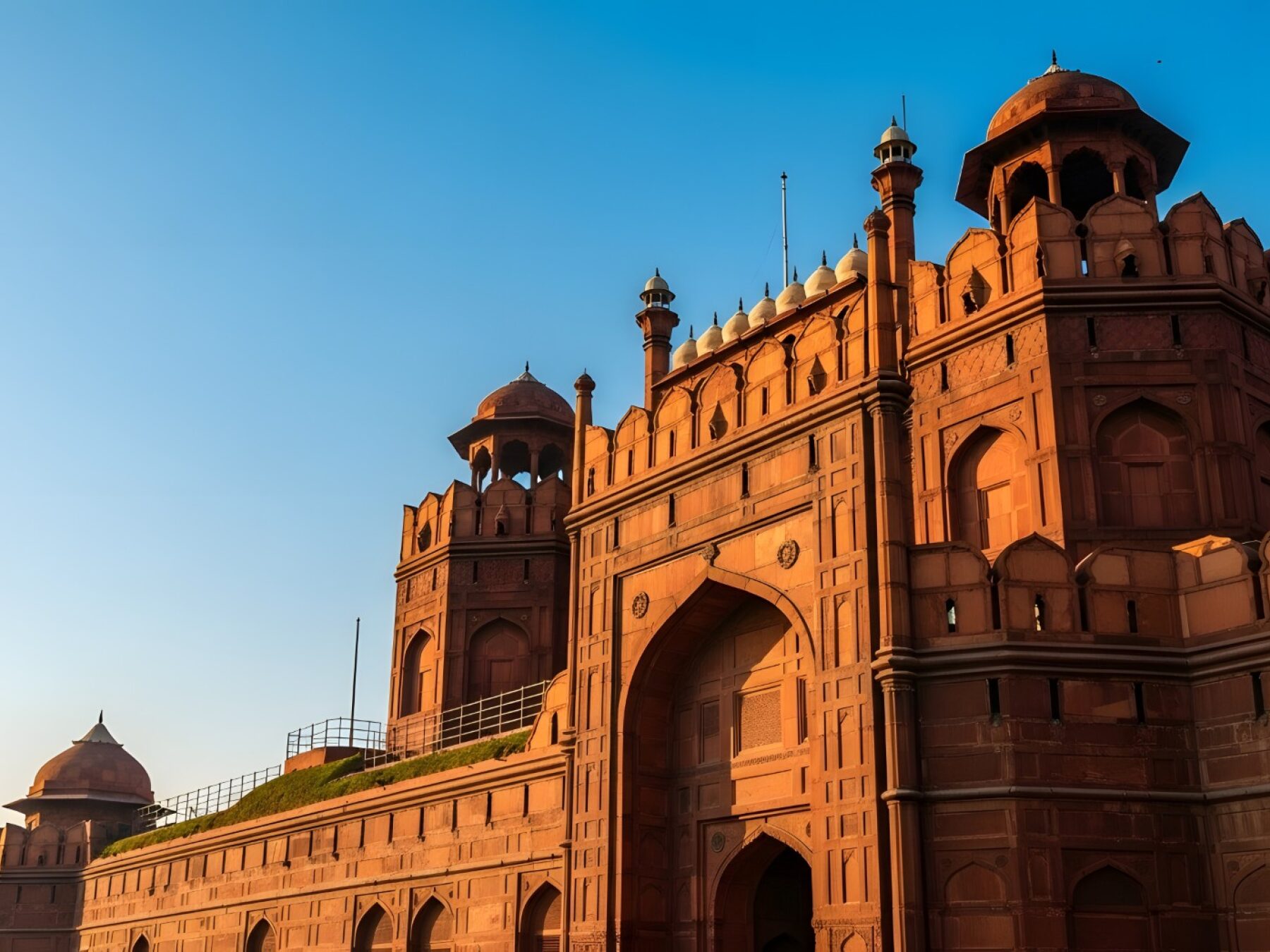
Built in the 1600s by the Mughal emperor Shah Jahan, the same emperor behind the Taj Mahal, this massive red sandstone fortress once served as the center of Mughal power for nearly 200 years.
At its peak, the fort was far more than just a military stronghold. Behind these enormous walls was an entire royal city filled with palaces, gardens, fountains, private apartments, markets, musicians, servants, royal courts, and thousands of people supporting the Mughal empire.
The red sandstone walls stretching before you can rise over 100 feet high in some sections and extend for more than a mile around the complex. Imagine arriving here centuries ago as a traveler or merchant. The sheer scale alone was designed to communicate power.
But the Red Fort is also deeply tied to modern India. Every year on India’s Independence Day, the Prime Minister raises the national flag here and addresses the country from the fort’s ramparts, continuing a tradition that began in 1947.
If you have extra time later, the inside of the fort is absolutely worth exploring with a proper guided visit. There are beautiful courtyards, royal halls, museums, gardens, and fascinating remnants of Mughal palace life hidden behind these walls.
That said, the area can become extremely crowded and overwhelming, especially during busy hours, weekends, and holidays. So for now, we’ll continue exploring the streets and energy of Old Delhi itself, where the city truly comes alive.
Take one last look at the towering walls around you, and when you're ready, continue following the route toward Chandni Chowk and the organized chaos waiting ahead.
Read More
10/60, Nehru Nagar, Chandni Chowk, New Delhi, Delhi, 110065, India
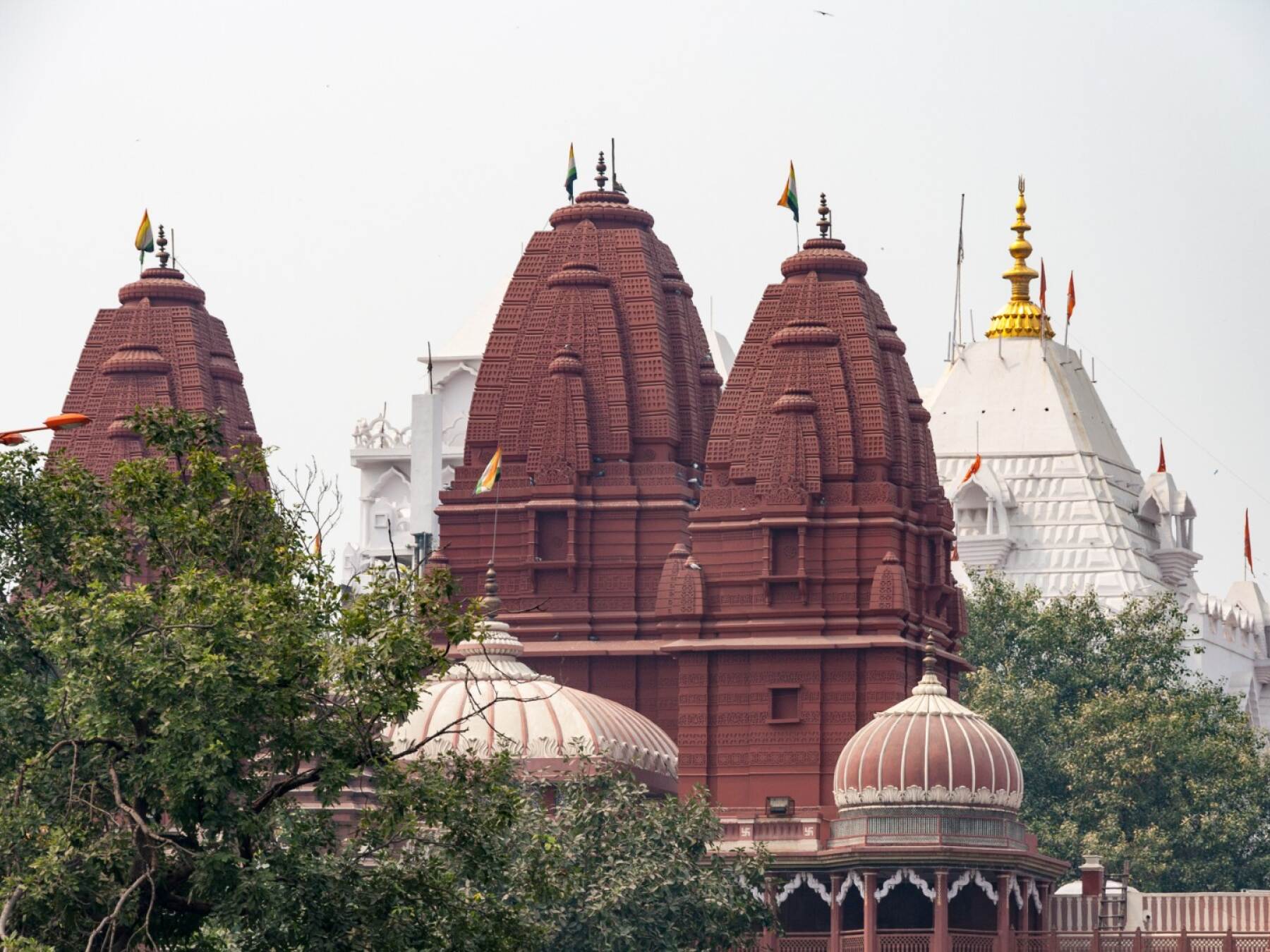
Originally built in the 1600s during the Mughal era, this beautiful red sandstone temple sits directly across from the Red Fort, almost as if spirituality and imperial power have been facing each other for centuries.
The temple belongs to the Digambar sect of Jainism, a religion centered around nonviolence, self-discipline, simplicity, and deep respect for all living beings. And when Jains say all living beings, they truly mean all living beings.
In fact, one of the temple’s most unique features is the famous Jain Bird Hospital located within the complex. Injured birds from around Delhi are brought here for treatment and care before being released back into the wild. It may sound unusual at first, but it perfectly reflects the Jain philosophy of compassion toward every form of life.
As you look around, notice the intricate carvings, the calm atmosphere, and the sharp contrast between the temple’s serenity and the constant movement just outside its walls. That contrast is part of what makes Old Delhi so fascinating. Around nearly every corner, chaos and calm somehow coexist.
If you decide to step inside, remember to dress respectfully and remove your shoes before entering.
And yes, after the noise of Chandni Chowk traffic, this may briefly feel like entering another dimension entirely.
Read More
Place 1
Red Fort – The Heart of Mughal Power
Place 2
Shri Digambar Jain Lal Mandir – Old Delhi’s Quiet Spiritual Corner
Place 3
Jama Masjid – The Grand Mosque of Old Delhi
Place 4
Chandni Chowk – Old Delhi’s Bustling Bazaar
Place 5
Kinari Bazaar – The Wedding Market of Old Delhi
Place 6
Gurudwara Sis Ganj Sahib – A Place of Sacrifice and Strength
Place 7
Sunehri Masjid – The Golden Mosque of Chandni Chowk
Place 8
Paratha Lane – Old Delhi’s Legendary Comfort Food Street
Place 9
Fatehpuri Masjid – The Western Gate of Chandni Chowk
Place 10
Khari Baoli - Asia's Aromatic Spice Hub