

Tbilisi Self-Guided (GPS) Audio Walking Tour, Georgia - Old Town Magic, History & Culture
About this English self-guided 2h:06m walking tour in Tbilisi
Hello and welcome to this UCPlaces tour of Tbilisi Georgia, the vibrant capital where history, culture, and modernity blend seamlessly. My name is Dave, and it will be my pleasure being your co-pilot today.
We begin our walking tour at Rustaveli Avenue, the city's grand boulevard, near the magnificent Tbilisi Opera House, a symbol of 19th-century elegance. From here, we'll make our way through the lively streets, crossing the scenic Kura River with its stunning views of old and new Tbilisi. As we stroll back across the bridge, the city's ancient heart beckons, where we'll explore the iconic Sulphur baths that have soothed travelers for centuries. Our journey concludes at Liberty Square, a bustling hub steeped in the spirit of freedom and independence, offering a perfect reflection of Tbilisi's rich heritage.
Our tour today runs roughly 2 and half miles, so I hope you brought your comfortable walking shoes. If you don’t feel like going the distance, you can always explore selected portions of the tour. Follow your GPS, and we will begin shortly.
Our location here on Rustaveli is a good place to start, as we are near many hotels, as well as public transportation stops.
Everyone ready? And, here, we, go…
- 1For the best experience, begin at the tour's recommended starting point and follow the stops in order.
- 2Want to start somewhere else? Simply use Start At on the tour screen, before tapping Start Tour, to begin from any stop.
- 3Need to detour or skip a stop along the way? Tap Tour Assistant (
![UCPlaces AI Bot Icon]() ) to use Force Play, Skip, and Back, for full flexibility.
 ) to use Force Play, Skip, and Back, for full flexibility.
Route Preview
- Category
- Language
- Mode

Places (POIs) visited during this tour

28 Shota Rustaveli Ave, T'bilisi, Georgia
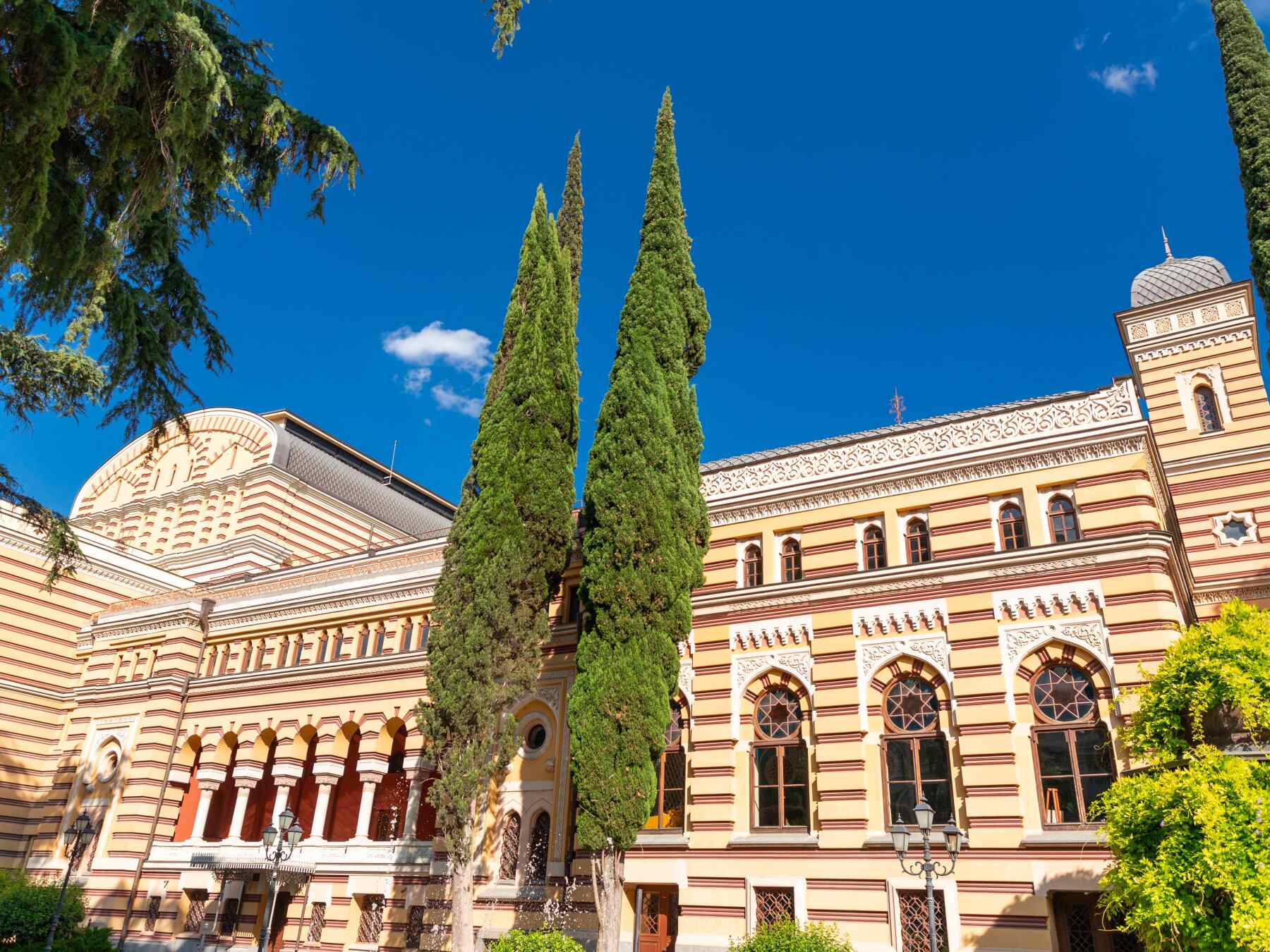
Now, let’s talk about what we see around us, as we stroll down Rustaveli Avenue, the main thoroughfare and cultural heart of Tbilisi. Named after the 12th-century Georgian poet Shota Rustaveli, it stretches for about 1.5 kilometers, connecting Freedom (Liberty) Square to Rustaveli Square. The avenue is lined with a blend of historic landmarks, government buildings, theatres, shops, cafés, and museums, making it one of the most vibrant and significant streets in the city.
Originally known as Golovin Avenue, it was renamed in 1918 after the Soviet Red Army invaded Georgia and overthrew the Democratic Republic of Georgia. The avenue underwent significant renovation in the 2000s, and today it features a blend of modern buildings and classical architectural styles.The architecture along the avenue is a mix of neoclassical, Soviet, and modern styles, reflecting the city’s complex history. We will talk more about the architecture of the city later in the tour.
The Tbilisi Opera and Ballet Theatre, to our left, is one of the most iconic cultural landmarks in Georgia, and has a rich history dating back to its founding in 1851.
The building itself is a masterpiece of Moorish Revival architecture, designed by Italian architect Giovanni Scudieri, and later reconstructed after fires and renovations. Its ornate facade and stunning interior, featuring a grand chandelier and beautifully detailed hall, make it a must-see attraction for visitors.
The theatre is named after Georgian composer Zakaria Paliashvili, who is best known for incorporating traditional Georgian folk music into his operas. It hosts performances of both Georgian and international works of opera and ballet, showcasing the talent of local and international artists. The theatre has played a crucial role in fostering Georgian culture and remains a vibrant center for the performing arts in the region.
Look up. Are the colors of the Georgian flag flying above the street? Sometimes the street is adorned and lined with the Red and White colors of the flag.
Let's keep walking down Rustaveli.
Read More
MQXW+VQ9, Shota Rustaveli Ave, T'bilisi, Georgia
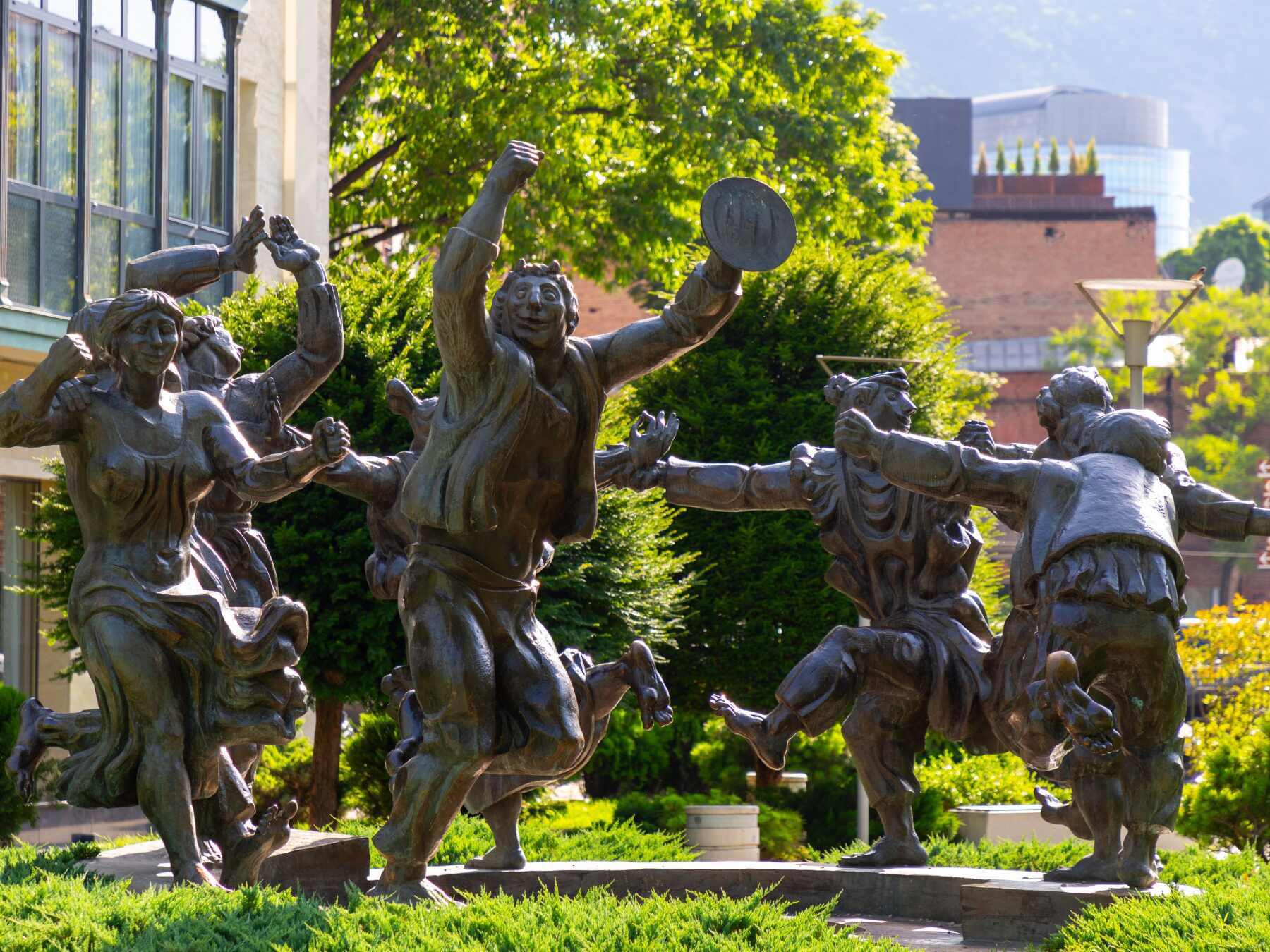
One of the most iconic bronze statues is the "Berikaoba," located on Rustaveli Avenue. It represents performers from a traditional Georgian masquerade festival, symbolizing celebration and humor. Another well-known bronze figure is the "Tamada," situated in the Old Town. The Tamada is a Georgian toastmaster holding a wine goblet, symbolizing the important role of toasting and hospitality in Georgian culture. The picture you see on your app is of this charming toastmaster.
You’ll also find statues that celebrate everyday life, such as the "Old Tbilisi Men," depicting older men sitting and talking, or "Women Selling Flowers," which highlights the city’s street vendors. These statues not only beautify the city but also tell stories of Georgian traditions, personalities, and social life, giving passersby a glimpse into the heart of Tbilisi.
Place 1
Opera House
Place 2
The Bronze Statues of Tbilisi
Place 3
Kashueti Church
Place 4
Parliament
Place 5
Soviet Occupation and Georgian National Museum
Place 6
Museum of Books
Place 7
Orbeliani Square
Place 8
Old Town Ruins and Tbilisi City Wall
Place 9
Story Time
Place 10
The Gabriadze Theatre
Place 11
Clock Tower
Place 12
Anchiskhati Basilica
Place 13
Cuisine
Place 14
Kura River
Place 15
Bridge of Peace
Place 16
Rike Park
Place 17
The Dancing Fountains
Place 18
Mother of Georgia Tramway
Place 19
Fortress of Isani
Place 20
Berlin Wall Memorial
Place 21
The Statue of King Vakhtang Gorgasali
Place 22
Metekhi Church
Place 23
Sololaki Hill
Place 24
Coffee Culture
Place 25
Sulphur Bath Houses
Place 26
Waterfall Square And Gorge
Place 27
Wine Ice Cream
Place 28
Architecture
Place 29
Picture Time and Gorgasali Square
Place 30
Shardeni Street
Place 31
Sioni Street
Place 32
The Zion Cathedral of the Dormition
Place 33
Urban Legends
Place 34
Museum of History of Georgian Jews
Place 35
Royal District Theatre
Place 36
Voronya Cave
Place 37
Liberty Square