
Places (POIs) visited during this tour
Place #1
Recommended Starting Point
Distance: 0.34mi
, Attraction : Entertainment
270 W 47th St, New York, NY 10036, USA
Theatres of 46th and 47th Street
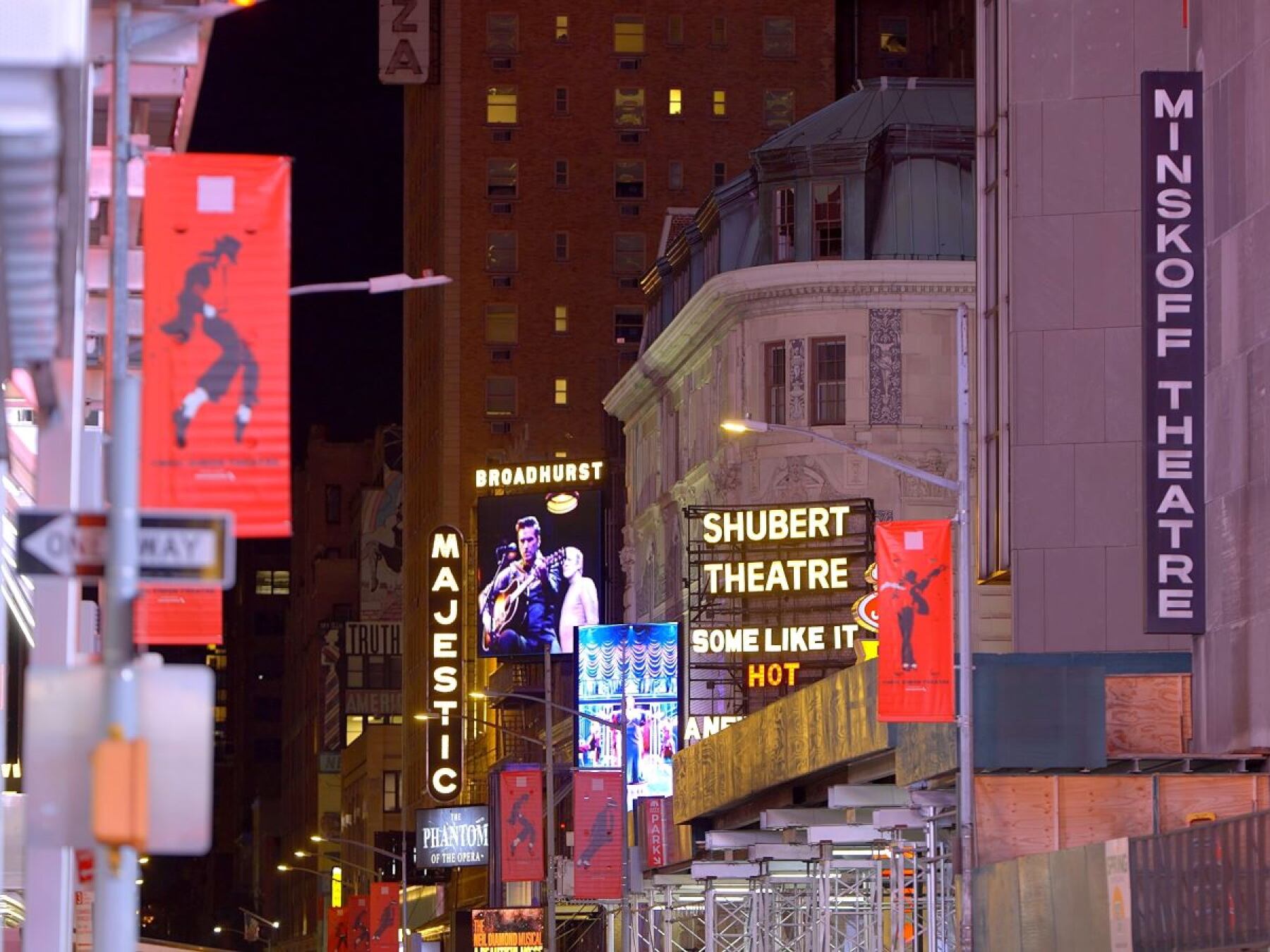
If you can make it here, you’ll make it anywhere! The theaters located on 47th Street in New York City are part of the vibrant Broadway Theatre District. These theatres are renowned for hosting a variety of acclaimed Broadway shows, ranging from classic musicals to contemporary plays, and they contribute significantly to the cultural vibrancy of New York City’s theatre scene. Let’s tell you about them as we walk by.
As we head down 47th Street, you’ll see The Samuel J. Friedman Theatre on the left, whose notable productions include "The Height of the Storm," "The Nap," "The Children," and "The Minutes." Opened in 1925 as the Biltmore Theatre, it was renamed in 2008 in honor of the Broadway publicist Samuel J. Friedman.
Right across the street is The Lena Horne Theatre, whose notable productions include, Waitress," "Spring Awakening," "Grease," "Rock of Ages," and "Six." The theatre was recently renamed in 2022 from Mansfield Theatre to its new name. Renaming the theatre to honor Lena Horne marks a significant acknowledgment of her contributions to the arts and civil rights. Lena Horne (1917-2010) was a groundbreaking African American performer who broke many racial barriers in the entertainment industry. She was also a committed civil rights activist who used her platform to fight against racial discrimination.
Across the street on our left is Ethel Barrymore Theatre, whose notable productions include, "A Raisin in the Sun," "The Curious Incident of the Dog in the Night-Time," and "The Band's Visit"
Opened in 1928, it was named after the actress Ethel Barrymore and is the only surviving theatre of the many theatres built for her.
Want to see some more theatres? We will soon be making a left onto where else, Broadway. No shortage of them there. Let’s check it out.
As we head down 47th Street, you’ll see The Samuel J. Friedman Theatre on the left, whose notable productions include "The Height of the Storm," "The Nap," "The Children," and "The Minutes." Opened in 1925 as the Biltmore Theatre, it was renamed in 2008 in honor of the Broadway publicist Samuel J. Friedman.
Right across the street is The Lena Horne Theatre, whose notable productions include, Waitress," "Spring Awakening," "Grease," "Rock of Ages," and "Six." The theatre was recently renamed in 2022 from Mansfield Theatre to its new name. Renaming the theatre to honor Lena Horne marks a significant acknowledgment of her contributions to the arts and civil rights. Lena Horne (1917-2010) was a groundbreaking African American performer who broke many racial barriers in the entertainment industry. She was also a committed civil rights activist who used her platform to fight against racial discrimination.
Across the street on our left is Ethel Barrymore Theatre, whose notable productions include, "A Raisin in the Sun," "The Curious Incident of the Dog in the Night-Time," and "The Band's Visit"
Opened in 1928, it was named after the actress Ethel Barrymore and is the only surviving theatre of the many theatres built for her.
Want to see some more theatres? We will soon be making a left onto where else, Broadway. No shortage of them there. Let’s check it out.
Read More
Place #2
Distance: 0.33mi
, Attraction : Entertainment
1565 Broadway, New York, NY 10036, USA
Broadway
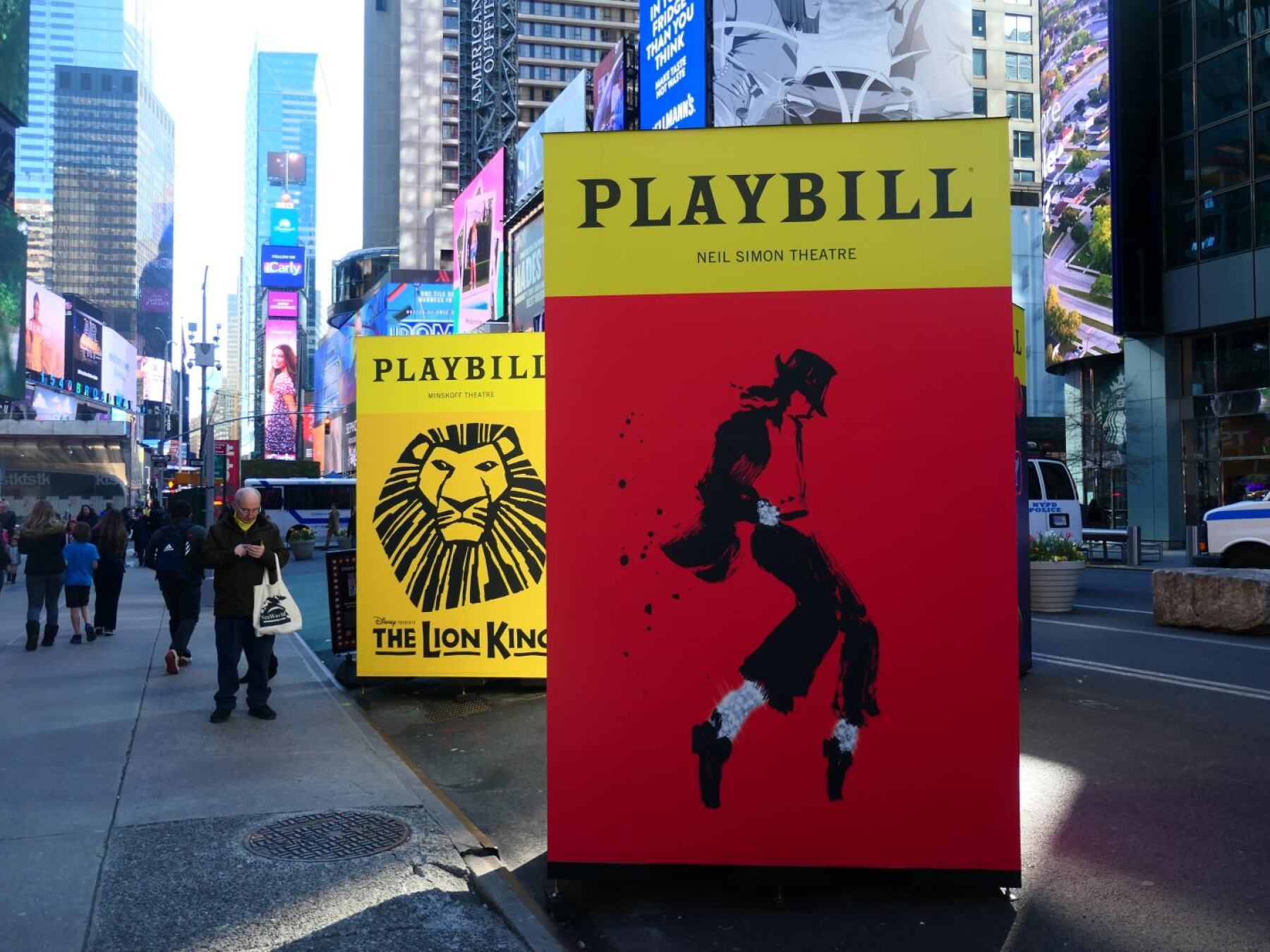
The sounds, the lights, the traffic, the smells. It can all be a bit overwhelming, especially while you’re listening to me talk. But bare with me, I’m just the messenger.
Any history buffs out there? Ok, good. Time for a little lesson. Broadway's history dates back to the early 19th century when theatres began to emerge along the street of Broadway. The first significant theatre on Broadway was the Park Theatre, built in 1798.
In the late 19th and early 20th centuries, the development of the Theatre District solidified Broadway's reputation as the premier location for theatrical productions. The construction of iconic theatres such as the New Amsterdam Theatre in 1903 and the Palace Theatre in 1913 contributed to its fame.
The mid-20th century is often considered the Golden Age of Broadway, with classic productions like "Oklahoma!" (1943), "West Side Story" (1957), and "My Fair Lady" (1956) defining the era.
The thoroughfare itself is a long street that runs the length of Manhattan, but the term "Broadway" commonly refers to the Theatre District, located in Midtown Manhattan.
This area is roughly bounded by 41st Street to the south, 54th Street to the north, 6th Avenue (Avenue of the Americas) to the east, and 8th Avenue to the west. Times Square is often considered the heart of the Theatre District. Broadway is one of the oldest north-south streets in New York City, originally an Algonquin trade route. The name comes from the Dutch "Brede Weg," meaning "Broad Way.
Established in 1947, the Tony Awards are the most prestigious awards in American theatre, celebrating excellence in Broadway productions. Winning a Tony is considered a significant achievement for any show or performer. Time for some did you know.
While "The Phantom of the Opera" is the longest-running show on Broadway, the longest-running American musical is "Chicago," which surpassed "A Chorus Line" in 2011.
Many Broadway theatres are said to be haunted. The Belasco Theatre is one of the most famous, allegedly haunted by its original owner, David Belasco.
Bert Williams was one of the first African-American Broadway stars. He performed in the 1903 musical "In Dahomey," which was the first full-length musical written and performed by African-Americans on Broadway.
The Shubert Organization, which owns and operates many Broadway theatres, maintains an extensive archive documenting the history of its theatres and productions, including original scripts, photographs, and set designs.
Any history buffs out there? Ok, good. Time for a little lesson. Broadway's history dates back to the early 19th century when theatres began to emerge along the street of Broadway. The first significant theatre on Broadway was the Park Theatre, built in 1798.
In the late 19th and early 20th centuries, the development of the Theatre District solidified Broadway's reputation as the premier location for theatrical productions. The construction of iconic theatres such as the New Amsterdam Theatre in 1903 and the Palace Theatre in 1913 contributed to its fame.
The mid-20th century is often considered the Golden Age of Broadway, with classic productions like "Oklahoma!" (1943), "West Side Story" (1957), and "My Fair Lady" (1956) defining the era.
The thoroughfare itself is a long street that runs the length of Manhattan, but the term "Broadway" commonly refers to the Theatre District, located in Midtown Manhattan.
This area is roughly bounded by 41st Street to the south, 54th Street to the north, 6th Avenue (Avenue of the Americas) to the east, and 8th Avenue to the west. Times Square is often considered the heart of the Theatre District. Broadway is one of the oldest north-south streets in New York City, originally an Algonquin trade route. The name comes from the Dutch "Brede Weg," meaning "Broad Way.
Established in 1947, the Tony Awards are the most prestigious awards in American theatre, celebrating excellence in Broadway productions. Winning a Tony is considered a significant achievement for any show or performer. Time for some did you know.
While "The Phantom of the Opera" is the longest-running show on Broadway, the longest-running American musical is "Chicago," which surpassed "A Chorus Line" in 2011.
Many Broadway theatres are said to be haunted. The Belasco Theatre is one of the most famous, allegedly haunted by its original owner, David Belasco.
Bert Williams was one of the first African-American Broadway stars. He performed in the 1903 musical "In Dahomey," which was the first full-length musical written and performed by African-Americans on Broadway.
The Shubert Organization, which owns and operates many Broadway theatres, maintains an extensive archive documenting the history of its theatres and productions, including original scripts, photographs, and set designs.
Read More
Tour itinerary stops | Additional places you'll see on this self-guided tour
Click below for full access to this tour
Have any questions about this tour? Or a general travel / self-guided tours question? That's completely natural
+ How long does this tour take?
Most travelers complete this tour in approximately 1 to 1.5 hours, depending on pace, time spent at each stop, and optional detours. Having said that, please remember that self-guided tours are extremly flexible (you can start, pause, continue anytime) and everyone has their own pace.
+ What does this tour include?
This self-guided walking tour includes 15 stops, covering top attractions such as Theatres of 46th and 47th Street, Broadway, The Brill Building, Radio City Music Hall, Rockefeller Center.
+ Where does the tour start?
The tour starts at Theatres of 46th and 47th Street (Address: 270 W 47th St, New York, NY 10036, USA). You can begin the tour there or join from any stop along the route.
+ What type of tour is this?
This is a self-guided walking tour designed to be completed on foot through walkable areas and city highlights.
+ Can I do this tour at my own pace?
Yes, this is a self-guided walking tour, so you can start anytime and explore at your own pace. You can pause, skip stops, or spend more time at places that interest you. You can even split it into multiple days. Explore however feels right for you.
+ Is this a walkable tour?
Yes, this tour is fully walkable and designed to follow a comfortable route through pedestrian-friendly areas.
+ Do I need anything in order to take the tour?
There is one thing that you need - A mobile phone (with the UCPlaces app installed and active location services, and a cellular data plan with a decent signal for downloading the tour) and comfortable walking shoes! But here are some recommendations for a great experience: 1. Make sure your phone is fully charged and bring a mobile charger/battery. 2. Bring earphones for the best experience. 3. Bring a bottle of water and dress appropriately according to the weather forecast.
+ How will I navigate from point to point during the tour?
The tour uses GPS-based navigation through the UCPlaces app, with automatic audio playback and step-by-step directions between stops. Just follow the route (cross streets carefully using crosswalks) and listen to the audio guide. Use the resume feature to continue the from where you recently stopped (or closed the app). Easily skip or go back to stops.
+ Is this tour suitable for families or groups?
Yes, self-guided tours are ideal for families and small groups, allowing everyone to explore comfortably without being tied to a fixed schedule.
+ What makes a self-guided tour better than a guided tour?
Self-guided tours are more flexible, affordable, and personalized. You can avoid crowds, choose your pace, and focus on the stops that interest you most.
+ I installed the app and it's now asking for GPS and media access permissions, why?
The app is your tour-guide, it needs to know where you are located on the map to be able to trigger the points of interest. It also needs access to audio and media files to provide you with this experience.
+ What happens if there are unexpected roadblocks or navigation issues?
We have been working hard to deliver a great experience. Though you may run into unexpected obstacles (the world is constantly changing), our app has multiple features and mechanisms in place to help you overcome them, including: AI assistance, force play an audio if you can't reach the stop, skip or return to stops, automatic rerouting and more.
+ Can I take the tour in my language?
Though all of our tours are primarily in English, many tours are muyltilingual (including: Spanish, German, Portuguese, French, Japanese, Hebrew, French, Arabic and more...). The tour language options depend on the specific tour - You can easily check which languages are available in the tour screen!
) to use Force Play, Skip, and Back, for full flexibility.
