

Berlin Self-Guided (GPS) Audio Walking Tour, Germany - Main Sites, Heritage, Culture & Art
About this English self-guided 2h:02m walking tour in Berlin
Hello and welcome to this UCPlaces tour of Berlin, Germany. My name is Dave and I’m pleased to be with you today as your co-pilot, as we immerse ourselves in a city where history and modernity intertwine seamlessly, creating a vibrant tapestry of culture and heritage.
As we embark on this walking tour, prepare to be transported through time, from the remnants of its Prussian past to the poignant echoes of the Cold War. Our journey will take us to iconic landmarks such as the Brandenburg Gate, a symbol of unity and peace, the haunting Berlin Wall, a stark reminder of division, and the Reichstag, a testament to resilience and democracy.
Along the way, we'll explore the artistic heart of the city in Museum Island, revel in the architectural beauty of Unter den Linden, and immerse ourselves in the stories that have shaped Berlin into the dynamic metropolis it is today.
We will begin today on Paul-Lobe Allee, conveniently located at the Bundestag Metro train stop, as well as the parking lots at Sculpture Park Garden.
Ok, let's get going. Follow your navigation and we will soon be making a right on Platz Reichstag, as we head towards our first point of interest on the tour, The Reichstag building. Everybody ready? And, here, we, go…
- 1For the best experience, begin at the tour's recommended starting point and follow the stops in order.
- 2Want to start somewhere else? Simply use Start At on the tour screen, before tapping Start Tour, to begin from any stop.
- 3Need to detour or skip a stop along the way? Tap Tour Assistant (
![UCPlaces AI Bot Icon]() ) to use Force Play, Skip, and Back, for full flexibility.
) to use Force Play, Skip, and Back, for full flexibility.
 ) to use Force Play, Skip, and Back, for full flexibility.
Route Preview
- Category
- Language
- Mode

Places (POIs) visited during this tour

Konrad-Adenauer-Straße 1, 10557 Berlin, Germany
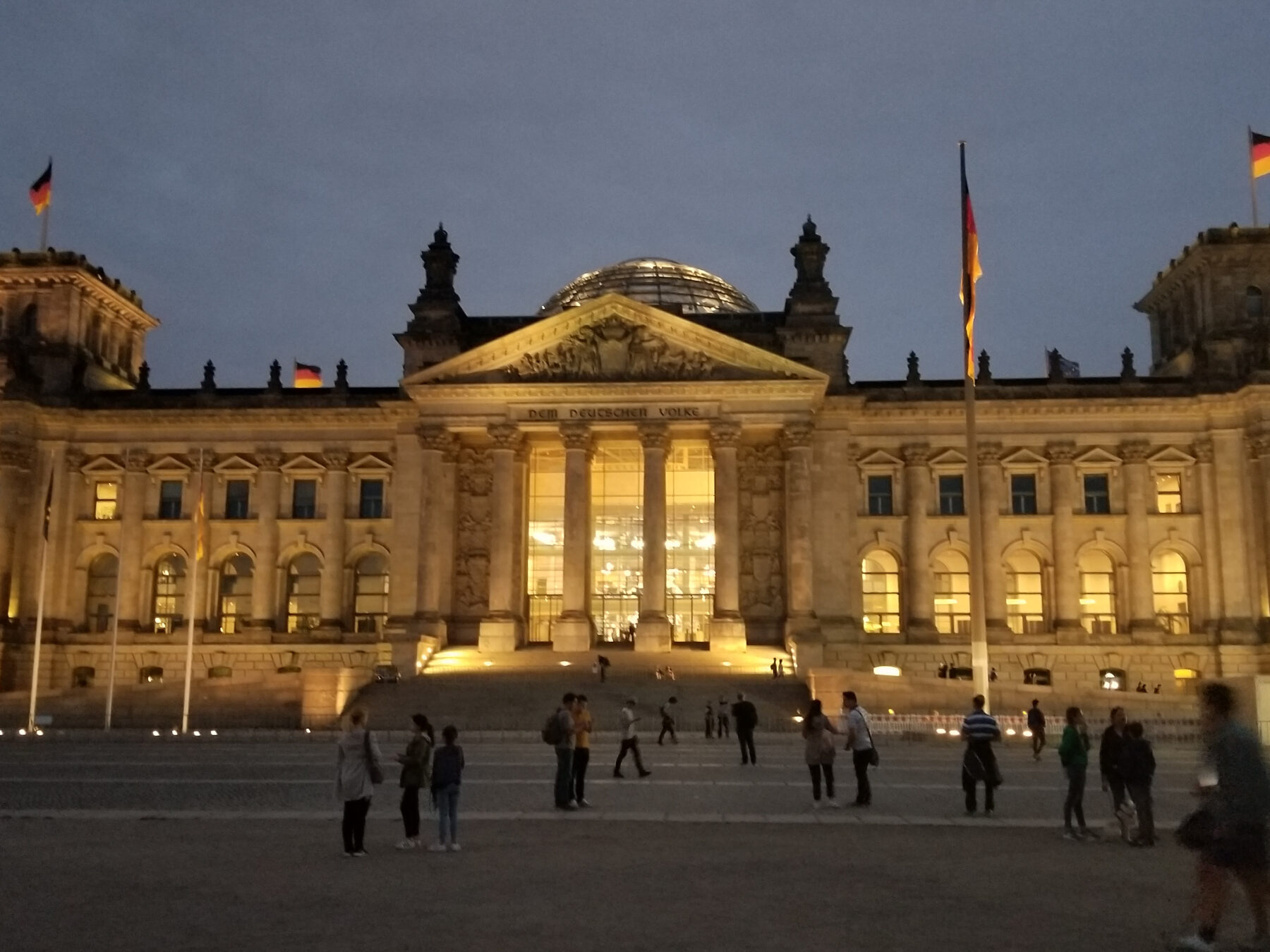
The original Reichstag building was constructed in the late 19th century to house the Imperial Diet (Reichstag) of the German Empire. It was designed by architect Paul Wallot and completed in 1894. The building's architectural style combines elements of Renaissance and Baroque revival, with a prominent glass and steel dome as its centerpiece. Later in the tour we will discuss the types of architecture found throughout the city.
Over the years, the Reichstag witnessed significant events in German history. One of the most notable incidents occurred in 1933 when the building was severely damaged by a fire, which the Nazi regime used as a pretext to further consolidate their power. After World War II, the building fell into disuse as Berlin was divided by the Berlin Wall.
Following the reunification of Germany, plans were made to restore and modernize the Reichstag building. British architect Norman Foster was chosen to lead the renovation project, which took place from 1995 to 1999. The most distinctive addition to the building was the new glass dome, which symbolizes transparency and offers panoramic views of Berlin.
Today, the Reichstag building is open to the public, and visitors can explore its historic halls, visit the parliament chamber, and ascend to the dome. The dome's spiral ramp leads visitors to an observation deck at the top, providing a unique perspective of the cityscape.
If you wish to go in and explore the building, we will pause the tour here, and pick back up when you are finished. One notable memorial to see inside is the Memorial to the Murdered Members of the Reichstag, which honors the members of the Reichstag who were murdered by the Nazis
Read More
Scheidemannstraße 2, 10557 Berlin, Germany
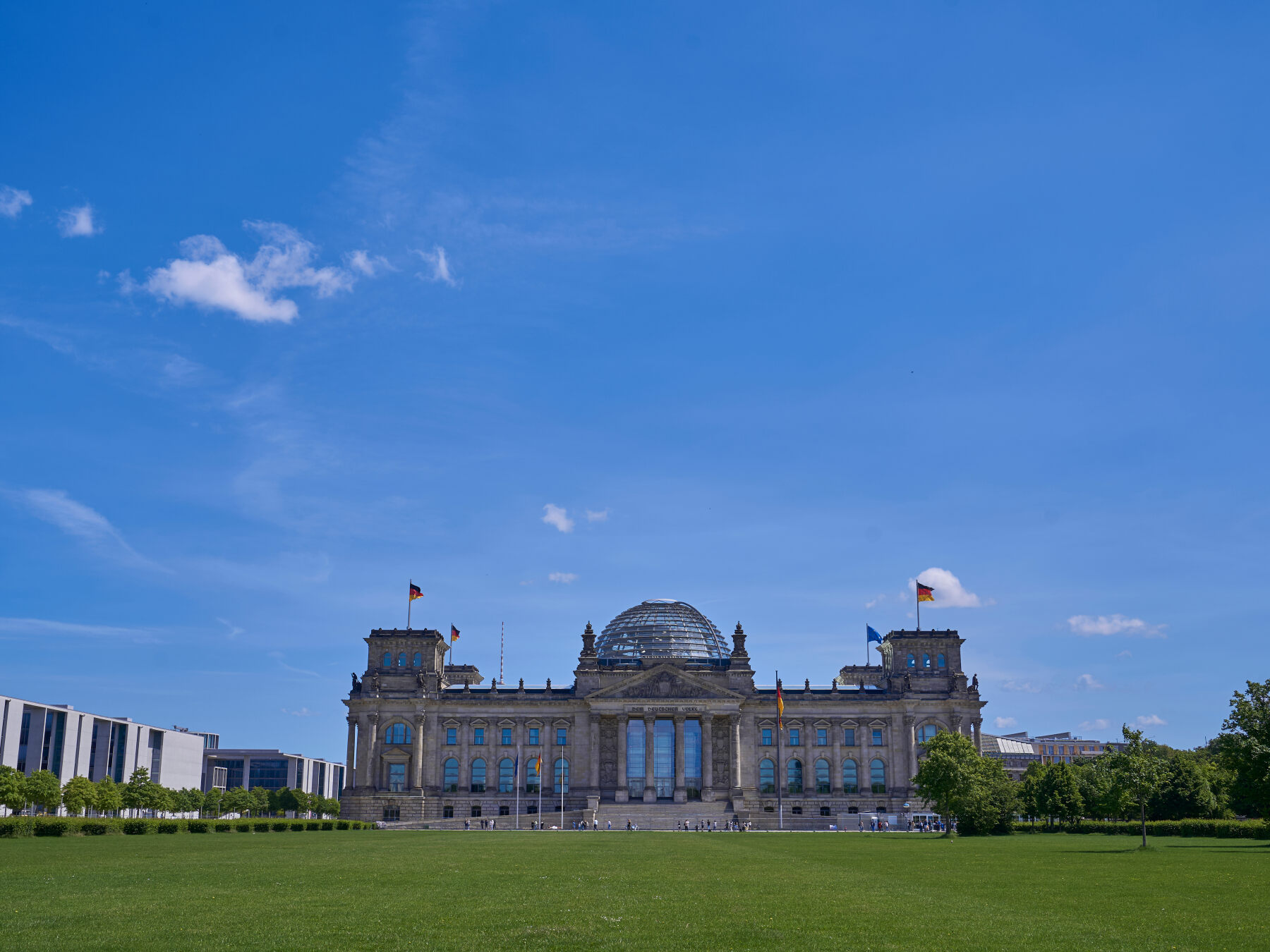
The square's most famous landmark is the Reichstag, a building that has symbolized Germany’s turbulent political history. The square was officially named "Platz der Republik" in 1926 to reflect the democratic aspirations of the Weimar Republic. It was later renamed back to Königsplatz during the Nazi era but regained its current name after World War II.
Since German reunification in 1990, Platz der Republik has symbolized the new democratic and united Germany. The Reichstag and the square itself are important locations for national celebrations and commemorations, including those marking the fall of the Berlin Wall and the unification of East and West Germany.
The square has been a popular site for political demonstrations, protests, and rallies over the years. Its central location and proximity to the Reichstag make it an ideal space for political expression. In addition to political events, the square is often used for public gatherings, celebrations, and ceremonies, including those associated with national holidays.
The open lawn area of Platz der Republik provides a contrast to the surrounding historical buildings and is often used by visitors and locals alike for relaxation. The nearby Tiergarten park, one of the largest urban parks in Berlin, adds to the natural beauty of the area.
Today, Platz der Republik stands as a powerful symbol of German democracy and political resilience. With its central location, it continues to play a significant role in the country’s political and social life. The nearby Brandenburg Gate, the Holocaust Memorial, and Unter den Linden boulevard further enhance its status as a central point in Berlin’s cultural and historical landscape.
The square is a must-visit for those interested in German history, politics, and the country's journey through both tumultuous and peaceful times.
Read More
Place 1
Reichstag Building
Place 2
Platz der Republik
Place 3
Tiergarten Park
Place 4
Brandenburg Gate
Place 5
Paris Square
Place 6
Holocaust Memorial
Place 7
Ottobock Science Center
Place 8
Berlin Wall Sections
Place 9
Potsdamer Platz
Place 10
Story TIme
Place 11
Topography of Terror
Place 12
Checkpoint Charlie
Place 13
Donuts
Place 14
Gendarmenmarkt
Place 15
Unter den Linden
Place 16
Neue Wache
Place 17
Museum Island
Place 18
Berlin Cathedral
Place 19
Cuisine
Place 20
Nikolaiviertel
Place 21
Urban Legends
Place 22
Neptune Fountain and St. Mary's Church
Place 23
Berliner Fernsehturm
Place 24
Alexanderplatz