

Petah Tikva, Israel: Pioneering Spirit of the Mother of the Colonies — A Self-Guided Driving Tour
About this English self-guided 42m driving tour in Petah Tikva
Welcome to Petah Tikva!
Let’s start with a little honesty. This is not a city that reveals its charms at first glance. If you were expecting cobblestone lanes, elegant boulevards and a postcard around every corner… you may be wondering whether you took a wrong turn.
You didn’t.
Petah Tikva makes you work a little harder. Between the apartment blocks, busy roads and buildings of questionable architectural ambition, there’s a story that’s easy to drive past without noticing.
That’s what this tour is here for.
Founded in 1878, Petah Tikva became known as Em HaMoshavot—Mother of the Colonies. Before the traffic and shopping centers, there was an ambitious attempt to build a farming community. Its founders left the familiar surroundings of Jerusalem to work land that would test their skills, their health and their determination.
They called their settlement Petah Tikva: “Opening of Hope.”
A lovely name. Making it live up to that name took rather more effort.
As we explore, we’ll meet the people behind that experiment: founders, farmers, guards, workers and families whose plans did not always agree. We’ll discover why a well could matter more than a house, how citrus connected this place to distant markets, and how a small agricultural colony grew into the city around us.
Some places invite you to admire what has survived. Here, part of the pleasure is imagining what has disappeared.
Look beyond a storefront, and picture a farmer’s courtyard. Beyond an apartment block, imagine rows of citrus trees. Beneath a familiar street name, look for a person with ambitions, arguments and probably no idea that one day people would complain about parking here.
Along the way, there will be opportunities to pause, explore on foot and find something good to eat.
Keep your eyes on the road and follow the navigation. We’ll help you uncover the stories along the way.
Let’s discover Petah Tikva.
Top landmarks on this tour
 Petah Tikva Market
- Petah Tikva Zoo
- Petah Tikva Cultural Hall
- The Great Synagogue
- Plow Square
- Segula Cemetery
- 1For the best experience, begin at the tour's recommended starting point and follow the stops in order.
- 2Want to start somewhere else? Simply use Start At on the tour screen, before tapping Start Tour, to begin from any stop.
- 3Need to detour or skip a stop along the way? Tap Tour Assistant (
![UCPlaces AI Bot Icon]() ) to use Force Play, Skip, and Back, for full flexibility.
 ) to use Force Play, Skip, and Back, for full flexibility.
Route Preview
- Category
- Language
- Mode
- Region
- Country
- City

Places (POIs) visited during this tour
Jabotinsky St 101, Petah Tikva, Israel
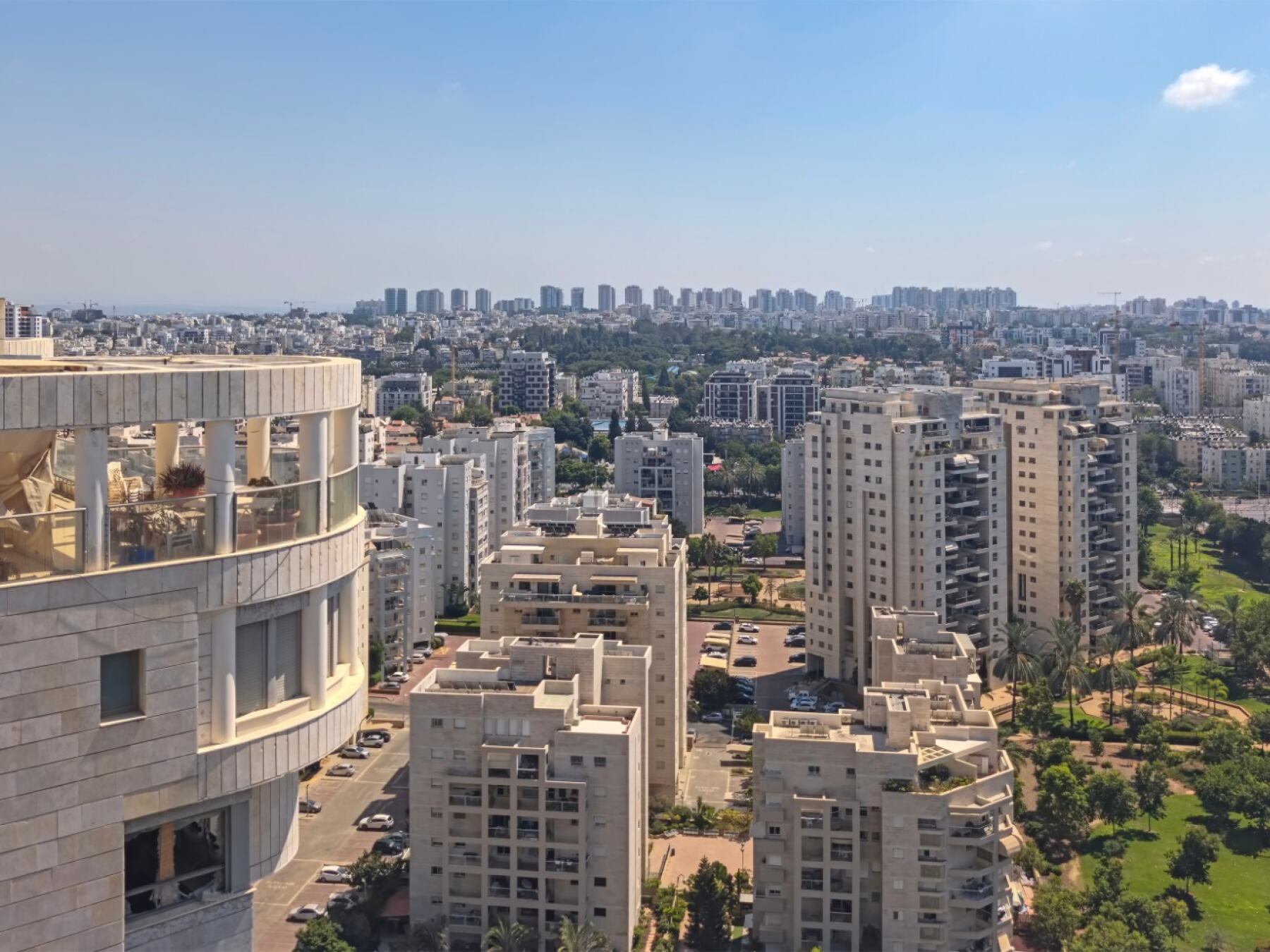
It’s a fitting place to begin our journey through Petah Tikva—or “Petach Tikva,” as it’s pronounced in Hebrew—a city whose agricultural ambitions eventually made room for rather different ways to earn, and spend, a living.
On your right, across the street from the mall, is the Beilinson campus of Rabin Medical Center. Here, two very different sides of everyday life face each other across the road: shopping bags on one side, hospital wards on the other.
But imagine the surroundings of Petah Tikva before the apartment towers, parking garages and busy intersections. Orchards once shaped this landscape, and the rhythm of life followed planting, irrigation and harvest.
Over time, the farming colony grew into a city. Fields gave way to neighborhoods, businesses and shopping centers. The founders wanted to build a place where people could make a living from the land. They probably didn’t picture quite this many escalators.
Beyond the mall, to your left, lies the newer side of Petah Tikva, including the neighborhood of Em HaMoshavot. Its name means “Mother of the Colonies” borrowing the historic nickname of the city itself. Even as Petah Tikva builds upward, it keeps a connection to its farming roots in its names.
There’s a useful contrast as we drive: the newer city to your left, and the older city to your right.
We’ll be exploring that older side, looking for the houses, courtyards and stories left behind by the colony that started it all.
Keep following the route. There’s more to this city than first meets the eye.
Read More
Jabotinsky St 39, Petah Tikva, 4941492, Israel
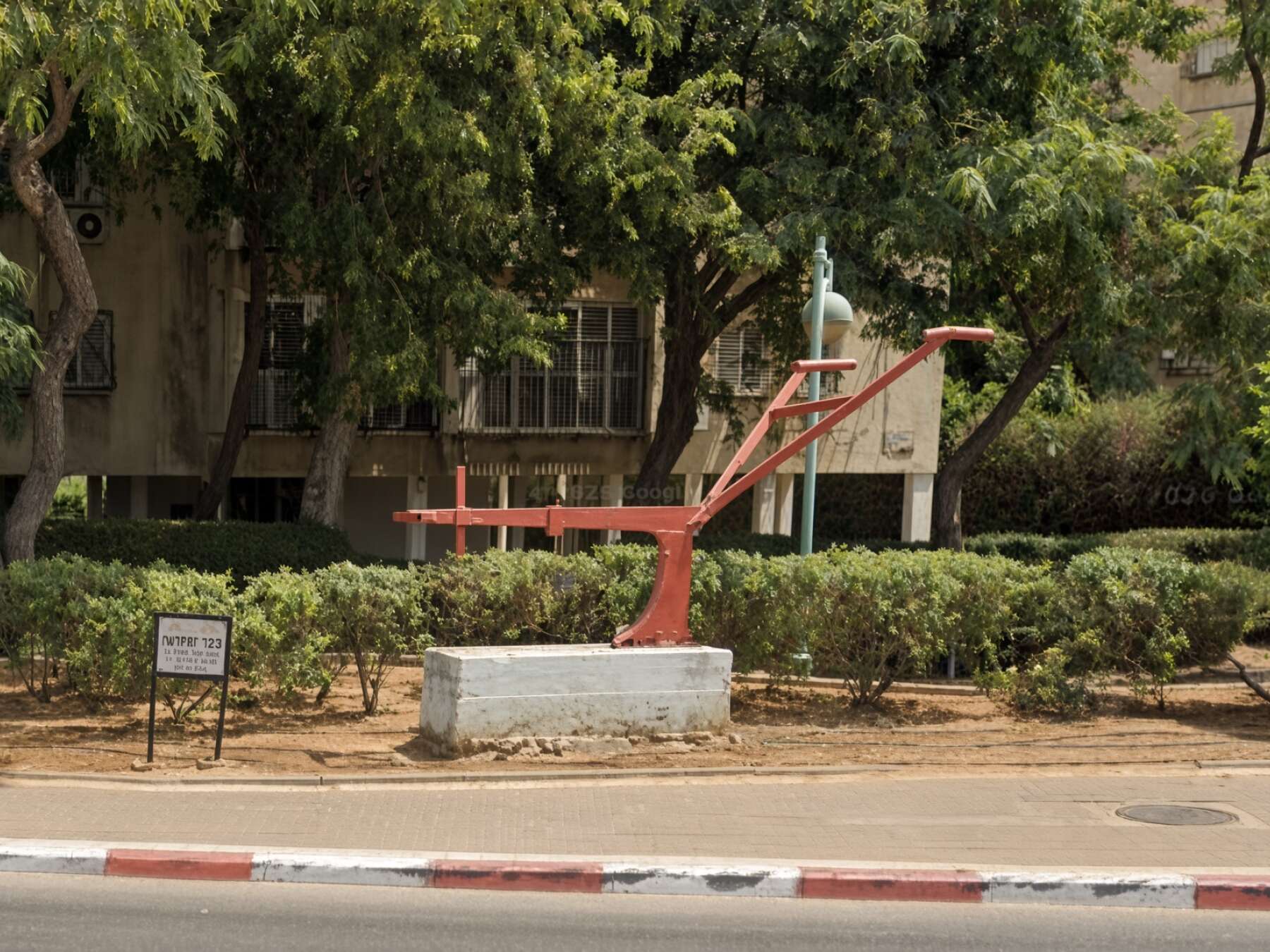
A plow might seem an unusual choice for a city landmark. But in Petah Tikva, this simple farming tool tells you more about the city’s beginnings than a grand statue of a king ever could.
The founders who established the colony in 1878 wanted to make a living by cultivating the land. For people leaving the familiar surroundings of Jerusalem, that meant learning an entirely different way of life.
Buying land was only the beginning. You still had to find water, understand the soil, grow something successfully and bring it to market. Hope was essential, but unfortunately, you couldn’t irrigate a field with it.
The plow became a symbol of that ambition. It even appears on Petah Tikva’s municipal emblem, alongside an orange tree and a flowing stream—an agricultural identity that has outlasted much of the agricultural landscape.
As we pass, imagine exchanging the steering wheel in your hands for the handles of a plow. No air conditioning, no navigation instructions, and a working day that depended rather heavily on the weather.
Keep following the route. We’re heading toward more traces of the community that grew from those early ambitions.
Place 1
The Grand Mall — A Different Kind of Harvest
Place 2
Plow Square — When Farming Was the Dream
Place 3
Petah Tikva Zoo — A Little Wildlife in the City
Place 4
Yad Labanim and the Museum of Art — Memory Meets Creativity
Place 5
Avraham Shapira House — The Colony’s Guardian
Place 6
Hovevei Zion Street — Traces of the Old Colony
Place 7
The Great Synagogue — Beit Yaakov
Place 8
Petah Tikva Market — A Taste of Everyday Life
Place 9
Founders’ Square and the First Well — Where Petah Tikva Began
Place 10
City Hall — From Colony to City
Place 11
David Wolffsohn Street — The Story Behind the Flag
Place 12
Petah Tikva Cultural Hall — An Evening Out
Place 13
Segula Cemetery — The Founders’ Final Chapter
Place 14
Givat HaShlosha — A Sweet Ending
Place 15
Farewell