

Old Jerusalem Walking Tour, Israel - Main Sites & History GPS Self-Guided Audio Tour
About this English self-guided 1h:18m walking tour in Jerusalem
Hello and Welcome to this UCPlaces tour of Old Jerusalem in Israel, one of our favorite Jerusalem walking tours. My name is Dave, and it will be my pleasure showing you around this ancient land.
Here we are at the cultural crossroads of historical and religious beliefs spanning the globe. Old Jerusalem's significance as a religious, historical, and cultural crossroads make it a compelling destination for people from all walks of life to renew their faith or learn about new ideals.
Jerusalem has a rich and complex history dating back thousands of years. It has been conquered and ruled by various civilizations, from the Canaanites and Babylonians, to the Crusaders, and the British, leaving behind a tapestry of historical layers and archaeological sites.
The Old City of Jerusalem is known for its stunning architecture, including medieval walls, narrow winding streets, and centuries-old buildings. The architecture reflects the city's rich history and the influence of different rulers and time periods.
Let's get going, and explore this more ancient part of the world. Follow your navigation, and we will begin shortly.
- 1For the best experience, begin at the tour's recommended starting point and follow the stops in order.
- 2Want to start somewhere else? Simply use Start At on the tour screen, before tapping Start Tour, to begin from any stop.
- 3Need to detour or skip a stop along the way? Tap Tour Assistant (
![UCPlaces AI Bot Icon]() ) to use Force Play, Skip, and Back, for full flexibility.
 ) to use Force Play, Skip, and Back, for full flexibility.
Route Preview
- Category
- Language
- Mode
- Region
- Country
- City

Places (POIs) visited during this tour

Q6FH+4X5, Zion Gate, Jerusalem
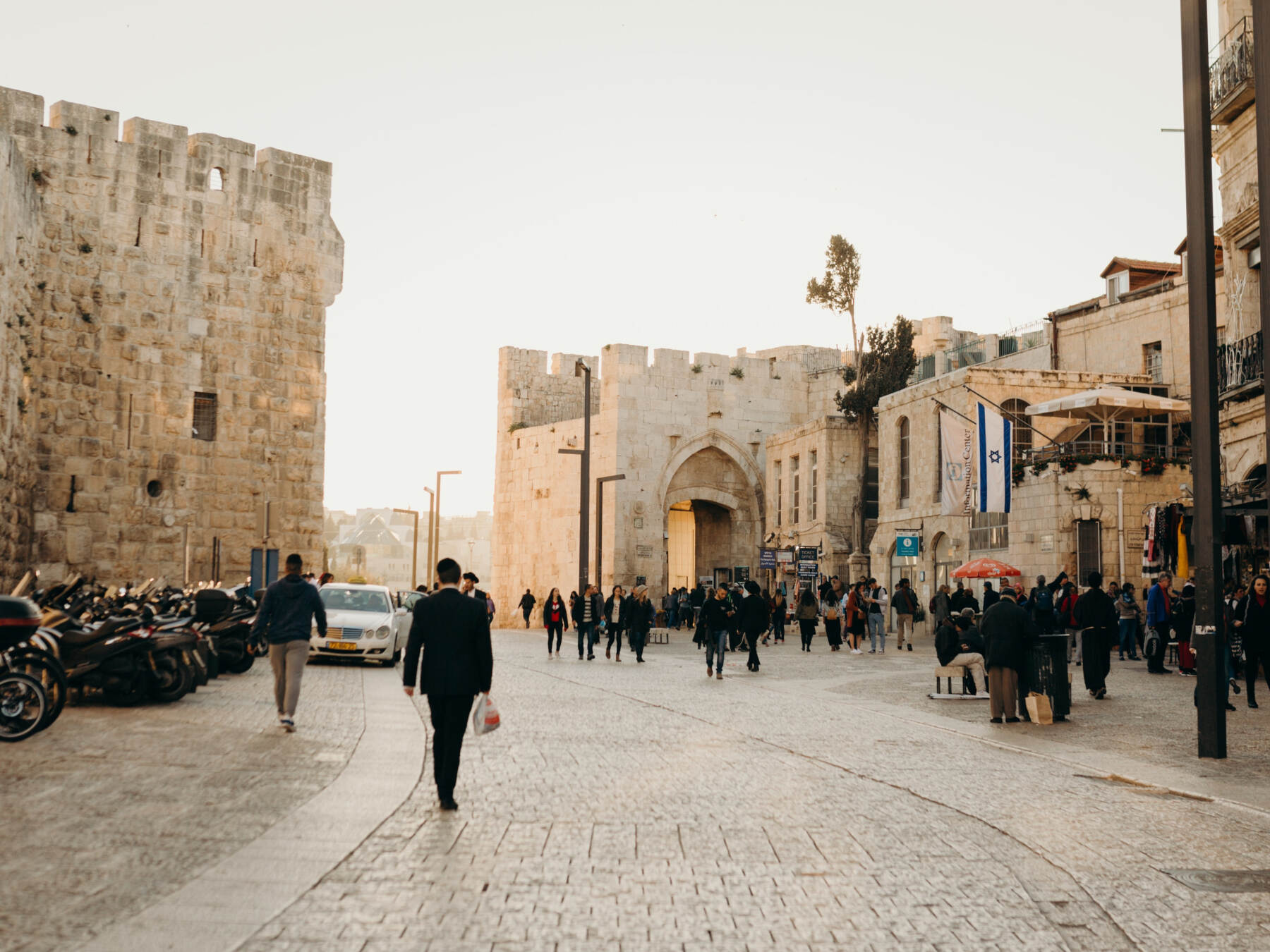
Zion Gate is one of the eight gates that provide entry and exit points to the Old City of Jerusalem. It is located on the southwestern side of the Old City in the Jewish Quarter and is near the southern part of the Western Wall or Wailing Wall.
The gate has a rich history dating back several centuries. It was originally constructed during the Ottoman period in the early 16th century. The gate's current appearance largely reflects renovations and reconstructions carried out by the Ottoman Empire in the mid-16th century and later by the British Mandate authorities in the 20th century.
The name "Zion Gate" is derived from its proximity to Mount Zion, a hill located just outside the Old City walls. Mount Zion has significant religious and historical importance, particularly for Jews and Christians. The gate serves as an entrance for visitors heading toward Mount Zion and the various religious sites associated with it.
Zion Gate is characterized by its distinctive stone architecture, which includes crenelated battlements and a protruding barbican, or outer defensive structure. The gate's design reflects the defensive measures taken by the Ottoman Empire to protect the Old City.
Beyond its historical and architectural significance, Zion Gate holds a symbolic importance for Jews, particularly during events like the Six-Day War in 1967. During this war, Israeli forces successfully reclaimed the Old City and its holy sites, including the Western Wall, after decades of Jordanian control. Zion Gate served as one of the entry points through which Israeli troops entered the Old City, making it an enduring symbol of Jewish return and sovereignty.
Though Mount Zion is outside the city walls, It must be noted that it is home to various religious and historical sites, including King David's Tomb and the Room of the Last Supper. Be sure to check it out if you have extra time. For now, let's make our way into Old Jerusalem.
Read More
The Armenian Patriarchate St 2d, Jerusalem
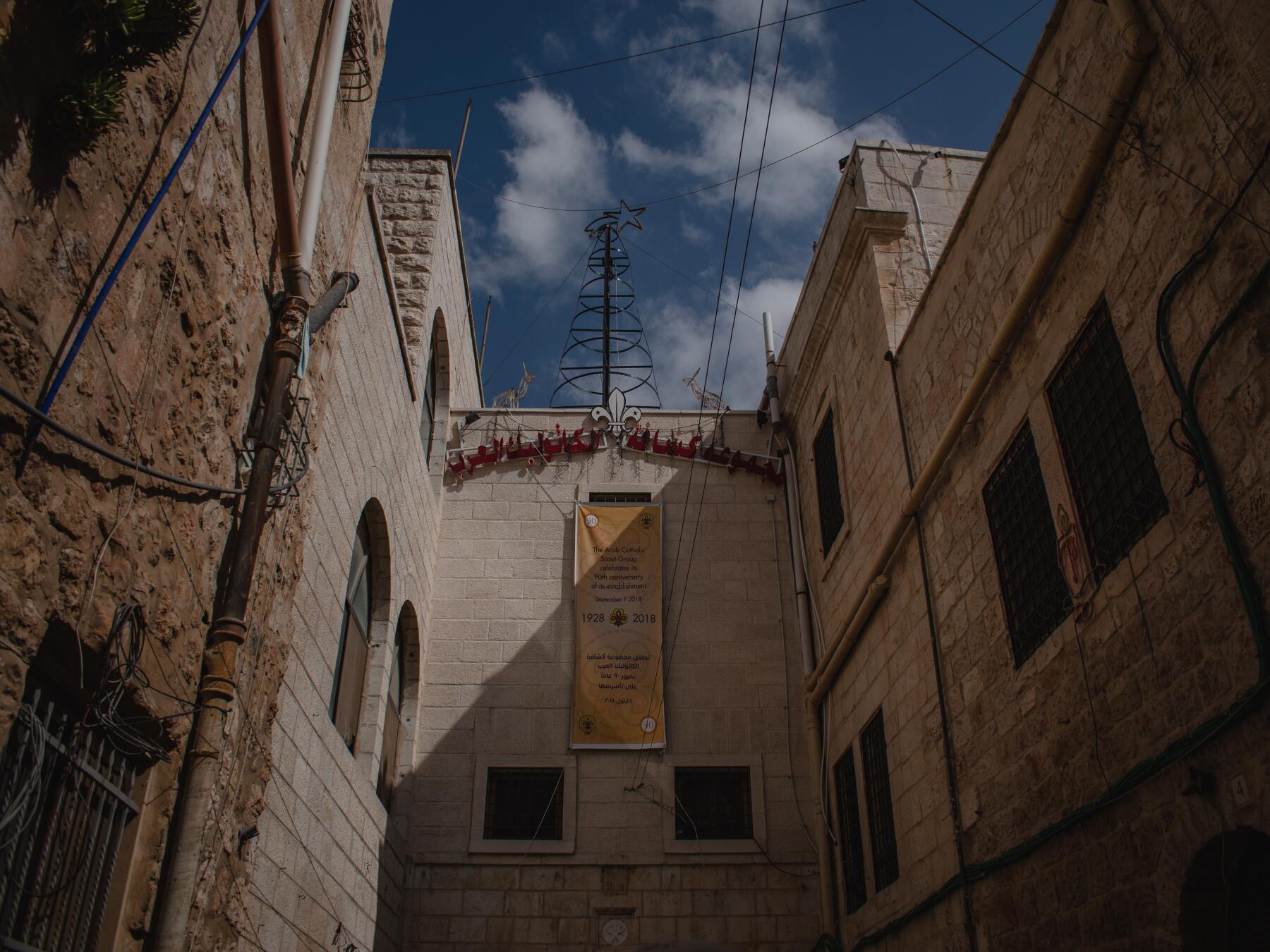
Covering approximately ⅙ of the Old City’s area, The Armenian presence in Jerusalem dates back over a thousand years, and their quarter has been inhabited continuously since the early medieval period. The Armenians first settled in Jerusalem as pilgrims and later established a permanent community. Their presence was strengthened by gifts and endowments from Armenian rulers, which allowed them to maintain their properties and institutions over the centuries.
The Armenian Quarter is characterized by its narrow, winding streets and traditional stone buildings. In addition to the Church of St. James, there are several other notable landmarks within the quarter, such as the St. Mark's Convent, the Armenian Seminary (Tarkmanchatz School), and the Armenian Museum.
Coming up ahead is one of the most heralded landmarks of the quarter, the St. James Cathedral Church.
Place 1
Zion Gate
Place 2
Armenian Quarter
Place 3
St. James Cathedral Church
Place 4
Tower of David
Place 5
Jaffa Gate
Place 6
Church of St. John the Baptist
Place 7
Muristan Market and Mosque of Omar
Place 8
Church of the Holy Sepulchre
Place 9
Foods of Old Jerusalem
Place 10
Via Dolorosa
Place 11
Muslim Quarter
Place 12
Little Western Wall
Place 13
Dome of the Rock
Place 14
Western Wall
Place 15
Al-Aqsa Mosque
Place 16
Western Wall Excavations
Place 17
Jewish Quarter
Place 18
The Burnt House
Place 19
Cardo Maximus
Place 20
Hurva Synagogue
Place 21
The Four Sephardi
Place 22
Conclusion