

Florence Self-Guided (GPS) Audio Walking Tour, Italy - Renaissance Architecture Galore, Iconic Landmarks & Scenic Piazzas
About this English self-guided 1h:50m walking tour in Florence
Hello and welcome to this UCPlaces tour of Florence, Italy.
My name is Dave, and it will be my pleasure to Embark with you on this journey through the heart of Florence, a city where history and culture converge at every turn.
This carefully curated walking tour will guide you through the city's most iconic landmarks, from the awe-inspiring Piazza del Duomo to the serene Piazza Santo Spirito. As you stroll through these storied streets, you'll encounter masterpieces of Renaissance art, architectural marvels, and the enduring legacy of the Medici family. Each stop is a testament to Florence's rich heritage, offering a glimpse into the past while allowing you to experience the vibrant life of this timeless city.
We will begin today on Piazza de Pitti, in front of Palazzo Pitti, in the Oltrarno district of Florence, which is on the southern side of the Arno River. There are public transportation stops here, as well as garage parking at Fosi, one block away, if you drove.
Our tour will take us through many narrow streets , so hopefully no one is claustrophobic! Just kidding, you will be fine, it’s just a bit of my computer like humor. Except this is actually Dave, so you are in good hands.
Ok, everybody ready to explore ‘ La Culla del Rinascimento?” That translates to "The Cradle of the Renaissance." This nickname highlights Florence's crucial role as the birthplace and center of the Renaissance, a period of great cultural, artistic, and intellectual growth that began in the 14th century.
Follow your GPS, and we will begin shortly.
- 1For the best experience, begin at the tour's recommended starting point and follow the stops in order.
- 2Want to start somewhere else? Simply use Start At on the tour screen, before tapping Start Tour, to begin from any stop.
- 3Need to detour or skip a stop along the way? Tap Tour Assistant (
![UCPlaces AI Bot Icon]() ) to use Force Play, Skip, and Back, for full flexibility.
 ) to use Force Play, Skip, and Back, for full flexibility.
Route Preview
- Category
- Language
- Mode

Places (POIs) visited during this tour

Sdrucciolo de' Pitti, 21r, 50125 Firenze FI, Italy
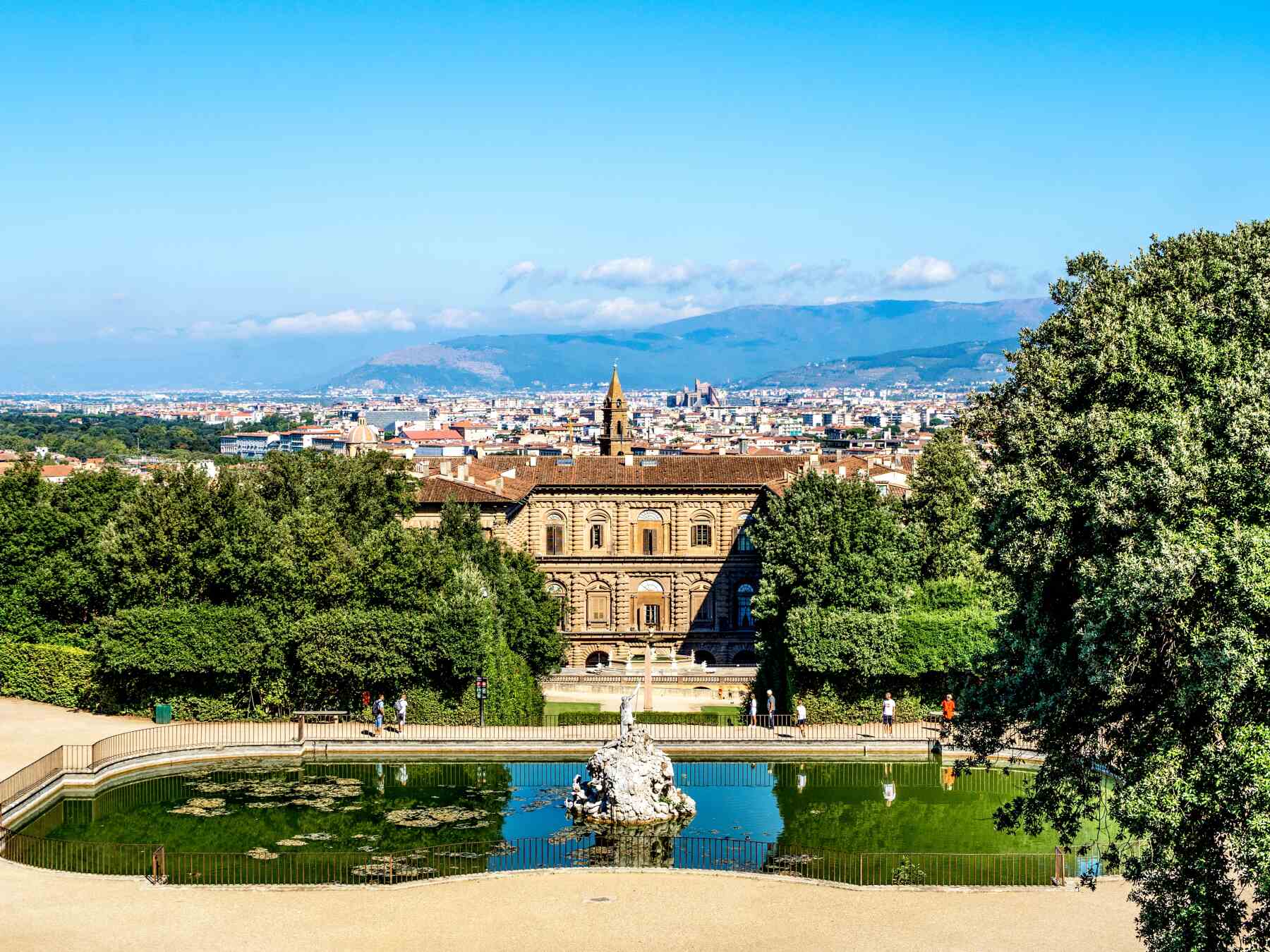
In front of us stands the grand Palazzo Pitti, originally constructed in the 15th century for the wealthy banker Luca Pitti. The palace became the residence of the powerful Medici family in the 16th century. The square itself serves as the forecourt to the palace and is surrounded by the elegant architecture of the Renaissance.
Palazzo Pitti dominates the piazza and is one of the largest architectural monuments in Florence. It houses several museums, including the Palatine Gallery, which displays works by renowned artists like Raphael and Titian, and the Royal Apartments, which offer a glimpse into the opulent lives of the Medici and later rulers.
This gallery boasts an extensive collection of Renaissance and Baroque paintings, primarily amassed by the powerful Medici family and later expanded by the Lorraine dynasty.
The Palatine Gallery is renowned for its extraordinary collection of works, notably Raphael's Madonna of the Chair and Titian's La Bella.
Unlike traditional museum layouts, the Palatine Gallery’s artworks are displayed in the richly decorated rooms of the palace, maintaining the historical context of how these pieces were originally viewed by the Medici family. The frescoed ceilings, elaborate furnishings, and opulent interiors contribute to an immersive experience.
The gallery is organized thematically rather than chronologically, which is unusual for art museums. This thematic arrangement allows visitors to explore the personal tastes and artistic preferences of the palace's former inhabitants.
The piazza is also the gateway to the Boboli Gardens, an expansive and beautifully landscaped park that was designed for the Medici family. The gardens are an important example of Italian garden design and feature sculptures, fountains, and grottoes.
Originally laid out for the Medici family in the 16th century, the Boboli Gardens served as the model for many European courts, including Versailles. The gardens were designed by several prominent architects and landscape designers, including Niccolò Tribolo, Bartolomeo Ammannati, and Bernardo Buontalenti.
The gardens are an open-air museum filled with a vast collection of statues, fountains, and grottoes. Notable sculptures include the Fountain of Neptune and the Obelisk, which was brought from Egypt. The gardens also house the famous Grotta del Buontalenti, an artificial grotto adorned with sculptures, frescoes, and stalactites, designed by Buontalenti.
The Boboli Gardens cover 111 acres, characterized by a formal layout with geometric paths, terraces, and vistas. The gardens are arranged on a hillside, offering panoramic views of Florence and the surrounding Tuscan countryside. The design includes a central axis leading to the Fountain of Neptune, flanked by symmetrical parterres and hedges, embodying the Renaissance principles of order and harmony.
Read More
Sdrucciolo de' Pitti, 19R, 50125 Firenze FI, Italy
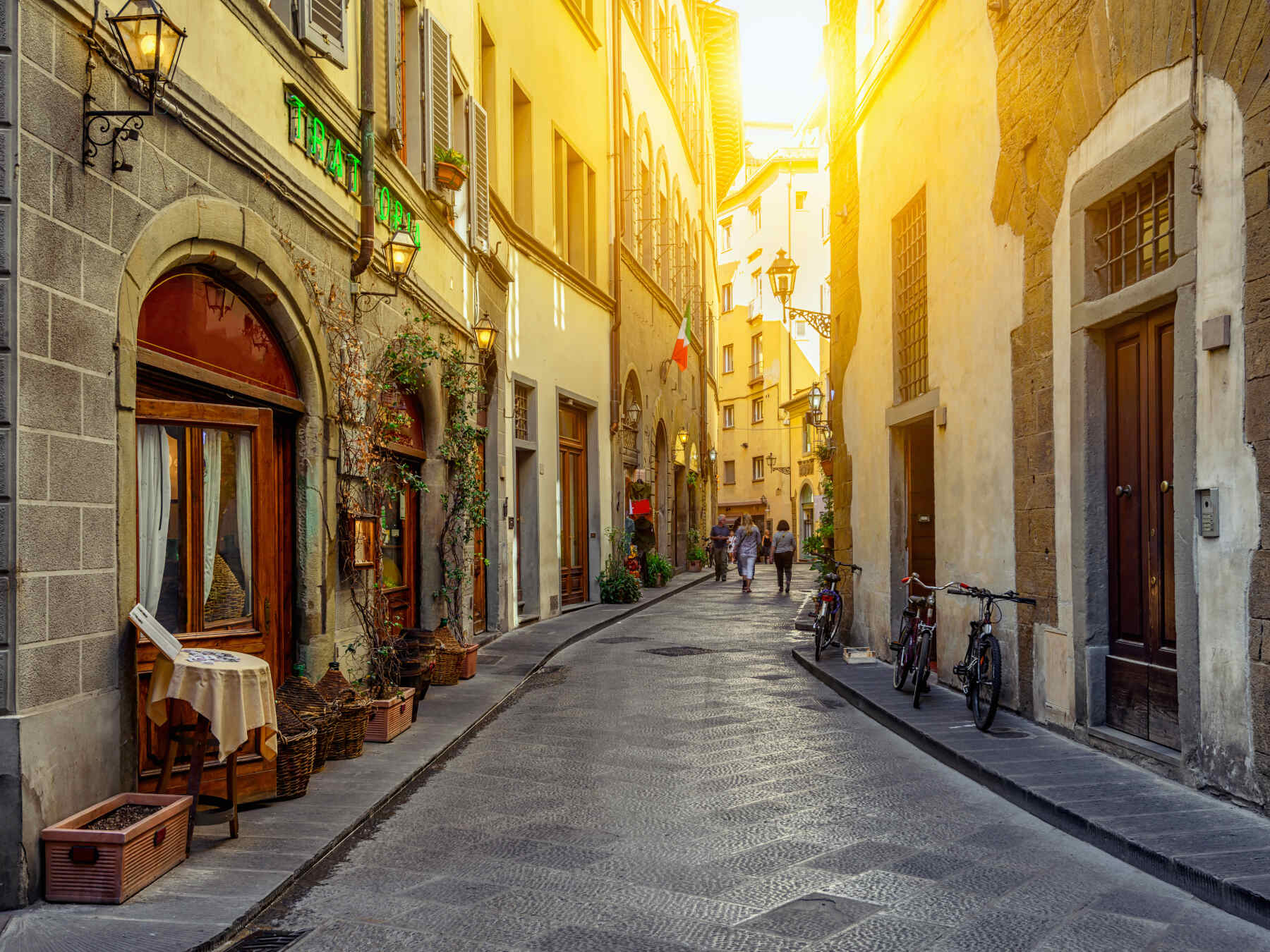
These narrow streets were designed during a time when the city was growing rapidly within its medieval walls. The close proximity of buildings and the winding nature of the streets were not just practical for defense but also reflective of the compact living conditions of the time. These streets were home to artisans, merchants, and the bustling everyday life of Florentines.
Walking through these narrow streets gives visitors a sense of intimacy with Florence’s rich history. The buildings lining these streets are often several stories high, with the upper floors jutting out over the street, creating a canyon-like effect. Many of these structures are adorned with beautiful stonework, frescoes, and historical plaques that tell the stories of the city’s past inhabitants.
As you navigate the narrow streets, you’re likely to stumble upon hidden gems such as small churches, ancient towers, and artisan workshops. In addition, the streets around the Duomo, Piazza della Signoria, and the Oltrarno district are particularly noted for their charm and cultural significance. We will visit them later in the tour.
Today, these streets offer a unique blend of the old and the new. While they preserve their historic character, many are home to modern boutiques, cafes, and restaurants. Despite their narrowness, they remain lively and vibrant, full of local residents and visitors alike.
Some of the most notable narrow streets include Via dei Calzaiuoli, which connects Piazza del Duomo to Piazza della Signoria, and Via del Corso, known for its historical significance and elegant buildings. The Oltrarno district, across the Arno River, also has many narrow streets that retain a more local, authentic feel, with artisan workshops and less commercialized spaces.
The narrow streets of Florence not only guide visitors through the city’s rich past but also create an intimate experience that immerses them in the daily life and timeless beauty of this Renaissance jewel.
Continue on Sdrucciolo de Pitti, then left at Via dei Michelozzi, until we reach the next place on our tour today, Basilica di Santo Spirito.
Read More
Place 1
Palazzo Pitti
Place 2
Vicoli (Streets)
Place 3
The Basilica di Santo Spirito
Place 4
Cuisine
Place 5
Ponte Santa Trinita
Place 6
Arno River
Place 7
Basilica si Santa Trinita and Ferragamo Museum
Place 8
Column della Giustizia
Place 9
Via Porta Rossa
Place 10
Story Time and Restroom Break
Place 11
Piazza della Repubblica
Place 12
Famous Figures
Place 13
Piazza di San Giovanni
Place 14
Giotto's Bell Tower
Place 15
Baptistery of St. John
Place 16
Duomo
Place 17
Duomo Legends
Place 18
Museo dell'Opera del Duomo
Place 19
Coffee and Gelato
Place 20
Palazzo Pazzi
Place 21
Bargello Museum
Place 22
Casa Buonarroti
Place 23
Basilica di Santa Croce
Place 24
Piazza di Santa Croce
Place 25
Wine Window
Place 26
Leather Industry
Place 27
Palazzo Gondi
Place 28
Piazza della Signoria
Place 29
Neptune Fountain and Hercules Statue
Place 30
Machiavelli Statue
Place 31
Uffizi Gallery
Place 32
Sonnet
Place 33
Ponte Vecchio
Place 34
Conclusion