
Places (POIs) visited during this tour
Place #1
Recommended Starting Point
Distance: 0.78mi
, Attraction : Entertainment and Dining
247號 Des Voeux Rd Central, Sheung Wan, Hong Kong

Man Wah Lane
Man Wa Lane, also known as Man Mo Temple Street, is a small and charming street located in the Sheung Wan district of Hong Kong.
It is named after the nearby Man Mo Temple, a historic Taoist temple dedicated to the gods of literature (Man) and martial arts (Mo).
Man Wa Lane is renowned for its traditional Chinese medicine shops, making it a fascinating destination for those interested in Chinese herbal remedies and alternative medicine.
The street is lined with various Chinese medicine shops and herbal dispensaries, offering a wide range of medicinal products, dried herbs, roots, and other ingredients used in traditional Chinese medicine. These shops have been serving the local community for decades, and some have been passed down through generations.
Walking along Man Wa Lane, you'll encounter shelves filled with neatly labeled jars, drawers filled with dried plants and herbs, and the distinct aroma of various medicinal ingredients.
Many shops also offer consultations with experienced Chinese medicine practitioners who can provide advice and prescribe herbal remedies tailored to individual needs.
Let's get to know some of these specialty herbs.
Dong Quai is a root commonly referred to as the "female ginseng" and is highly regarded in traditional Chinese medicine for its benefits to women's health.
Astragalus is an herb known for its immune-boosting properties. It is often used to support the body's defenses, promote healthy Qi (vital energy) flow, and strengthen the spleen and lungs.
Reishi mushroom is revered in Chinese medicine for its immune-modulating and adaptogenic properties. It is believed to promote longevity, support heart health, enhance mental clarity, and strengthen the body's defenses against various illnesses. Reishi mushroom is commonly consumed in the form of tea, extracts, or as an ingredient in herbal formulations.
Beyond Chinese medicine shops, Man Wa Lane also hosts a few other specialty stores, including those selling incense, antique Chinese artifacts, and traditional handicrafts. It's an excellent place to explore and immerse yourself in the rich cultural heritage of Hong Kong.
Visiting Man Wa Lane allows you to delve into Hong Kong's traditional healing practices and appreciate the connection between ancient beliefs and modern-day medicine.
Ok, let's make our way to Cat Street, the next destination on our tour.
Read More
Place #2
Distance: 0.42mi
, Attraction : Shopping and Dining
Fook Lai Building, Queen's Road Central, Tai Ping Shan, Hong Kong
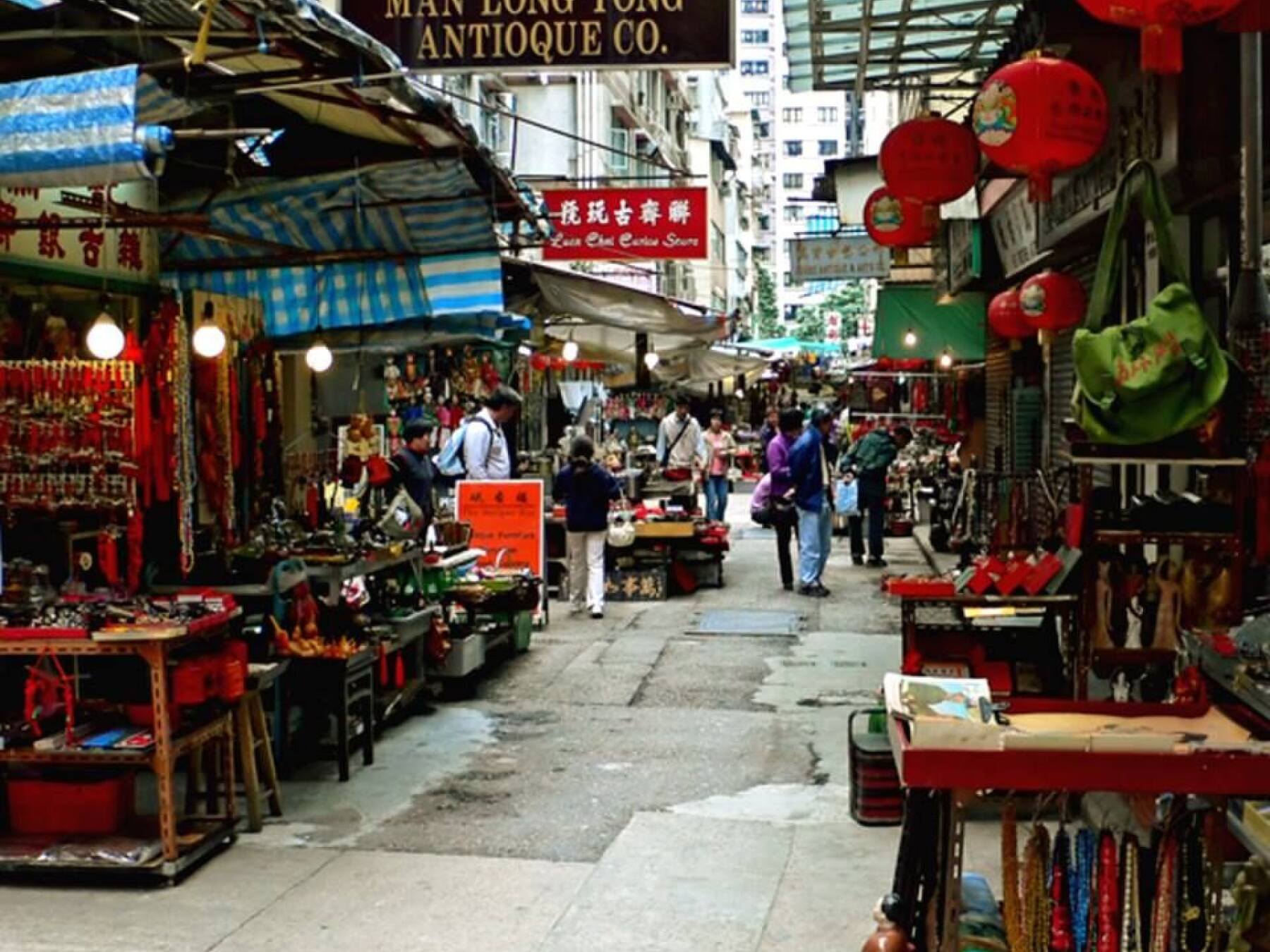
Cat Street
Cat Street, also known as Upper Lascar Row, is a vibrant and historic street located in the Sheung Wan district of Hong Kong. The street runs between Hollywood Road and Queens Road Central, and it is renowned for its antique market and intriguing curiosities.
Despite its name, Cat Street has no association with cats. The origin of the name is unclear, but it is believed to have come from the Cantonese term "Cat," which means "misfortune" or "bargain." The street earned this name due to the availability of inexpensive second-hand goods and antiques that were sold there.
Cat Street has a long history and dates back to the mid-19th century. It was a popular spot for trading second-hand goods and items salvaged from shipwrecks, attracting collectors, bargain hunters, and tourists. Over time, the street evolved into an antique market where one can find a diverse range of treasures, including antique furniture, porcelain, jewelry, vintage posters, and curios from various periods and cultures.
Exploring Cat Street is like stepping into a treasure trove of history. The narrow and winding lanes are lined with shops and stalls filled with fascinating artifacts, each with its own story. Collectors and antique enthusiasts visit the street to browse through the unique and sometimes rare items on offer.
Let's explore some of these rare artifacts that are unique to Hong Kong.
The Jadeite Cabbage is an iconic and highly prized artifact displayed at the Hong Kong Museum of Art. Carved from a single piece of jadeite, it depicts a cabbage head with a small locust and a grasshopper camouflaged within the leaves. This delicate and intricately detailed sculpture is a symbol of fertility and wealth in Chinese culture.
The Hong Kong Maritime Museum houses a collection of artifacts recovered from the Chiuchow Shipwreck, which dates back to the late Ming Dynasty (late 16th century). The collection includes ceramics, gold, silver, and other precious items, providing insights into maritime trade and cultural exchange during that period. We will be talking about another famous shipwreck later, towards the end of our tour.
In addition to antiques, Cat Street has also become a hub for art galleries, boutique shops, and trendy cafes. It has transformed into a creative and eclectic neighborhood where traditional and contemporary cultures blend seamlessly.
Read More
Tour itinerary stops | Additional places you'll see on this self-guided tour
Click below for full access to this tour
Have any questions about this tour? Or a general travel / self-guided tours question? That's completely natural
+ How long does this tour take?
Most travelers complete this tour in approximately 1.5 to 2 hours, depending on pace, time spent at each stop, and optional detours. Having said that, please remember that self-guided tours are extremly flexible (you can start, pause, continue anytime) and everyone has their own pace.
+ What does this tour include?
This self-guided walking tour includes 17 stops, covering top attractions such as Man Wah Lane, Cat Street, Hollywood Road, Man Mo Temple, Ladder Street.
+ Where does the tour start?
The tour starts at Man Wah Lane (Address: 247號 Des Voeux Rd Central, Sheung Wan, Hong Kong). You can begin the tour there or join from any stop along the route.
+ What type of tour is this?
This is a self-guided walking tour designed to be completed on foot through walkable areas and city highlights.
+ Can I do this tour at my own pace?
Yes, this is a self-guided walking tour, so you can start anytime and explore at your own pace. You can pause, skip stops, or spend more time at places that interest you. You can even split it into multiple days. Explore however feels right for you.
+ Is this a walkable tour?
Yes, this tour is fully walkable and designed to follow a comfortable route through pedestrian-friendly areas.
+ Do I need anything in order to take the tour?
There is one thing that you need - A mobile phone (with the UCPlaces app installed and active location services, and a cellular data plan with a decent signal for downloading the tour) and comfortable walking shoes! But here are some recommendations for a great experience: 1. Make sure your phone is fully charged and bring a mobile charger/battery. 2. Bring earphones for the best experience. 3. Bring a bottle of water and dress appropriately according to the weather forecast.
+ How will I navigate from point to point during the tour?
The tour uses GPS-based navigation through the UCPlaces app, with automatic audio playback and step-by-step directions between stops. Just follow the route (cross streets carefully using crosswalks) and listen to the audio guide. Use the resume feature to continue the from where you recently stopped (or closed the app). Easily skip or go back to stops.
+ Is this tour suitable for families or groups?
Yes, self-guided tours are ideal for families and small groups, allowing everyone to explore comfortably without being tied to a fixed schedule.
+ What makes a self-guided tour better than a guided tour?
Self-guided tours are more flexible, affordable, and personalized. You can avoid crowds, choose your pace, and focus on the stops that interest you most.
+ I installed the app and it's now asking for GPS and media access permissions, why?
The app is your tour-guide, it needs to know where you are located on the map to be able to trigger the points of interest. It also needs access to audio and media files to provide you with this experience.
+ What happens if there are unexpected roadblocks or navigation issues?
We have been working hard to deliver a great experience. Though you may run into unexpected obstacles (the world is constantly changing), our app has multiple features and mechanisms in place to help you overcome them, including: AI assistance, force play an audio if you can't reach the stop, skip or return to stops, automatic rerouting and more.
+ Can I take the tour in my language?
Though all of our tours are primarily in English, many tours are muyltilingual (including: Spanish, German, Portuguese, French, Japanese, Hebrew, French, Arabic and more...). The tour language options depend on the specific tour - You can easily check which languages are available in the tour screen!
) to use Force Play, Skip, and Back, for full flexibility.